A Nonprofit Places a Bet on Testing a Bevy of New Approaches

By NICOLE WALLACE
Features Editor
September 30, 2012 | Read Time: 3 minutes
One Acre Fund, a fast-growing nonprofit that helps poor farmers in sub-Saharan Africa improve crop yields, built the idea of continuous testing into its operations from the very beginning.
The six-year-old charity has 18 employees in Kenya, 27 employees in Rwanda, and one employee in Burundi whose roles are to experiment with new ways of improving the organization’s services to farmers. This year the group will spend $3-million on research and innovation, roughly 15 percent of its $19.1-million annual budget.
Testing a steady stream of new ideas to see what works helps the organization stay agile and respond quickly to farmers’ requests for new services, says Stephanie Hanson, director of policy and outreach at One Acre Fund.
“It allows us to try more things because the risk is lower,” she says. “If something doesn’t work with 100 farmers, well, then we’re not going to offer it.”
Doubling Farmers’ Profitablity
One Acre provides high-quality seeds and fertilizer on loan to 130,000 farm families in East Africa, who then pay for the supplies after they sell their crops. The group also offers training that explains the latest growing and storage techniques in easy-to-understand terms, and crop insurance that pays farmers in the event of significant drought or disease. Farmers who participate in the program have been able to double the profitability of every acre they plant compared with the results of a control group.
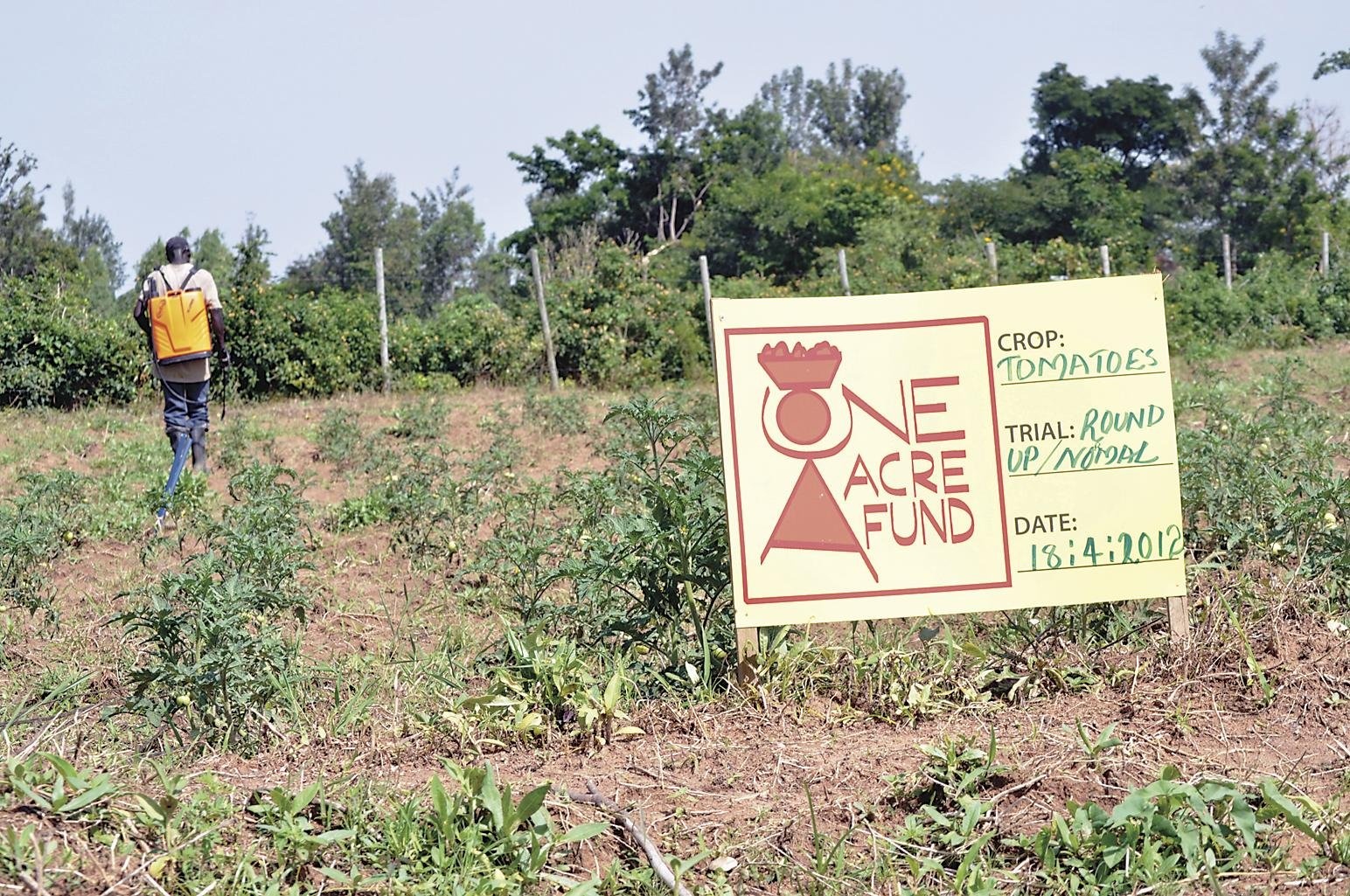
The research and innovation groups test new products and services thr group is thinking about offering farmers, such as a new crop or solar lights.
The team in Kenya ran trials for two years before offering seeds for grevillea trees to all the farmers it works with in the country. Grevillea trees grow quickly, require less water than similar trees, add nitrogen back into the soil—and provide farmers with a significant return on their investment.
The tests allowed One Acre to work out some problems. For example, disappointing germination rates helped the charity realize that the plastic packaging recommended by suppliers was actually killing seeds before they got to farmers. The group now packs the seeds in brown paper bags.
Recognizing Failure
One of the organization’s goals is to reduce its reliance on philanthropic support and eventually be able to cover all its costs through its work with farmers.
To that end, the group has already adopted some measures from its One Village trial, an experiment to see if the organization can increase the number of farmers each of its staff members serves—which would drive down the cost of the program per participant—without sacrificing income gains for farmers.
Of course, not every trial is successful.
“The research and innovation process is littered with things that we’ve tried and really haven’t worked,” Ms. Hanson says with a chuckle.
Several years ago, officials at the organization were excited about passion fruit as a crop that might help poor farmers climb out of poverty. But during trials, the charity learned that passion fruit was complicated to grow and susceptible to disease.
What’s more, says Ms. Hanson, it wouldn’t have been realistic to distribute fragile passionfruit seedlings to large numbers of farmers: “Pretty much on every kind of metric that we would use to evaluate the success of a trial, that one just failed.”
When One Acre first started, some board members and donors questioned the group’s focus on innovation, says Ms. Hanson. They asked whether the research was a smart use of limited funds and wondered if the experiments were a distraction from the group’s basic work to help farmers. But in time, she says, the results won them over.
“There are hundreds of millions of farmers who could benefit from these services,” says Ms. Hanson. “It would be irresponsible for us not to invest in the research and innovation work, because that’s the work that enables us to grow faster, offer products that have more dollar impact for farmers, and do that sustainably.”