


February 4, 2025 | Read Time: 2 minutes
Sometimes the data that scientists need to accelerate conservation and climate solutions can be hard to come by. That’s where Adventure Scientists comes in. The nonprofit mobilizes outdoor enthusiasts and trains them to collect high-quality samples and data.
Adventure Scientists has mobilized volunteers to collect water samples to measure microplastic pollution, tree samples to help identify illegally harvested timber, and more.
The more remote the assignment, the better, says Gregg Treinish, the organization’s founder and executive director. “If it’s difficult to access, if it’s high up on the mountains, if it’s in remote forests, we love those kinds of projects because we have thousands of volunteers who are looking for opportunities to use their outdoor skills to go get those data.”
The range of projects Adventure Scientists volunteers have participated in is impressive.
They’ve collected one of the largest and most diverse datasets of microplastic pollution to date. Competitors in rowing races that crossed the Pacific and the Atlantic took water samples, as did a woman snorkeling the Inside Passage and people rowing some of the world’s major rivers. Other volunteers have gathered tree samples for a project that helps scientists use genetics to identify illegally harvested timber and efforts to replant forests with trees that are resilient in the face of disease. Mountaineers got snow and ice samples at elevations above 15,000 feet for a scientist who studies how glaciers are thinning. The list goes on.
“We have people who are now on their seventh, eighth, ninth projects with us,” Treinish says.
He says that science powered by everyday citizens has the potential to make a real difference.
Pennsylvania got $400 million through the Infrastructure Investment and Jobs Act to remediate orphaned and idled oil and gas wells that are leaking methane, a potent contributor to climate change. The money is enough to remediate roughly 7,000 of the 570,000 idled wells in the state. Adventure Scientists is trying to raise $1 million for a project to organize volunteers to collect air samples near wells on public land to determine which are leaking the most methane.
Says Treinish: “It’s such a crucial time where the world needs citizen science.”
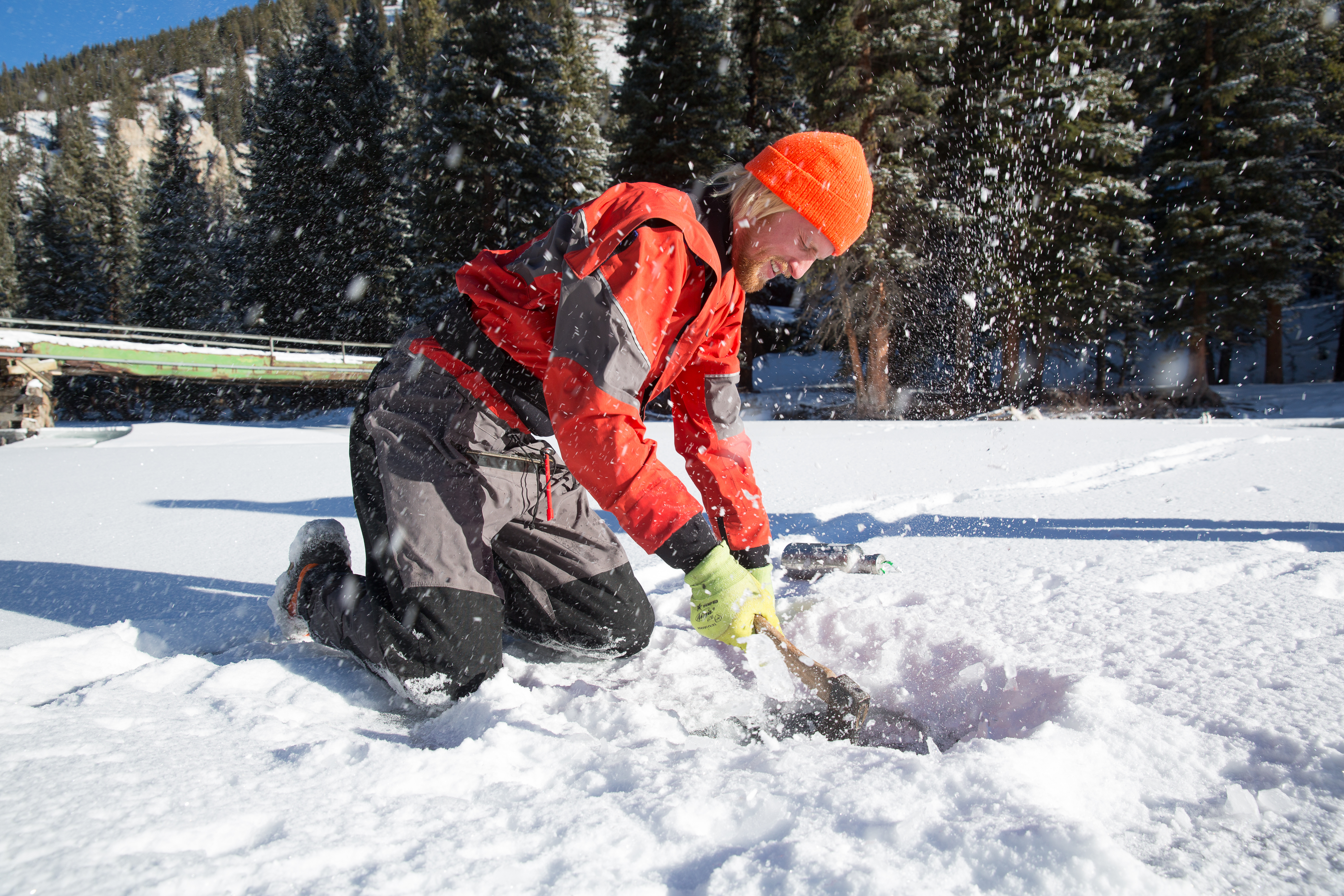
Below, a volunteer cuts through ice to collect a water sample for a project to measure microplastic pollution in Montana’s Gallatin River.





