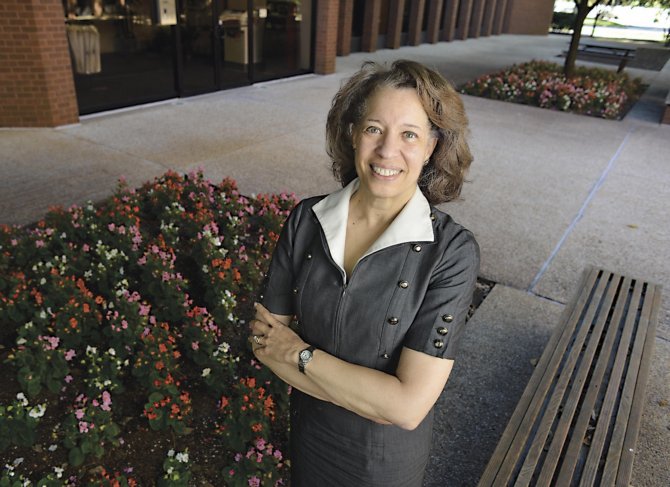
A Nonprofit Veteran Aims to Draw American Neighborhoods Closer

By PETER PANEPENTO
Contributor
May 12, 2005 | Read Time: 6 minutes
When Barbara Link cultivates blueberries and raspberries at her organic farm in Rehoboth, Mass., she still feels the wonder she experienced when, as a fourth grader, she first watched a pale green lima bean plant sprout through dark soil for a science project.
Since that day, Ms. Link, 52, says she has always been energized by the challenge of bringing something to life and nurturing it to health. That is why she founded the Texas Environmental Center decades ago and why she wakes every day at 5 a.m. to tend to her 25-acre farm.
That feeling is also what motivated Ms. Link to leave her job as head of the ArsDigita Foundation, the grant-making arm of an Internet service company in Cambridge, Mass., to take over as the chief executive officer of the fledgling National Neighborhood Day. The year-old organization in Providence, R.I., is working to strengthen communities by promoting an annual one-day gathering in neighborhoods nationwide.
The neighborhood parties, to be held on September 11 this year, are designed to help build relationships and forge bonds that can reduce crime, improve social-support groups for children, and, by extension, create happier, healthier communities.
While the September 11 date is a coincidence, the goal of National Neighborhood Day is much in keeping with the numerous volunteer efforts that have sprung up to bring people together to mark the anniversary of the terrorist attacks in 2001 and the strong philanthropic response.
Still, the organizaton is just getting off the ground. It had generated just $35,000 in contributions by the end of last year and had relied heavily on pro bono consultants and volunteers to promote and plan the first National Neighborhood Day last year.
Ms. Link is charged with raising $250,000 for National Neighborhood Day in 2005. By 2006, Ms. Link says she hopes to lead efforts to push that number to $400,000.
Because its finances are tight, Ms. Link is working temporarily as a contractor for the organization, making the equivalent of $43,000 annually. By summer, the board hopes to hire her full time at a recommended salary of about $60,000, she says.
“She is, for all intents and purposes, a volunteer CEO,” says Lorne Adrain, National Neighborhood Day’s founder and chairman. He is also the founder of Kindmark, a company that makes software for philanthropic organizations.
But although Ms. Link is drawing a small paycheck, Mr. Adrain saysshe comes with the requisite clout and knowledge to build the organization’s credibility and expand its reach.
“She’s got a unique combination of start-up experience and running mature organizations and running organizations that, to be at their best, must collaborate on a very grand scale,” Mr. Adrain says.
Ms. Link says she accepted the position because she believes strongly in National Neighborhood Day’s goals and because of the challenge it represents. The organization has a lofty mission, she says, but it doesn’t have a defined path for fulfilling that mission.
And, for Ms. Link, finding that course will produce the same thrill that she found watching that first lima bean plant and still gets when she tends to her farm.
“This is not about building some huge organization or bureaucracy,” she says. “This is about being an inspirer to help other entities to do great work. If as we go through this journey, we find voids or vacuums, then we will be creative to find out how we can make a difference and help people.”
In an interview, Ms. Link discussed her new role:
How do you tackle building such a wide-ranging organization?
Over and over in my career I have realized the power of being able to bring people together. Early on, one of the things that was just an amazing experience was that I was asked to run a coalition of environmental groups — from Greenpeace and the Monkey Wrench groups all the way to the garden club ladies. Now, when I look at building relationships, it’s about finding things that are meaningful to people. Bringing people to action is the hardest part of that equation.
What can one person do to inspire action from such disparate groups?
The most important thing is understanding what the value is for each of those organizations and sectors, understanding where the rubber meets the road for them, what’s important and what’s not. Then there is this very arduous process of communication and being prepared for the inevitable conflicts and confrontations.
You have to work through it if you are going to bring about any kind of meaningful partnership. You also need to be aware that the end result is not going to be perfect. Every time you approach bringing people together, it is a unique situation. Understand that everybody has value and everybody has a different motivation.
It’s hard. If you think you’re going to convert people to your point of view hook, line, and sinker, you’re not going to be able to do it.
The beauty of National Neighborhood Day is that it’s of interest to everybody because everybody in some way has a neighborhood. Most people find joy and security and meaning in having relationships with other people. At the heart of it, it’s about building connections.
What is your most immediate challenge?
It is incumbent upon the organization to reach out to all different types of groups across the country to find out what’s important to them.
How do you do that?
If you are really going to make a difference, you have to stick with it for the long haul. There’s a lot of commonality in terms of shared vision and thinking. But it’s hard.
We’re going to try some things and we’re going to succeed and there are other things that are going to fail. It’s a jerky process to get to the point where we’re going to make a difference.
In three years, if we have a really good idea of how our outreach is executed and what we see is most successful and we have a reasonable income stream to leverage what we want to accomplish, I will be thrilled.
ABOUT BARBARA LINK, CHIEF EXECUTIVE OFFICER, NATIONAL NEIGHBORHOOD DAY
Education: Earned her bachelor’s degree in linguistics and archaeology from McGill University in 1976 and a master’s degree from the Graduate School of Design at Harvard University in 1984.
Previous employment: Ms. Link founded the Texas Environmental Center, in Houston, and has worked as president of the National Environmental Education & Training Foundation, in Washington. She served as chief operating officer of GuideStar, in Williamsburg, Va., and most recently worked as executive director of the ArsDigita Foundation, in Cambridge, Mass.
What she’s been reading: An avid reader, Ms. Link has a library of about 2,000 mystery novels that she collects for overnight visitors to her Rehoboth, Mass., home. Among her recent non-mystery favorites are This Organic Life: Confessions of a Suburban Homesteader by Joan Dye Gussow and The Virtual Community: Homesteading on the Electronic Frontier by Howard Rheingold.