
A Philanthropist Takes the Long View With an Ambitious Project in Africa

By Caroline Preston
Contributor
April 1, 2012 | Read Time: 6 minutes
Greg Carr decided more than a decade ago, when he was in his late 30s, that he wanted to devote all his time to philanthropy. In 1999, Mr. Carr, who co-founded the company Boston Technology, started a foundation that bears his name and also gave $18-million to help Harvard University create the Carr Center for Human Rights Policy.
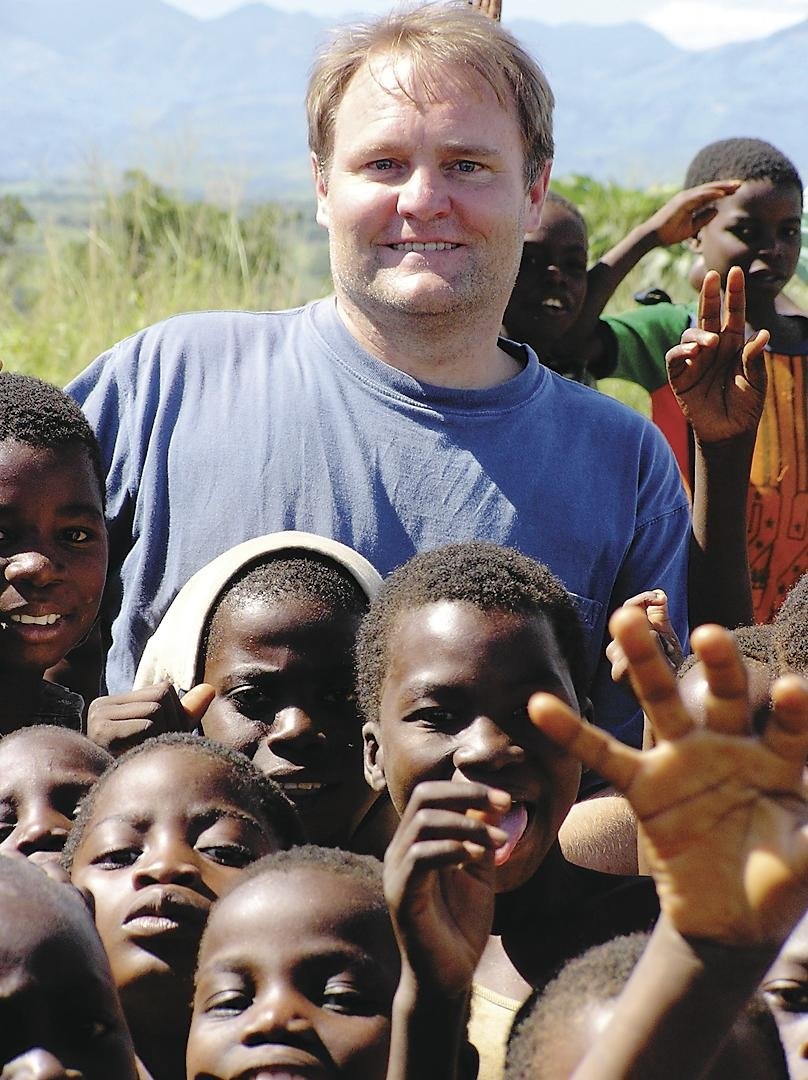
In 2004 he visited a beleaguered national park in Mozambique, and decided to use his money to help revive its ecosystem and improve conditions for the people who live around it. A few years later, Mr. Carr committed up to $40-million to the Gorongosa National Park.
In addition to his work in Mozambique, Mr. Carr serves as a board member of Internews, a nonprofit that trains local journalists and expands media coverage around the globe.
He has also been a trustee of the Idaho Human Rights Education Center, Physicians for Human Rights, and Witness. He says he’s on pace to give away more than half of his fortune, which has reached roughly $200-million, but also plans to leave a lot of money to his nieces and nephews, whom he envisions taking over the Carr foundation.
In an interview with The Chronicle, Mr. Carr discussed his philanthropy.
You made a commitment to give $40-million to the Gorongosa National Park over 30 years. Why did you stretch out the gift over that time and should others consider that approach?
Change takes a long time. Imagine if your goal is to empower women through education in a developing country. If you come in with a three-year plan, all the 2-year-old girls will be 5 when you leave, and all the 7-year-old girls will be 10. You have to commit to a generation. You want the 2-year-old girls to be 32 when you leave and getting their Ph.D.’s or becoming a vice president of a company.
I don’t work in the [nonprofit] world and I don’t claim to be an expert, but I saw a lot of three-year projects and I thought, I don’t quite get it. Nothing happens in three years. Of course, there are reasons for it: There are funding cycles, there are political cycles. But if you’re not on a political cycle, and you can make a 20- or 25-year change in leadership, I say do it.
Let’s talk about the park. Think about how long it takes to grow a tree. We planted 3 million and change in the last three years. Twenty years from now, I’ll be able to actually look at those trees, they’ll be 10 or 30 feet high.
Did people in Mozambique believe you when you said you wanted to be there for 30 years?
Think about the private sector. If you and I were going to operate a cellular network in a country, we’re not going to do it in three years and then have the government take it over. It’s normal in the private sector to have 20- or 30-year time frames. In the nonprofit world, why shouldn’t it be normal? You should be able to say, we’re investing a lot here, and we’re going to have a learning curve, and maybe our organization will have a five-year learning curve.
Is it true that another reason priorities change so quickly is because new leaders come in and want to put their stamp on something?
In the for-profit world, you have CEO’s who change every four or five years and want to put their stamp on something. But once somebody is invested in something, the enjoyable part is getting your return on investment. If you’re thinking you’re going to go into some difficult part of the world and solve some challenging problem, the first five years will be the worst. That’s when you make all your mistakes. When you get good at it, why not hunker in for 20 years?
What do you think makes a nonprofit board work well? What can nonprofits do better?
I think it works very well at Internews. If I’m sitting on their board, I’m going to ask, How can I be helpful and not be a meddler? The last thing you want is to be the guy about whom they say, I have to waste two hours with this board member and then I can get back to work. What I like about Jeanne [Bourgault, the president of Internews] is she comes to me and says, “Greg, I have a complicated problem and I need you to fix it.”
So organizations need to be specific about what they’re asking?
Yes, if you’d heard [my last] conversation with Jeanne, I’m saying, “I feel like I’m not doing enough for you. How can I be useful?” She says, “Greg, we’re doing a very specific thing now in Europe, and I would like to get a whiteboard and sit down with you for a few hours and solve this together.” And I said, “That’s great, I want to be helpful.”
I’m also respectful of the organization’s structure. I respect the president and know they are going to give it to me straight. I have been on some boards that were a little dysfunctional because if the president ever gets a sense that a board member is not fully trusting them, or going around them, that tells you that something is very wrong.
In Gorongosa Park, how much progress have you made toward the goals you set?
There are things that happened more quickly than I thought and things that happen more slowly. I was glad we had a broad portfolio because what that meant is we might be making progress somewhere, even though I’m frustrated somewhere else.
Things that have gone better are the ecosystem recovery; the animal population has recovered. Tourism has gone at least as fast or faster than I thought. Then there are things that you think will be easy and it turns out they are practically impossible. We could just never get zebras. Who knew they were so hard to find?
We also wanted to make a difference in education and health care.
We ended up with an amazing partner in Mount Sinai, in New York. We have a maternal-health program, and we just trained 25 local women to be health assistants. Seeing these women in class becoming home health assistants, who are locally hired and trained, is very rewarding.
Even if you do something and it’s not on a grand scale, but it actually works, it’s really rewarding. You might feel happier then you even know you would. You learn a lot, and then you might be able to scale it.




