A Social-Service Charity Showcases Twitter to Add Pizazz to a Gala

By Eric Frazier
Contributor
June 13, 2010 | Read Time: 3 minutes
Kathy Rowan wanted to do something special and different with the annual fund-raising luncheon for her client, Thompson Child & Family Focus. The charity in a suburb of Charlotte, N.C., which offers services to needy children, had just set up a Facebook page, its first foray into social networking. Ms. Rowan, a public-relations specialist who goes by “PRqueen” on Twitter, was trying to think of a catchy Twitter campaign when an idea hit her: Why not add a “Twitter table” to the usual array of sponsored tables at the luncheon?
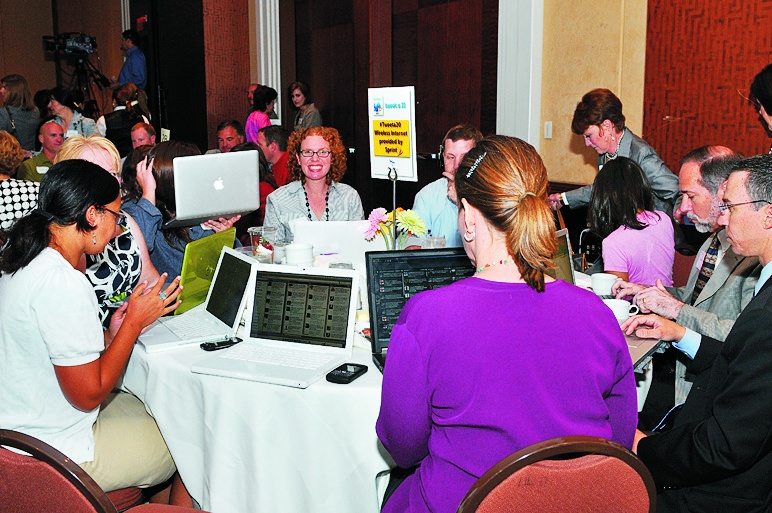
People at the Twitter table would be equipped with laptop computers to send out fund-raising tweets, and Thompson could reach thousands of potential donors well beyond the hotel ballroom where the luncheon would be held.
That’s how “Tweeta20,” a digital-era twist on the fund-raising lunch tradition, was conceived. Attendees of the Twitter table asked their followers for donations of $20 or more. The table raised more than $4,000 for Thompson, which provides clinical and behavioral treatment, developmental education, and care to more than 10,000 children and their families.
That was just a fraction of the $645,000 raised overall at the luncheon, but Virginia Amendum, the charity’s president, said the biggest benefit wasn’t the money. It was the chance to put the 124-year-old former Episcopal orphanage’s name and mission in front of new and younger donors.
“I see the possibility for us to become better connected to them through the social-media world,” Ms. Amendum says. “We honor and respect our history, but we know as a nonprofit human-service organization that we have to keep looking for new ways to support those services.”
‘Go to the Leaders’
Ms. Rowan sought out the help of more experienced social networkers to refine her idea. That, she says, should be the first move for any charities wishing to copy the project.
“You have to go to the leaders,” she says, “and you have to hang on loosely. It’s a great collaborative process that you need to let happen naturally and not get into control mode.”
Collectively the people at the table had some 38,000 followers. “You’ve got to have people who have large followings,” says Harry Hoover, another Charlotte public-relations manager who worked with Ms. Rowan on the project, “but they have to have trust with those followers. People aren’t going to go into action unless they trust that person.”
The luncheon organizers set up a Twitter account for Thompson and crafted “tweet cheat sheets” to ensure a consistent effort. The supporters recruited for the Twitter table started sending out tweets about a month before the lunch, hoping to build awareness of Thompson’s programs and services. Ms. Rowan says they limited requests for donations at that point out of concern that people would be annoyed to receive a month’s worth of fund-raising tweets.
Another key preparation point was ensuring the Twitter table could connect to the Internet. The hotel couldn’t provide wireless access, so the group got donated, 4G wireless hot spots from Sprint.
On the day of the lunch, the Twitter table, with its battery of laptops, stood out from the others. People at the lunch kept coming by the table after the event kicked off to see what all the fuss was about. The Twitter table sent out tweets that included links to the Thompson Web site, where donors could give online.
The Twitter guests also provided running commentary on the lunch program. When a former Thompson client told a poignant story of how the organization helped him turn his life around, the Twittersphere heard about it too. Many of the Twitter table volunteers’ followers passed along—or retweeted—the messages to an even broader audience.
Still, the table fell just short of its goal, which had been set at what Ms. Rowan calls an ambitious $5,000. She and Ms. Amendum said any other charities that seek to try their Twitter-table idea should focus on building new relationships, realizing that’s at the heart of fund raising anyway.
“It’s about helping people understand what you do,” Ms. Amendum says. “It’s about making friends.”