A Son’s Cerebral Palsy Leads His Father to Become a Charity CEO

By Maria Di Mento
Senior Editor
March 23, 2014 | Read Time: 4 minutes
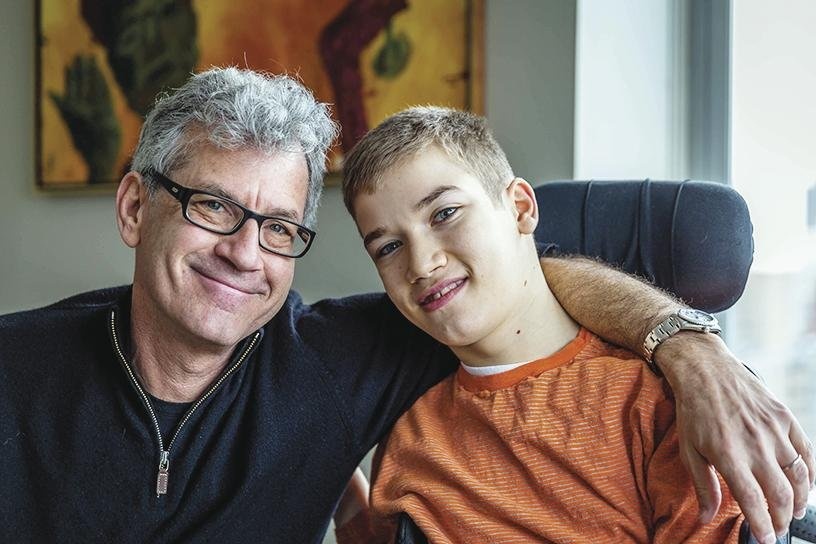
Richard Ellenson’s son, Thomas, was three months old when Mr. Ellenson and his wife first noticed their baby couldn’t sit up.
Several months later an MRI scan of Thomas’s brain revealed why: He had been born with cerebral palsy. Doctors said the boy would be confined to a wheelchair and unable to speak for the rest of his life.
The family coped as best they could. Eventually, his son’s condition prompted Mr. Ellenson to abandon a successful advertising career and invent a device that helped Thomas to communicate.
Mr. Ellenson went on to start two assistive-technology companies, and in January he became chief executive of the Cerebral Palsy International Research Foundation.
He says his path from worried parent to nonprofit advocate has been full of experiences that will shape his leadership of the research organization.
When Thomas was 4, Mr. Ellenson attended a conference in Pittsburgh about work options for people with cerebral palsy and other conditions so he could get an idea of what his son’s options might be later in life. He heard disabled adults describe their struggles to find a job and feel included.
He returned home to New York with a migraine that lasted three days.
“I said to my wife, ‘If my kid, at 20, is sitting in a hotel in Pittsburgh being miserable about not finding a job, I’m going to shoot myself,’” says Mr. Ellenson, 57, whose son is now 16. “It was painful to see all these smart, articulate, remarkable people who were not getting a chance to use their abilities.”
Growth in Mind
In his new position, Mr. Ellenson plans to help make life better for the more than 17 million people worldwide who have cerebral palsy. Those efforts will include improving public perceptions of people with the condition.
He seeks to raise both the foundation’s profile and its revenue, increasing the nonprofit’s resources from $2-million today to $50-million in the next five to seven years by attracting more donations from individuals, corporations, and foundations.
The money will support long-term medical research in areas such as early detection of cerebral palsy, as well as the development of new products and technologies to improve the quality of life of people who are affected.
Mr. Ellenson is a perfect fit for the job, says William Richards, a financier and the foundation’s chairman, because of his personal knowledge of cerebral palsy and his experience in the business world.
“He brings a new set of eyes to an old organization, and I think that’s a good thing,” says Mr. Richards. “He’s only been CEO for 60 days and he’s already given us some amazing new ideas.”
Mr. Ellenson is getting results as he uses his persuasive powers on behalf of the cause. This month, the group 100 Women in Hedge Funds named the foundation as the beneficiary of proceeds from all of its 2014 U.S. philanthropic activities. Mr. Richards says Mr. Ellenson won the commitment by spreading the word about the charity’s new Transforming Healthcare for Women with Disabilities program, a nationwide project to improve the ability of disabled women to get basic health care.
Mr. Ellenson brings to the job substantial experience in rebranding and in using technology to make disabled people’s lives easier.
While leading his own ad agency, he wrote the successful tagline “It’s not TV, it’s HBO.”
After attending the conference in Pittsburgh, he left advertising to work on the invention of Tango, a speech device that enables people who are mute to communicate.
He also founded two assistive-technology companies, Blink Twice and Panther Technology, which he later sold so he could focus on his son’s education. He ended up working with New York officials to make the city’s schools better able to help disabled students.
The experience led him to advocacy work. “But as an advertising guy, I realized the biggest problem people with cerebral palsy were having was they were not being perceived correctly,” he says.
For him, it boiled down to a branding issue: “We gotta change the brand, and one of the things I bring is the ability to articulate a vision and to make that compelling to others.”
He’s eager to tell the charity’s story, emphasizing a clear message: People with cerebral palsy are more than the sum of their physical limitations.
He says: “When you understand the person doesn’t have a headline over their head that says ‘life is tough,’ but one that says ‘my life is interesting,’ everything starts to change and the value of an individual increases.”
Richard Ellenson, chief executive officer, Cerebral Palsy International Research Foundation
Education: Bachelor’s degree, English literature, Cornell University; MBA, Wharton School, University of Pennsylvania
Career highlights: Founder, Ellenson Group, an advertising agency; founder, Blink Twice and Panther Technology, both assistive-technology companies
Salary: He declined to disclose it.
What he’s reading: Present Shock: When Everything Happens Now, by Douglas Rushkoff