September 6, 2007 | Read Time: 5 minutes
In the for-profit world, a promising young business usually has little trouble raising money
to help pay for growth. The company could sell shares to investors — perhaps through a public offering in the stock market — and use the proceeds to expand the business.
No similar structure exists in the nonprofit arena. But a division of the New York-based Nonprofit Finance Fund, which provides financial services and loans to nonprofit organizations, has devised a novel accounting process that gives donors to fast-growing charities an “equitylike” experience and may make it easier for nonprofit executives to obtain money for growth.
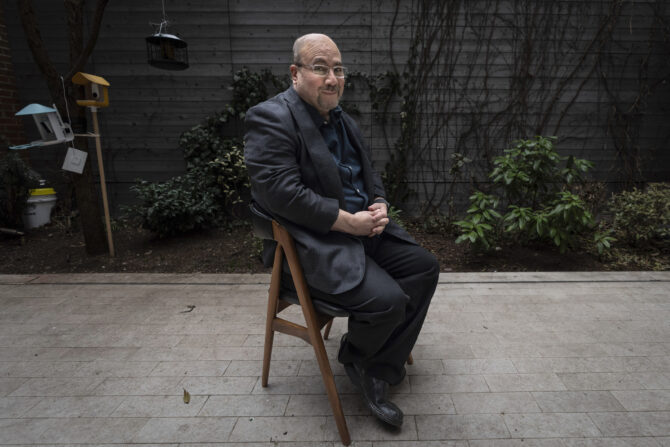
The concept was created by George Overholser, founder and managing director of NFF Capital Partners. Mr. Overholser, who was a founding executive at Capital One, a consumer-finance company, and later worked as a venture capitalist, believes that relatively few donors and foundations are willing to provide money for growth because it is difficult to track what their money accomplishes. In other words, these donors cannot calculate the social “return” they earn on their gift.
Mr. Overholser has come up with a new way to account for this growth money (which he calls “patient capital”) to demonstrate to donors that they can earn a high social return by covering operating losses for a charity while it is in expansion mode. If all goes according to plan, the charity at the end of three to five years of growth will have a sustainable source of revenue and will be operating at a much larger scale.
“The patient capital pays the bills en route to achieving the long-term business model,” Mr. Overholser says.
Business Approach
One of Mr. Overholser’s first clients (before he started NFF Capital Partners) was College Summit, a charity that helps students from low-income families navigate the college-application process. In just six months during 2005, College Summit raised a total of $15-million from 10 donors to help carry it through the end of its growth plan in 2009.
Charles T. Harris III, a former partner at Goldman Sachs and the chairman of College Summit’s board, credits Mr. Overholser for helping steer the charity toward raising the growth funds before embarking on the plan. All but two of the donors pledged $1-million or more. Mr. Harris himself has given a total of roughly $3-million to College Summit over several years.
“Philanthropists tend not to think about social entrepreneurs in the same way that they think about their business investments, but the dynamics of growing an operation are no different,” Mr. Harris says. “You can’t undertake the effort of building for scale if you’re not sure the money is going to be available.”
Mr. Harris and Bob Steel, also a former partner at Goldman Sachs and the current under secretary for domestic finance at the U.S. Department of the Treasury, have started their own nonprofit organization, SeaChange Capital Partners, with a mission to help youth groups raise growth funds. The nonprofit organization, which has received a $5-million founding grant from Goldman Sachs ($4-million of which is contingent upon the organization’s ability to raise additional money), expects to begin working with charities in 2008.
NFF Capital Partners charges its nonprofit clients as much as $200,000 for its product, which it calls Segue (Sustainable Enhancement Grant). NFF Capital Partners is in some ways acting as the investment banker for the charity — helping it to put its best foot forward in the prospectus for donors — and pricing depends in part on how well prepared the charity is to participate in the program. Charities that already have a strong argument for why they deserve philanthropic support, adequate accounting systems, and consensus on strategic direction would probably be charged less.
Part of the pitch to donors is that NFF Capital Partners will track the growth money separately, alert the initial donors if the charity is raising new money for growth from others, and provide regular updates about how the growth money is being used. By setting aside the growth funds and new donations in the accounting process, NFF Capital Partners provides information to the original growth donors that allows them to determine whether the charity is making progress at finding sustainable sources of revenue.
One official at a foundation, who asked that her name not be used, said the idea of accounting separately for growth funds at charities was helpful. But she questioned whether the full slate of services from NFF Capital Partners, including the monitoring of funds, was worth the price. “It’s just an unproven concept right now,” she said.
Mr. Overholser says NFF Capital Partners provides a wider array of services and charges far less, on a percentage of money raised, than for-profit fund-raising consultants.
An Unusual IPO
NFF Capital Partners has worked with 11 charities, including Year Up, which helps young adults gain professional skills and entry-level employment. Mr. Overholser helped Year Up develop a prospectus for an “initial partnership offering.”
The charity is trying to raise $18-million to cover operating deficits as it doubles its number of sites, to eight, by 2011. The 54-page prospectus has a similar look to those circulated by for-profit businesses prior to a public offering in the stock market.
The charity’s long-term plan is for the eight sites to each generate an annual surplus of $350,000, through fees charged to corporate partners and government and private support. The surplus would cover the expenses of the national office.
The charity began working with NFF Capital Partners in November and has already received pledges for more than $15-million. By raising the money upfront, says Gerald Chertavian, Year Up’s founder and chief executive, “we’re just adopting the principles that for-profit companies use day-to-day on a very effective basis.”
Mr. Overholser points out that if the $18-million were used only to cover program costs for one year, it would help an additional 818 young adults receive training. But if the money is used instead to cover losses until Year Up becomes sustainable, the donation may eventually enable the charity to assist an additional 1,100 young adults every year.
“It’s almost like a naming opportunity in a capital campaign,” Mr. Overholser says. “You’ll be the funder that gave rise to a new household name called Year Up.”