After 16 Years in Prison, a Massachusetts Man Helps Others Rebuild

By NICOLE WALLACE
Features Editor
December 5, 2017 | Read Time: 3 minutes
About a third of the young adults who enter YouthBuild have a criminal record, which means they share something in common with the venerable organization’s CEO, John Valverde. When he was 20, Mr. Valverde killed the man accused of raping his girlfriend and served 16 years in prison.

“I’ve overcome a lot in my life. I’ve lived with regret and remorse and a sense of responsibility and guilt and shame and all of those things that come with committing a crime and really appreciating the harm that you’ve done,” he says. “Out of that I’ve really learned that it’s possible to stand alone as a leader and that it takes courage, but that it’s often necessary.”
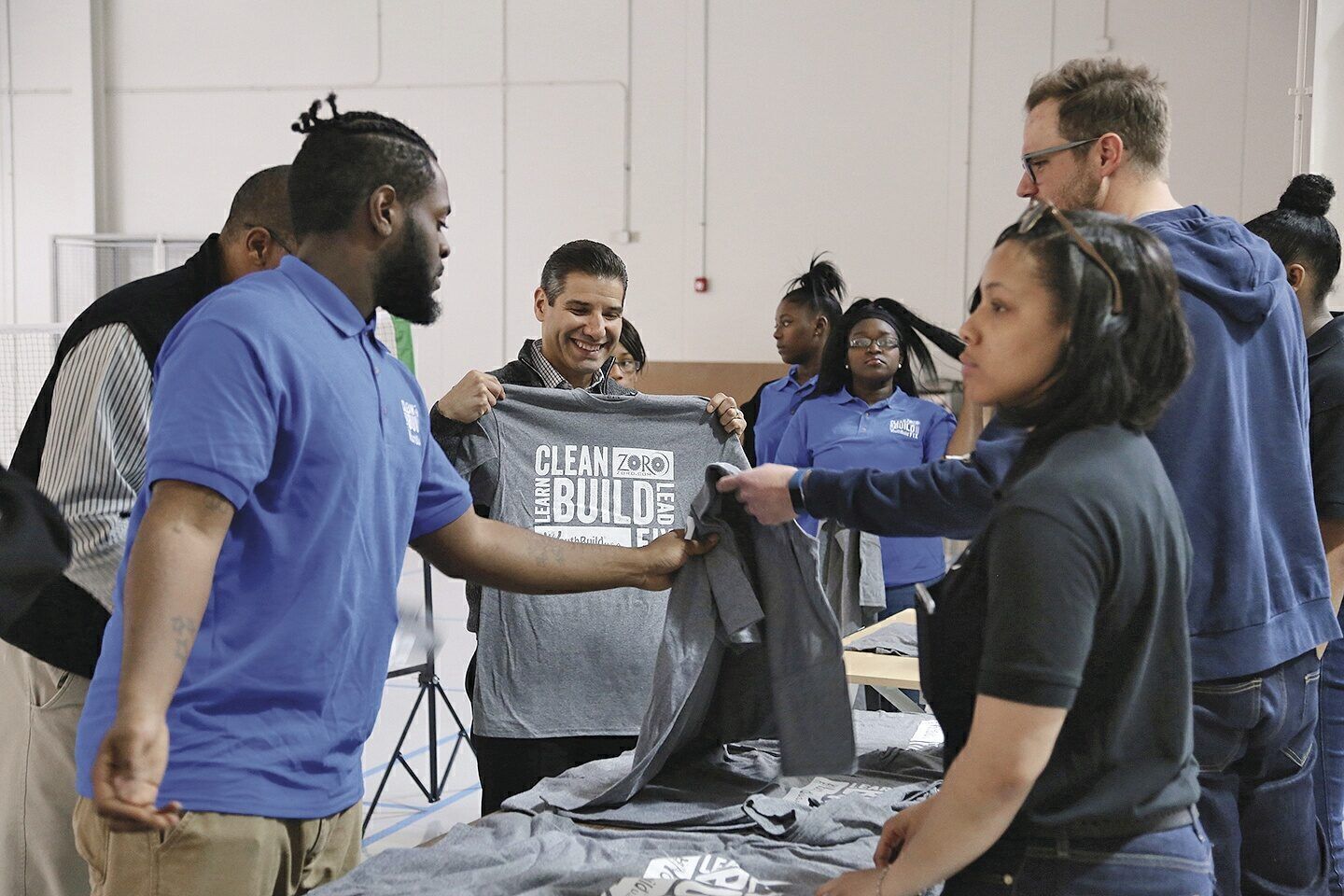
While incarcerated, Mr. Valverde (pictured, third from left) finished his education, including a master’s degree in urban ministry. He also started his career as a nonprofit leader, co-founding Hudson Link for Higher Education in Prison, the first privately funded accredited college program in New York State’s prison system.
After his release, Mr. Valverde worked at a law firm, living relatively anonymously and talking little about his past. “I tried that for a year and felt that I was not living authentically and not living with integrity,” he says. So he got a position with the Osborne Association, a New York nonprofit that provides assistance to people in the criminal-justice system and their families, and he rose to executive vice president.
Mr. Valverde this year became the second chief executive officer of YouthBuild USA. He follows founder Dorothy Stoneman, who over a 38-year career expanded the charity, which teaches construction skills to young people working on their GED’s. The charity grew from a single site in East Harlem to programs in more than 20 countries.
Mr. Valverde wants to do more than tweak existing projects around the edges. His most radical idea: to expand training into other areas, like information technology and health care, particularly in regions with little construction work. “None of us who do this work want to train young people for jobs that don’t exist,” he says.
Mr. Valverde is open about his past when he talks to YouthBuild participants. He used to worry that his life story might send the message that a prison record is easily overcome. Instead, he believes his experience is inspiring young adults. He recalls a young man who approached him after a speech.
“He’s blown away, and he says, ‘Mr. John, you messed me up. Now I have no excuses any more. I can be somebody. I want to be a CEO one day, but Mr. John, I don’t want to go to prison to get there,’ ” Mr. Valverde laughs recalling the conversation. “And I said, ‘You got it.’ ”