
All Staff Members, Including the Janitor, Should Help With Fundraising, Says Expert

By Caroline Bermudez
Contributor
November 3, 2013 | Read Time: 4 minutes
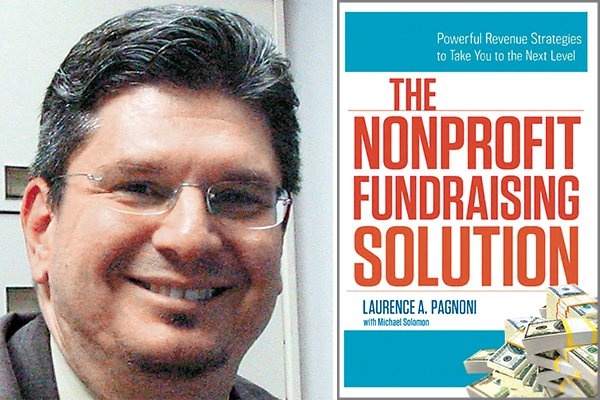
Every staff member needs to be involved in raising money, says Laurence Pagnoni, a consultant to nonprofits whose experience includes working as chief executive of Harlem United, a New York social-services charity that helps people with AIDS, and of Freedom House, a group in Richmond, Va., that serves homeless people.
He explains how to improve donations in his new book, The Nonprofit Fundraising Solution, which he discussed with The Chronicle:
You say the Catholic Church is the greatest fundraising organization ever. Why?
They bring up and talk about their need. The more effective parishes talk about the specifics of their goals and they have the fundamental energy in place, of enthusiasm for their cause, and passion that it can be done against all odds. That sense of urgency has often carried the Catholic Church towards great endowments from its faithful congregations. On a tactical level, they bring up funding needs every week with an audience in front of them. The more often you’re able to share the details with donors, the better it is.
A small nonprofit without a waiting audience to listen to it has to go out of its way to try to create that, which is cumbersome and costly, whereas the Catholic Church has parishes all over.
Whose fundraising do you admire?
Partners in Health is a model in terms of Paul Farmer’s ability to innovate on the program side and allow talented people to come into the organization to build up its advertising and marketing capacity. I myself am a donor. I’m in awe of how articulate they are about their needs and the funding required to do that.
They exist in a field of so many international agencies that just move from project grant to project grant but they’ve often lost sight of impact and poverty reduction. There was something like 14,000 nongovernmental organizations in Haiti [after the earthquake] and so few of them worked with the government in such a small country. There’s something the sector has to ask itself about impact—ultimately, that’s what we’re raising money for.
Why do you think leadership is overrated in fundraising?
Following is an art. The questioning characteristic of a follower is essential.
Donors practice the art of following—they’re following the leadership of the organization they give to, they’re following the mandates that the boards or executives set. No matter how much their gift is a “leadership gift,” it’s still following.
Everybody follows somebody.
What often happens is that the leadership of an organization gets assigned the fundraising function, but the others in the organization are not so engaged.
I’ve had experiences as a nonprofit CEO where the case worker brought a lead for a donor who became one of the most significant donors to the organization [or] the receptionist convinced a foundation officer before they even got to meet the CEO that people were impassioned about the organization.
Too often, fundraising is stuck with the development director or the vice president of institutional advancement. The thoughtful fundraisers do turn to the staff and explain the numbers.
There’s no reason that a janitor at the YMCA can’t say, “We have a $4-million annual budget and right now we have a capital campaign that is only 40-percent complete.” Oftentimes that’s overlooked.
How can nonprofits use LinkedIn to raise money?
Board members build up impressive networks on LinkedIn that they can turn to.
For example, an organization with a budget of $250,000 that I met with a couple of weeks ago was struggling with not having a natural donor constituency. When I looked at LinkedIn for all their board members, there was a total of about 7,200 contacts amongst their 15-person board.
Why do charities have trouble raising money?
The first thing that’s going on is probably unconscious. Talking about money, dealing with money, is one of the fundamental taboos of life. It’s impolite to talk about money.
You have to partner with somebody who’s comfortable and go to pitch meetings and listen to how your colleague does it. You have to get in touch with the nobility of fundraising and the power that it allows the organization to achieve its mission.
Fundraising is a practitioner’s art; you can’t just read about it.




