AmeriCares Leader Expanded Health Care to the Uninsured at Home and Overseas

By NICOLE WALLACE
Features Editor
May 5, 2013 | Read Time: 3 minutes
After a 25-year career in investment banking and financial services, Curt Welling knew he wanted to make a switch to the nonprofit world, but he wasn’t set on a particular cause. So in the months after the September 11 attacks, he looked at opportunities at a wide variety of charities, including child-welfare, environmental, and health groups.
“I was really looking for one where I could get enthusiastic and excited about the mission and felt that I could contribute to the evolution of the organization,” he says.
Mr. Welling found the challenge he was looking for at AmeriCares, a charity in Stamford, Conn., that was making the transition from Bob Macauley, who had started the organization 20 years earlier, to new leadership.
The energy of passionate founders allows new organizations to take root but can also make it difficult to develop leadership throughout the organization, says Mr. Welling.
“Charismatic founders often want to hold all of the reins to all of the horses all of the time,” he says.
Now AmeriCares, which distributes donated drugs and medical supplies around the world, will need to find someone to take Mr. Welling’s place. After more than 10 years as chief executive, Mr. Welling, 63, last month announced his decision to step down after his successor is named.
“Under Curt’s leadership, AmeriCares has grown into a highly professional organization and seen its donor base increase significantly,” Dean Maglaris, chairman of the board of AmeriCares and chief executive of Cytogel Pharma, said in a written statement. “Curt has big shoes for us to fill.”
Opened Local Offices
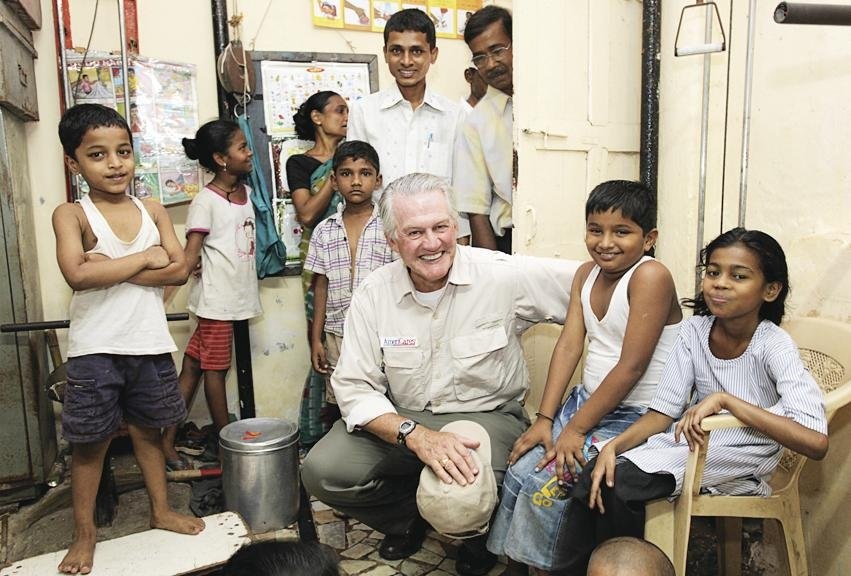
AmeriCares expanded significantly during Mr. Welling’s tenure. The group, which in 2012 reported total revenue of $531-million, including $502-million in donated goods, opened offices in Haiti, India, Japan, and Sri Lanka and grew from 35 employees to 250 worldwide.
The new offices help the nonprofit work with small, grass-roots groups that are closer to the people AmeriCares is trying to serve, says Mr. Welling.
“Most of the organizations that we work with, particularly in a post-emergency setting, are local organizations that have no international footprint,” he says. “It would be almost impossible to identify and work with them if you didn’t have a local presence.”
Donated Medicines
Mr. Welling is also proud of the growth in the organization’s domestic programs. He says the desire to do more at home grew out of what charity officials saw at the free clinics AmeriCares has run in Connecticut for almost two decades. The charity now distributes donated medicines and supplies to more than 400 U.S. health clinics that serve uninsured patients.
But to do that required a big change in policy by the pharmaceutical companies that donate the drugs.
“Twelve years ago, they wouldn’t let us distribute medicine in the United States under any circumstances,” says Mr. Welling.
Over time, he says, companies’ awareness about the challenges uninsured patients face has grown, as has the pressure for the companies to respond to the problem: “We have evolved now to where some of our most committed partnerships are people who are pushing us to be more involved in the United States.”
Just as the economy plays an important role in health-care access here in the United States, there’s a growing consensus among global public-health experts on the link between poverty and health care, says Mr. Welling.
“You’re not going to be able to fix the health systems of the world without creating economies that are vibrant,” he says. “And you’re not going to be able to create economies that are vibrant without making progress on health outcomes for mothers, for children, for breadwinners, and for communities.”
Curt Welling, chief executive, AmeriCares
Education: Bachelor’s and master of business administration degrees, Dartmouth College; J.D., Vanderbilt University
Career highlights: Chief executive, SG Cowen Securities Corporation; senior managing director of global equity capital markets, Bear Stearns
Salary: $275,000, the same amount as when he started in 2002
Plans: To write and speak about the intersection of business and social good, serve on nonprofit and for-profit boards, travel, and exercise more