
May 5, 2013 | Read Time: 2 minutes
As cultural institutions across the country struggle to attract young visitors, the Cleveland Museum of Art is embracing cutting-edge technology to try to lure new audiences to its collection of masterworks.
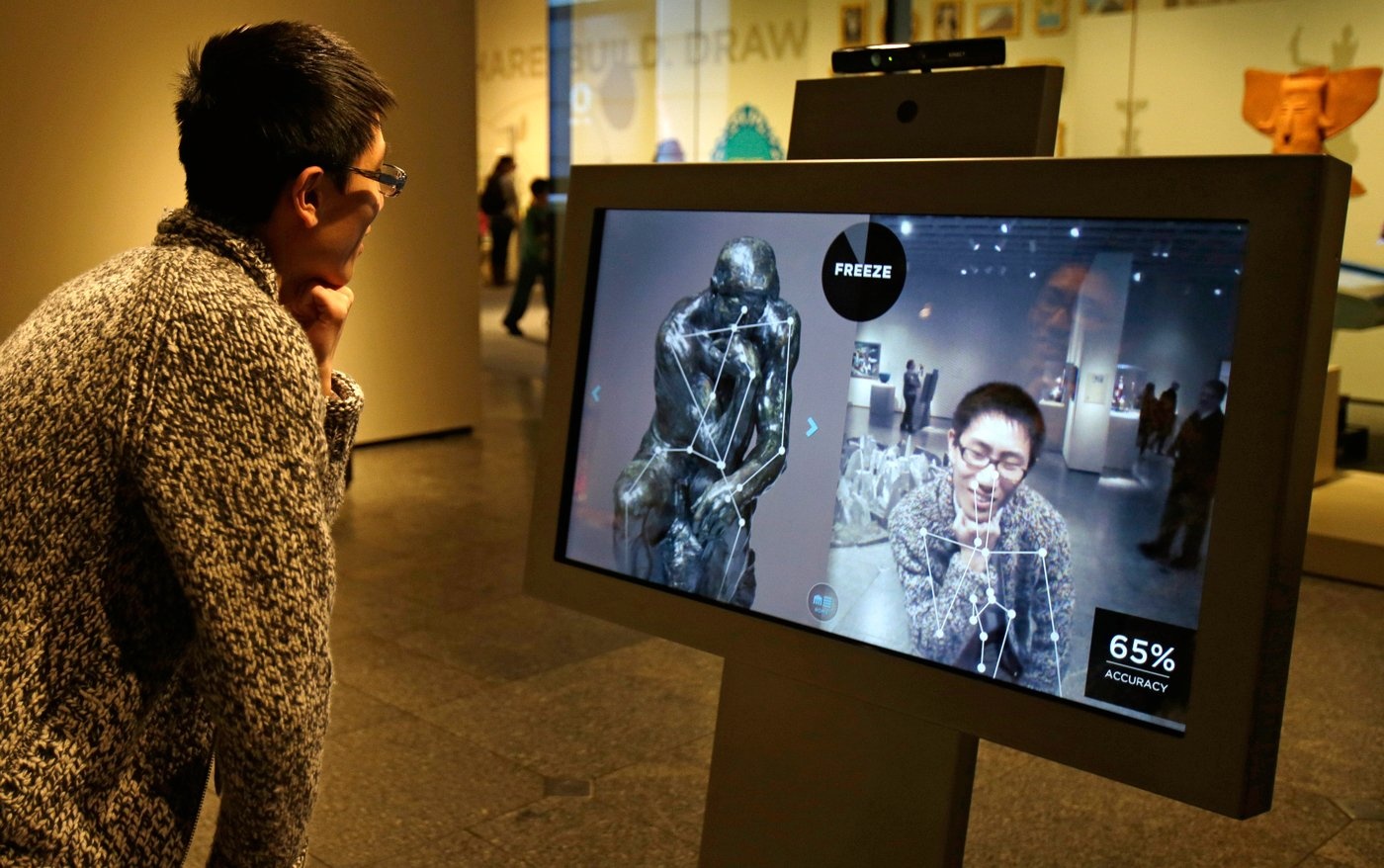
In the museum’s new Gallery One, visitors can try to match the expressions of faces in a painting or strike the pose of a sculpture in the collection and then share photographs of the results via social media. Display screens paired with original works of art show people how the pieces were made and where they come from.
The goal is to make the museum more welcoming, especially to young people who “mediate the world through the screen,” says David Franklin, director of the museum.
“The outcome is intergenerational,” he says. “But one of the inspirations was certainly trying to attract a younger demographic to the art museum, a demographic that might see the museum as off-putting or forbidding.”
The Collection Wall, a 40-foot touchscreen, features images of artworks grouped by theme, time period, and materials used, acting as a bridge between the interactive gallery and the rest of the museum. Visitors can create their own tours by saving their favorite pieces from the wall to an iPad, either their own or one borrowed from the museum.
The new space culminates with a gallery devoted to small exhibits. The first artwork exhibited was La Vie, a painting from Pablo Picasso’s Blue Period. The layout encourages visitors to take what they’ve learned from the interactive experiences to engage deeply with the artwork, says Mr. Franklin.
“There might be a temptation to put storage pictures there, works that wouldn’t necessarily belong in the main galleries,” he says. “But we’ve put works there of the highest order and therefore you’re interacting with the best of the best.”
The museum declined to reveal the total cost of the new gallery, saying only that it exceeded the $10-million grant the museum received from the Milton and Tamar Maltz Family Foundation for the project.
As the museum world debates the best ways to incorporate technology, leaders of cultural institutions are watching the experiment at the Cleveland Museum of Art carefully, says Joshua Jeffery, manager of digital engagement at the Andy Warhol Museum, in Pittsburgh.
“A lot of people were excited; a lot of people were really turned off,” he says. “But everyone was like, ‘We can’t wait to see what’s going to happen.’”