

February 24, 2013 | Read Time: 2 minutes
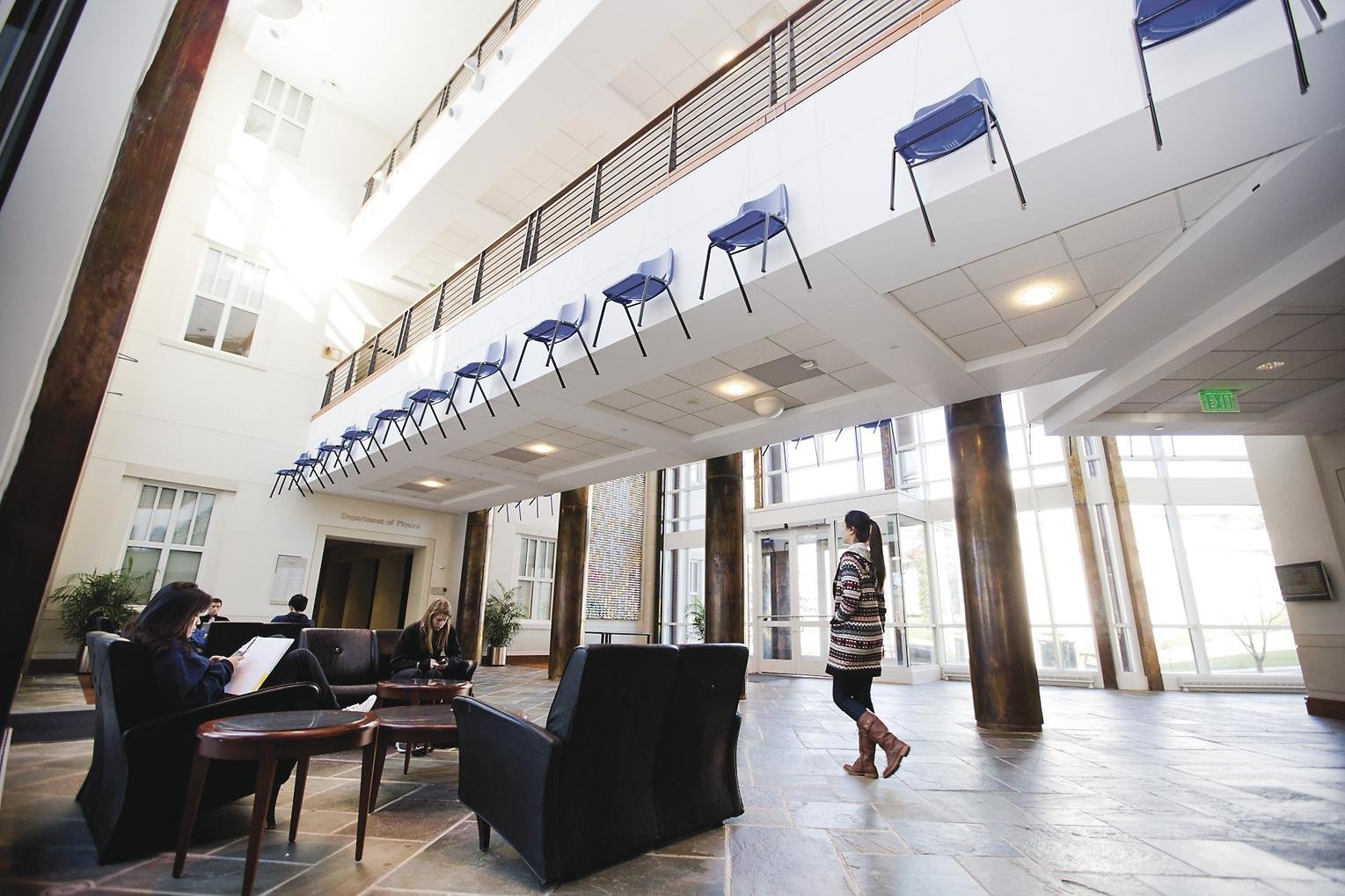
Playful signs of a successful $1.7-billion campaign are everywhere on the Emory University campus: Twenty-nine chairs are suspended in midair in the university’s student center, representing the endowed professorships that donors have supported.
At the center of the business school’s main spiral staircase stands a tower of 100 graduation caps, signifying the $225-million raised for scholarships.
Arranged on a table in the lobby of the library are 24 books with their pages folded to spell out a quote by Albert Einstein, “Information is not knowledge,” a nod to the $469-million raised for research.
And two 10-foot-tall wooden facades, painted to imitate the red roof tiles and pink-and-gray marble of many of Emory’s buildings, stand in the foyers of two classroom buildings, representing the money raised for new buildings and improvements to facilities.
The provocative displays, which are displayed at Emory’s suburban campus in Atlanta this month, were designed to both celebrate and illustrate the university’s seven-year fundraising effort that ended in December.
Emory officials responsible for the art works say they wanted to recognize donors who helped meet — then surpass — the drive’s $1.6-billion goal and to physically demonstrate the impact of such grand philanthropy.
“Nobody would walk around campus and think, I wonder what the impact of the campaign was,” says Michael Kloss, executive director of university events, who oversaw the creation of the installations. “But they will say, Why are there 29 blue chairs hanging from the ceiling?”
Angelica Calderon, a junior from Lawrenceville, Ga., calls the exhibits “eye-catching” and an important reminder about how much “the experience at school is based on the huge amount of money that is donated.”
Philanthropy Made Visible
That’s exactly the reaction the university sought from the exhibits.
“We wanted people on campus to recognize and be sensitized to the fact that their education is made possible in large part because of these efforts,” says Susan Cruse, Emory’s vice president for development and alumni relations. “We wanted them to actually see what philanthropy is and what it can do.”
Ms. Cruse says that Emory considered staging a traditional end-of-campaign gala affair, but decided instead to hold a number of smaller celebrations around the country and to put the focus locally on conveying the campaign’s impact.
Going that route “was more reflective of Emory University’s ethos,” she explained in an e-mail message to The Chronicle. “It’s inclusive, understated, meaningful to our community, and fun.”




