March 10, 2013 | Read Time: 2 minutes
When officials at the American Red Cross look at smartphones, they see a powerful survival tool for anyone faced with a natural disaster.
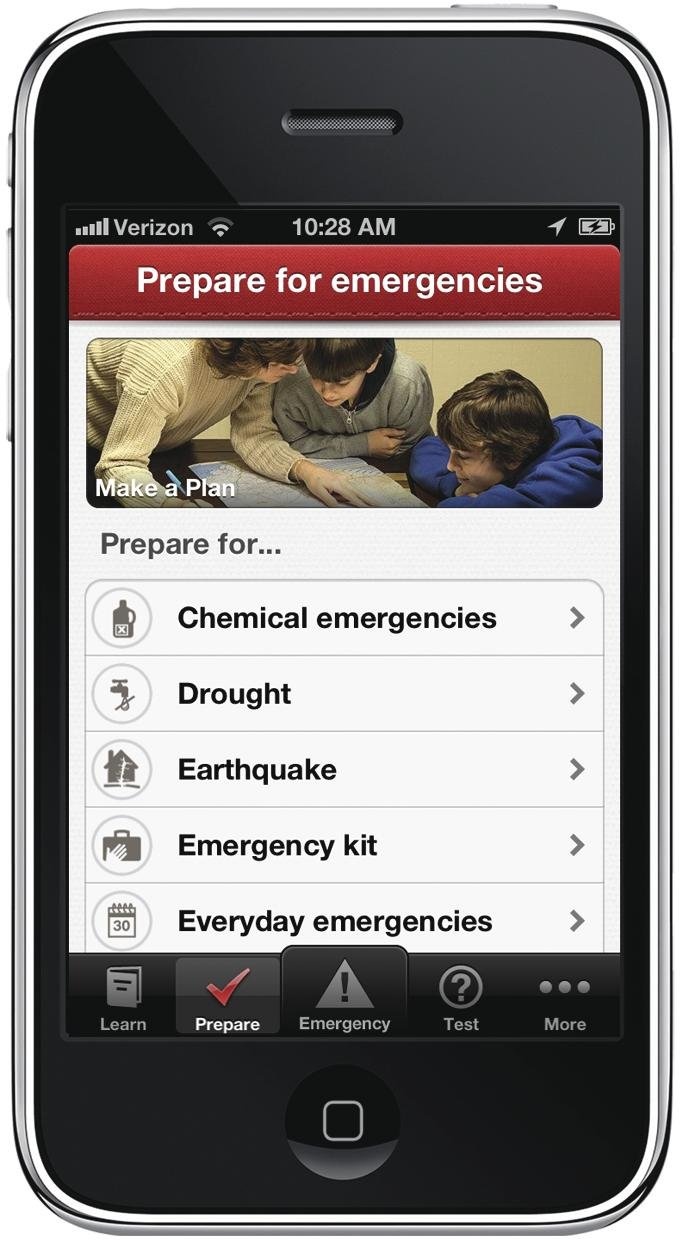
In June, the organization started to unveil a series of apps to help people get ready for earthquakes, hurricanes, wildfires, and now tornadoes. It has also released a first-aid application. Together the apps have been downloaded more than 2 million times, with more than 65 million page views and more than 10 million weather alerts issued.
“The overarching goal is to save a person’s life or a family’s life,” says Dom Tolli, a vice president in the organization’s preparedness, health, and safety-services department.
Making Clear What Matters Most
The disaster apps are designed to provide clear information about the most important steps to take to prepare for an emergency as well as other things users can do if they have time. “What we used to do at the Red Cross is give people a lot of information, not prioritize it, and they had to fish through it,” says Mr. Tolli.
People can test themselves on the material to earn badges in areas such as bleeding or hurricane preparedness and then share their achievement on Facebook or Twitter.
“It surprised us how many people were testing themselves and sending those badges out,” says Mr. Tolli, who notes that users’ social-media posts help promote the apps to people who may not have been aware of them.
The Red Cross relied on its local chapters for valuable advice. Because tornadoes often accompany hurricanes, for example, chapters in the Southeast suggested including information on both in the hurricane app.
The apps also allow users to create disaster plans that reside on mobile devices so users can access them even if they don’t have cell service.
Says Mr. Tolli: “That’s 2 million relationships we have now where people carry the Red Cross in their pocket.”