
Art on Borrowed Time
To help local artists feel the gains of the area’s booming economy, Denver’s Museum of Contemporary Art allows residents to take home original works of art for free for 10 months.

By Ariella Phillips
Contributor
October 2, 2018 | Read Time: 2 minutes
Denver has experienced a boom recently — the population grew by 100,000 people in just seven years. But the folks at the city’s Museum of Contemporary Art felt that artists weren’t experiencing the same growth as other business owners.
To help local artists, the museum created the Octopus Initiative, a program that allows residents to borrow a work of art from a Denver-based artist for 10 months free of charge. “Octopus” is meant to symbolize many hands reaching out to help one community.
“We feel that our role as the contemporary-art museum is, in a sense, custodians of Denver’s creative life,” says Nora Abrams, a curator there.
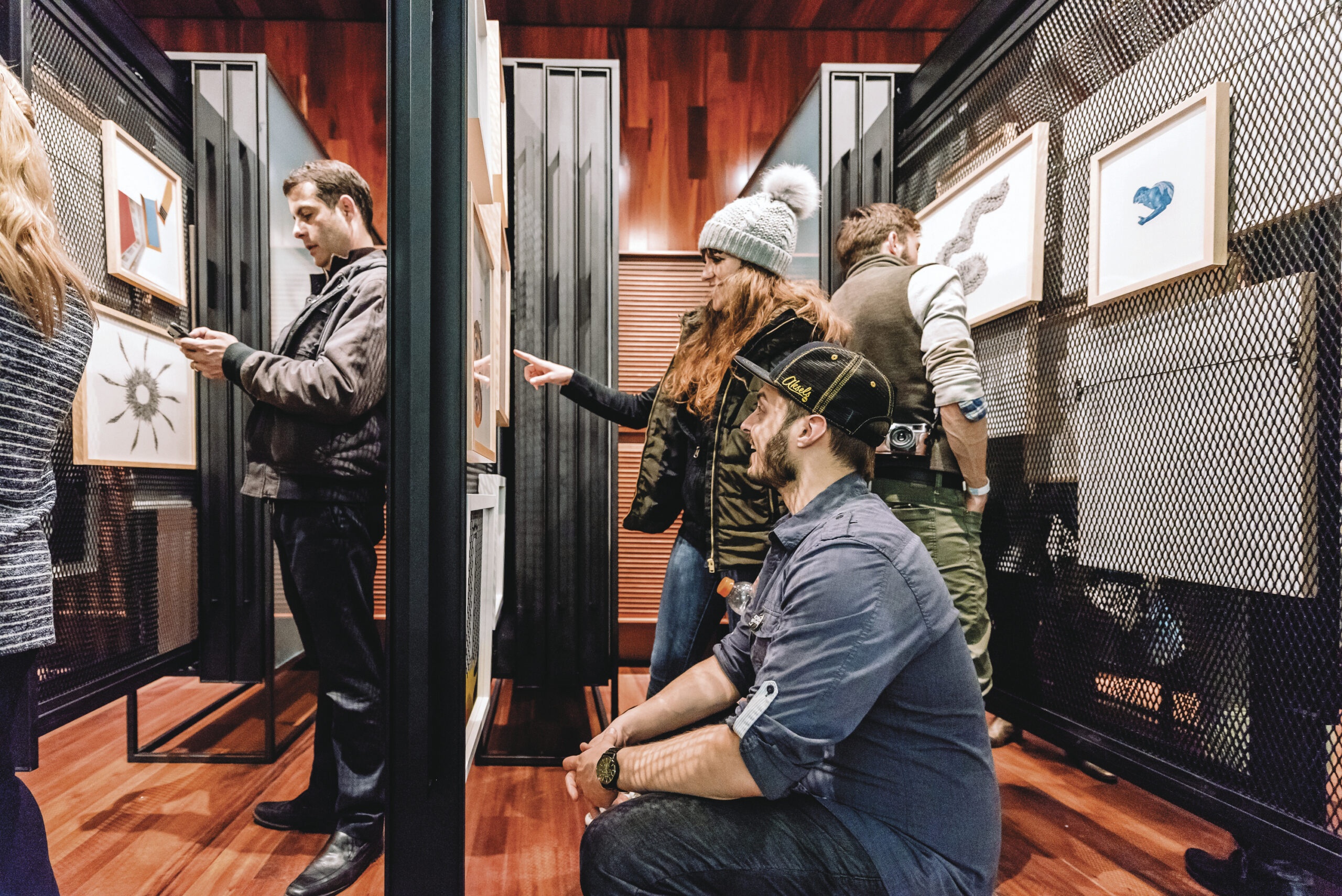
The museum commissions pieces directly from artists for the program. To receive a piece of art, residents enter a monthly lottery online. Winners come to the museum to pick up their artworks. For some, it’s their first time in the museum.
“It feels like we are reaching more people outside of our known audience,” Abrams says.
There’s no rent-to-own program, but residents can get in touch with the artist to have another painting made.
Some universities also have borrowing programs, Abrams says. But what makes the Octopus Initiative different is that the works are commissioned specifically for the program. Artists are also provided a stipend for studio space.
Raising the initial funds for the project was the biggest hurdle, Abrams says. In addition to providing money for the artists, the museum converted an on-site library to a gallery so residents could pick out paintings in person as well as online.
Since the program launched in March, more than 6,000 people have registered to borrow 85 works by nine artists. By next summer, the museum plans to have 16 artists commissioned for the program, Abrams says.
“I think it is one of the most well-received programs we’ve ever done in the history of the museum,” she says. “In terms of audience, in terms of community building, it has been tremendously successful.”







