March 9, 2006 | Read Time: 2 minutes
THE FACE OF PHILANTHROPY

Photograph by Barry Oreck
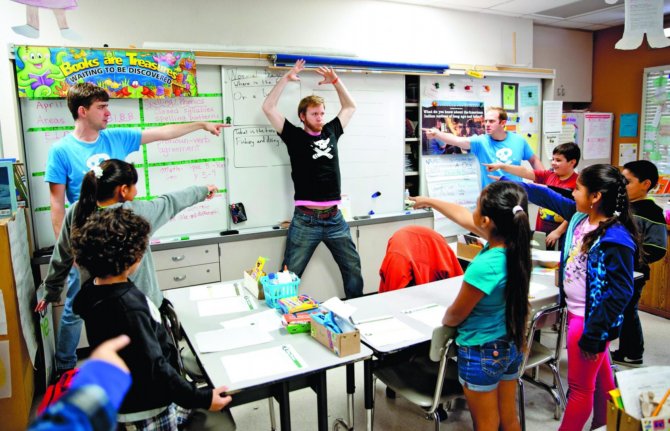
Often students who don’t speak English as a first language keep quiet in class, reluctant or unable to participate in the daily lessons. But when puppet-making or dancing comes on the schedule, words and smiles erupt on those students’ faces, prompting them to join their peers in learning and laughter.
Such experiences are a driving force behind ArtsConnection, a New York charity. Founded in 1979 after a fiscal crisis led city officials to dismiss many arts teachers, ArtsConnection’s flagship program brings theater, dance, music, visual, and literary artists into elementary and secondary classrooms for regular visits. The nonprofit group now reaches 30,000 students annually and has 150 artists on its roster.
Bringing art into the classroom gives all children “a reason to communicate,” says Steven Tennen, ArtsConnection’s executive director. In addition to providing fun activities, the arts help students learn to communicate better, develop the ability to start and finish a task, and work cooperatively with others — skills that lead to success as a student and an adult, he says.
Weeks of planning go into the artists’ visits, which are tailored to meet the needs of each school and include advice for teachers on how to keep up efforts to incorporate the arts into the academic curriculum. Any city public school can apply to work with ArtsConnection, but the group tries to focus on schools that serve mostly poor children whose exposure to the arts might otherwise be limited.
A third of the group’s $3.6-million budget comes from government grants, 40 percent from donations, and the remainder from fees from participating schools.
ArtsConnection has worked with several schools for more than 20 years, including P.S. 282, in Brooklyn, where the charity operates one of its four Young Talent Programs. Sixty students in the third, fourth, and fifth grades who show a desire — more than a talent — to dance are handpicked to continue weekly improvisational dance classes after the artist’s residency ends.
“There are kids who get left behind who have a whole lot of skills,” says Mr. Tennen. “This is an opportunity for kids to do something they enjoy and be recognized for that.”
Here, students from P.S. 282 perform at the charity’s annual spring gala.