
As Deficit Hawks Circle, Charities Brace for Capitol Hill Battles

By SUZANNE PERRY
Contributor
April 14, 2011 | Read Time: 7 minutes
Washington
As lawmakers and President Obama intensify their efforts to close the federal deficit, nearly every kind of nonprofit program financed by the government will have to fight to keep the budget scalpel at bay.
This month’s battle over how much the government will spend in the 2011 fiscal year, which is more than half over, and a plan for the 2012 budget released by House Republicans both sent the message that programs to help low-income people, promote the arts, alleviate poverty overseas, and provide a range of other services will face a tough time preserving current levels of spending.
In a compromise over the 2011 budget, Congressional leaders and the White House agreed to cut almost $40-billion from 2010 spending, leaving few non-defense programs untouched.
In addition to an across-the-board cut of 0.2 percent, the plan–approved by both the House and Senate on Thursday–will trim money for the arts, community health centers, family planning, international aid programs, legal services for the poor, national service, and other areas that provide aid to nonprofits and the people they serve.
The cuts were not as deep as the Republicans who control the House had sought, but many lawmakers have made it clear that their battle to cut the size of the federal government has only begun.
$6.2-Trillion in Cuts
Many of their specific ideas became clear with the release of the Republican budget plan drafted by Rep. Paul Ryan, of Wisconsin.
Mr. Ryan’s plan has an ambitious goal: It seeks to eliminate $6.2-trillion from the budget that President Obama outlined for the next 10 years.
In doing so, it would fundamentally change the way the country provides aid to people in need.
The plan would cut spending on the Medicaid health program and require people who get food stamps, rental assistance, and other help to get jobs or job training.
The costs of such programs are growing “at an unsustainable rate,” it says, adding: “Many of these programs do not provide beneficiaries with the tools they need to bounce back into self-sufficient working lives as quickly as possible.”
‘The Worst of Times’
To some nonprofit leaders, such talk harkens back to the 1980s, when President Ronald Reagan talked about “welfare queens” and chipped away at government spending on social programs. But they worry that the modern version comes at a time when the economy is much worse, driving the needs for social programs up.
“It’s sort of the worst of times and the worst of times,” says Irv Katz, president of the National Human Services Assembly, a coalition of nonprofits.
But Republicans say the government needs to ensure that future generations do not inherit a fiscal mess and that austerity is the only way to cut the deficit.
Some experts say the crisis atmosphere could give nonprofits a chance to rethink the way they relate to the government.
Howard Husock, a vice president at the Manhattan Institute for Policy Research, a conservative think tank, says in the past 50 years nonprofits have come to depend too much on government money, displacing private donors who can influence others in their communities.
“Now that we’re facing this fiscal stress, it’s a good time to take stock of where that has led us,” he says.
“The best outcome one could look for here is that the message goes out to donors that, No, the government can’t substitute for you in the long term.”
But Tom Sheridan, a veteran lobbyist for nonprofit groups, says he hopes the budget battles will act as a sort of clarion call, prompting nonprofits to fight more aggressively against plans that disproportionately burden vulnerable people.
He is urging nonprofit leaders to propose their own agenda for revamping government programs, one that attempts to cut costs by reducing red tape, and to insist that tax increases become part of the equation for closing the budget deficit.
“If we don’t have the guts and backbone to start that conversation, we will live with the consequence of not doing it,” he says.
President Obama pledged in a speech on Wednesday to ensure that tax increases for the wealthy are part of future deficit-cutting plans.
Arts and National Service
While people like Mr. Sheridan plot strategy, others are assessing exactly how they will fare in the short run.
Because the deal negotiated this month is less draconian than one adopted in February by the Republican-led House, some nonprofit leaders were happy simply to learn that spending reductions weren’t as bad as they might have been.
“Though I feel cuts are never a good idea, in this climate I’ll take it,” says Robert L. Lynch, president of Americans for the Arts, an advocacy group.
The National Endowment for the Arts would get $155-million in 2011—down from $167.5-million in 2010. But that is an improvement over the House Republican effort to carve $43-million from its budget.
Save Service in America, a group that mobilized thousands of people to contact lawmakers in an effort to fend off deep cuts to national-service programs, looked for the silver lining in a plan to cut $74.6-million from the Corporation for National and Community Service budget.
The agency, which operates programs including AmeriCorps and Senior Corps, had been gearing up for a big expansion as called for by the 2009 Edward M. Kennedy Serve America Act—but that is now ancient history.
“The good news is that thanks to your leadership and mobilization, the [national-service agency] was funded at 94 percent of FY 2010 levels,” the Save Service campaign director, AnnMaura Connolly, said in an e-mail message to supporters.
It’s easy to see why she considers that somewhat of a victory: The House had voted to eliminate the agency entirely.
The House also lost its bid to eliminate spending on the Corporation for Public Broadcasting, despite outrage by some Republicans over the release of an undercover video that showed a fund raiser for NPR, a recipient of money from that agency, making disparaging comments about Republican and the Tea Party.
Basic spending on the agency would remain unchanged—$445-million for the 2013 fiscal year, the same as for 2012 (public broadcasting gets money two years in advance).
But Tim Isgitt, the Corporation for Public Broadcasting’s senior vice president for communications and government affairs, said he’s not ready to relax.
“I know that the budget battles and deficit-reduction battles will continue, and we need to continue to make the case for federal funding.”
Battle Over Medicaid
Looking forward, the Republicans’ 2012 blueprint would change the way that the federal government pays for Medicaid and food stamps by offering block grants to states according to a formula based on population and other factors instead of paying a fixed percentage of the state’s costs.
The new approach would save the government $750-billion in Medicaid costs over 10 years, according to the plan, with additional savings from a proposal to kill last year’s health-care law, which expands Medicaid coverage.
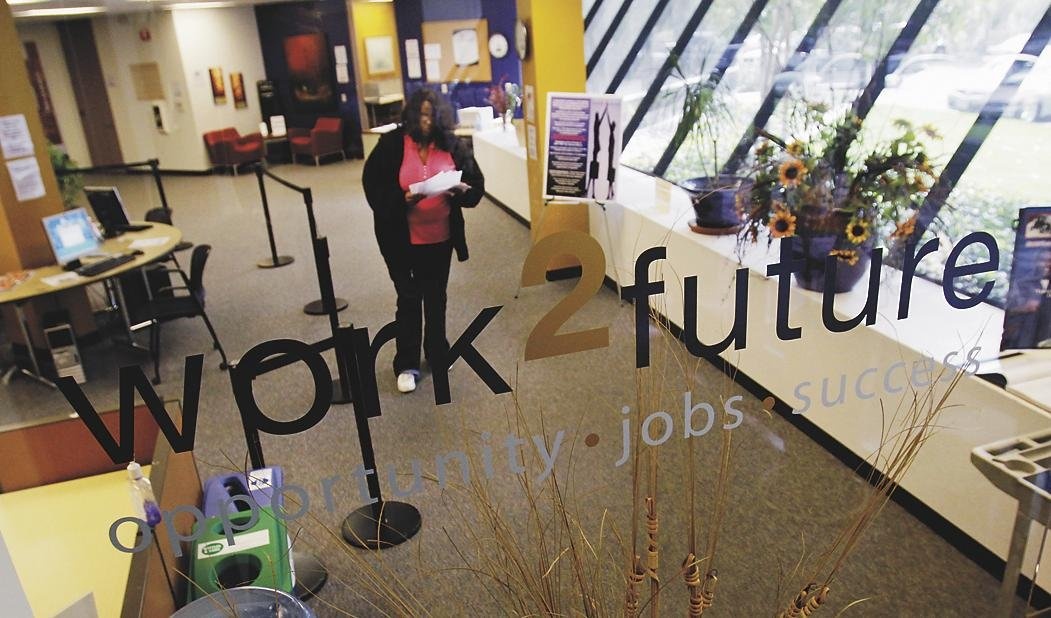
The plan would also consolidate dozens of federal job-training programs, many of which are operated by nonprofit groups, and make them more accountable.
The government would track the type of training provided, the cost per student, employment after training, and whether people are working in the field for which they were trained.
The Medicaid proposal would mean “draconian” cuts in the number of people served and the rates that are paid to nonprofits and other health providers, says Edwin Park, vice president for health policy at the Center on Budget and Policy Priorities, a liberal economic think tank in Washington, adding that states could not compensate for the loss of federal money.
But Michael Tanner, a senior fellow at the Cato Institute, a free-market think tank, says the Republican proposal would give states more flexibility to devise the kind of program that work best for them, without the strings that are now attached to federal aid.
“We can’t pay for everything,” he adds.
Maria Di Mento contributed to this article.




