As FEMA Falters, Philanthropy Is Forced to Step Up
Shrinking federal disaster support is prompting philanthropies to recalibrate how they plan and fund local relief, recovery, and resilience efforts.

By Eden Stiffman
Senior Editor
December 4, 2025 | Read Time: 5 minutes
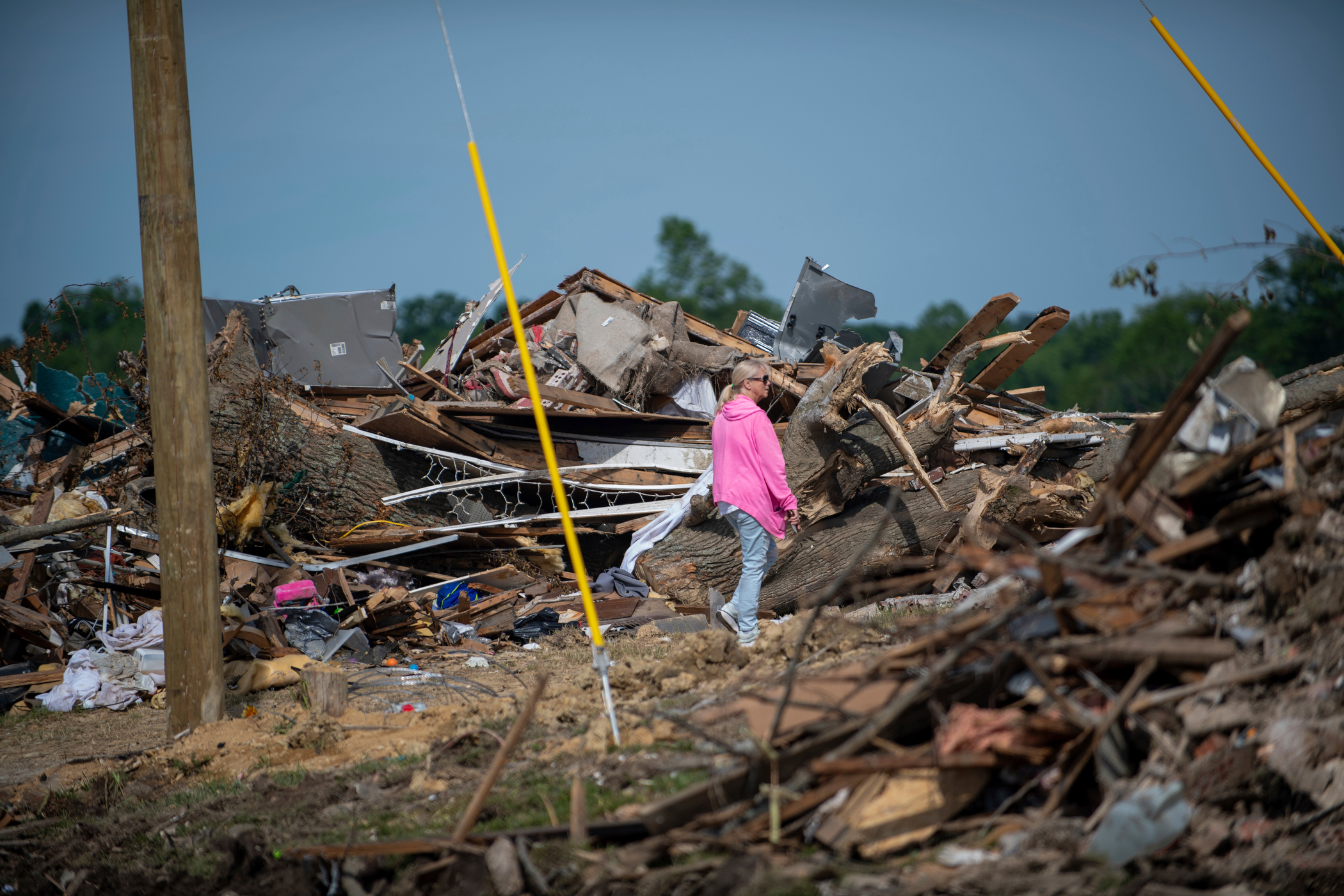
This July, devastating floods killed at least 135 people and destroyed homes and businesses in the Texas Hill Country. FEMA was slow to clarify what recovery efforts federal aid would pay for. The local community foundation knew that needs were too acute to wait for guidance. It had to begin awarding grants without that input from the government, relying instead on its own assessments and grant criteria to bridge urgent needs.
“Since the earliest days of recovery, the Community Foundation of the Texas Hill Country has focused on identifying needs quickly and getting resources into the hands of those most affected,” said CEO Austin Dickson.
With so many areas of government undergoing radical change so quickly and publicly funded support systems becoming less reliable, philanthropy is increasingly stepping into roles once dominated by government. That shift has been especially swift and pronounced among those supporting the response to disasters. To meet the needs of survivors and their communities, funders are acting earlier, staying longer, and supporting preparedness and long-term recovery as catastrophes, often amplified by climate change, occur more often and are ever more costly.
Those demands are intensifying just as the Trump administration seeks to shrink or overhaul FEMA and shift more of its responsibilities to the states, creating new pressures and uncertainty for communities, nonprofits, and funders about when — or whether — federal help will arrive.
Patricia McIlreavy, CEO of the Center for Disaster Philanthropy — a recent recipient of a gift from mega-donor MacKenzie Scott — said donors are increasingly stepping in as communities face compounding disasters and unpredictable public support.
“We’re hearing stories of community partners and donors leaning in and stepping up to address gaps,” she said. “Nonprofits and philanthropy bring unique strengths and capacity — such as nimbleness, innovation, and connection with communities — but it cannot and should not replace the role of governments.”
Funding Amid Federal Turbulence
McIlreavy’s warning lands amid mounting turbulence in the federal disaster-aid system. In recent months, FEMA slowed disaster declarations, delayed reimbursements to states, and halted major mitigation programs like the Building Resilient Infrastructure and Communities program and the Hazard Mitigation Assistance grant program, which many states rely on to prepare for extreme weather. The agency’s director resigned last month after criticism that he was unresponsive following last summer’s devastating floods in Texas.
The Center for Disaster Philanthropy’s new State of Disaster Philanthropy report, which tracked $1.2 billion in 2023 disaster and humanitarian giving, provides a baseline for understanding how funders are adapting to this growing uncertainty. While overall disaster giving dipped from 2022, support for mitigation, resilience, and risk reduction, though a small portion of overall disaster giving, tripled year over year.
McIlreavy said the shift suggests more donors are reconsidering their role in disasters — shifting their attention not only to response but also to preparation and favoring long-term, community-driven strategies that match their priorities and capacity to give.
Federal instability compounds challenges that predate the recent disruptions. Research by Sarah Labowitz of the Carnegie Endowment for International Peace found that on average across 170 disasters from 2015 to May 2024, just 39 percent of applicants for FEMA’s Individual and Households Program were deemed eligible. The biggest part of FEMA’s budget, the Public Assistance program, is the program most affected by recent administrative changes.
Because philanthropic dollars cannot duplicate federal benefits, federal delays reverberate directly through the nonprofit world, she said.
“When FEMA delays decisions, philanthropy is slowed down too,” Labowitz said. “Funders can’t plan effectively if they don’t know what federal assistance will or won’t cover.”
Philanthropy’s role hinges on what FEMA ultimately decides, she said. In the absence of federal help, funders must triage the most essential needs, but when federal assistance flows, philanthropy should shift to filling gaps and supplementing the government’s work.
Some community foundations are hoping to address this problem by calling for clearer coordination with FEMA.
In July, Andy Kopplin, CEO of the Greater New Orleans Foundation, told a FEMA review council that the agency’s long-term recovery systems remain “too slow” and “too bureaucratic” and that the federal government continues to duplicate work that community foundations are better positioned to lead. He urged FEMA to establish a more formal partnership with community foundations, rather than operating in parallel and leaving them to work in a vacuum. After Hurricane Katrina, he noted, FEMA and state officials developed recovery plans that weren’t aligned, forcing community foundations to raise private dollars to fill gaps while the federal process lagged. In the two decades since, the Greater New Orleans Foundation has become a national touchpoint and adviser for other community foundations navigating recovery.
“Community foundations are ready to be partners, but they cannot fill the role of government,” Kopplin said in an interview.
Meanwhile, the pressure on philanthropy is mounting as expensive disasters multiply. According to the nonprofit Climate Central, the frequency of U.S. disasters with costs exceeding $1 billion has risen sharply since 1980.
Increased Support, Increased Need
The Center for Disaster Philanthropy — which directs long-term recovery grants to local nonprofits and provides guidance to foundations and donors on effective disaster giving — is also attracting increased support. In December, Scott awarded the nonprofit $60 million, her third gift to the organization and the largest in its history. In its coverage, the New York Times described the mega-donation as “an early signal that philanthropists may be stepping up to fill the void expected as FEMA scales back.”
Yet the prospect of filling those gaps makes some local funders uneasy. Cari Cullen, who leads domestic grant making at the Center for Disaster Philanthropy and supports community foundations preparing for disasters, said she hears growing anxiety about the implications of stepping too deeply into roles traditionally filled by government.
“If we really step into some of these roles, will the government start to look at us and say, ‘They will fund this for all time?’” she said. “There’s tension right now about how this might shift roles in the future.”
McIlreavy stressed that philanthropy has an essential, but ultimately limited, role to play — one that must be matched by strong public investment.
“The goal isn’t for philanthropy to do more or take on more — it’s for all sectors to do better together,” she said. “Real recovery requires partnership, accountability, and shared responsibility.”