Awaiting $9-Billion, the Cargill Philanthropies Prepare to Grow Big

By Ben Gose
Senior Editor
February 6, 2011 | Read Time: 6 minutes
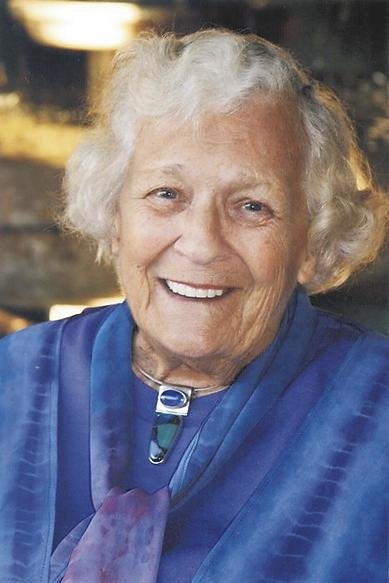
Margaret A. Cargill was a deeply private but fun-loving woman who enjoyed mixing in unnoticed at dedications of new buildings that she had helped make possible through anonymous gifts. At the openings of the National Museum of the American Indian, in Washington, a humane society, and a center for older adults near her home outside San Diego, Ms. Cargill was there mingling—and keeping a secret.
“She was thrilled to come and be incognito at events that were pretty much done to honor her,” says Cheryl Wilson, chief executive of St. Paul’s Senior Homes & Services, in San Diego, whose community-care center Ms. Cargill supported.
Ms. Cargill died in 2006, at age 85. In death, as in life, her philanthropy has remained under the radar—until now.
Ms. Cargill was an heir to Cargill Inc., one of the world’s largest privately held companies, and for years it was hard for outsiders to estimate how much her estate was worth.
But a complex deal announced last month involving the agribusiness conglomerate and Mosaic, a public company that Cargill largely owns, will allow the Margaret A. Cargill Philanthropies to fully liquidate its holdings in the next four to five years. The deal shines a clear light for the first time on her estate’s considerable wealth, which totals nearly $9-billion.
That sum will probably put the combined Cargill philanthropies among the nation’s three wealthiest foundations.
The size of the estate might have surprised even Ms. Cargill. The value of Mosaic, a fast-growing fertilizer company, has risen five-fold since her death.
“I think she would have been amazed, and very, very pleased to see all this money going to make the world a better place,” Ms. Wilson says.
A Boon in Funds
The estate will be split evenly between two funds under the Cargill philanthropies umbrella: the Margaret A. Cargill Foundation and the Anne Ray Charitable Trust (named for Ms. Cargill’s mother), according to Sallie L. Gaines, a spokeswoman for the philanthropies. Each will be worth more than $4-billion, based on Mosaic’s current price.
The Anne Ray trust will be a huge boon for the seven charities designated by Ms. Cargill to receive payouts from it. They range from giants like the American Red Cross and the Nature Conservancy to smaller groups like the American Swedish Institute, in Minneapolis. (See article, below.)
The public face of the philanthropies will be the Margaret A. Cargill Foundation, which will devote grants to at least six causes, including arts and culture; the environment; and disaster relief, recovery, and prevention. The foundation’s new headquarters, in Eden Prairie, Minn.—just a few suburbs away from Cargill Inc.’s Wayzata headquarters—is decorated with pieces from Ms. Cargill’s art collection.
A third fund, the Akaloa Resource Foundation, holds $150-million in assets, and was set up in 1995 to benefit certain Southern California charities near Ms. Cargill’s home in La Jolla, Calif. Akaloa will not receive additional money.
The announcement about the size of the Cargill philanthropies may refocus national attention on the growth of foundations, a long-term trend that lost some luster during the recession. According to the Foundation Center, more than 75,000 foundations existed at the end of 2008 (the latest year available), up from fewer than 47,000 a decade earlier, and the assets held by foundations rose by nearly 50 percent over that period, to $565-billion.
Steve Gunderson, president of the Council on Foundations, says philanthropy is in a sweet spot: Community funds have helped to democratize it, and mega-rich apostles like Warren E. Buffett and Bill Gates and have helped made it hip.
“It’s now cool and trendy to be a philanthropist,” Mr. Gunderson says. “People think, ‘Even though I don’t have $9-billion, I have enough money to create a donor-advised fund.’”
Now comes the hard part for the Cargill philanthropies—putting the billions backing the three foundations, all of which are expected to operate in perpetuity, to good use.
That responsibility rests on the shoulders of Christine M. Morse, a former financial adviser to Ms. Cargill whom she hand-picked to lead all three philanthropies, and Paul G. Busch, the only other trustee of the Cargill philanthropies. Mr. Busch, who serves as chief operating officer of both the Margaret A. Cargill Foundation and Akaloa, is an accountant who also advised Ms. Cargill.
“Everybody from Andrew Carnegie to Warren Buffett has noted that it’s easier to make the money than to give it away effectively,” says Phil Buchanan, executive director of the Center for Effective Philanthropy, in Cambridge, Mass. “They’re not going to figure out this out overnight. It’s going to take some careful thought and analysis.”
Following Her Passions
Ms. Cargill, the woman whose generosity will trigger all that brow-furrowing, was the granddaughter of William Cargill, the company’s founder; her father and brother were both senior executives at the company. She did not work there, instead pursuing her passion for the arts, notably Native American and folk art, according to an obituary on her foundation’s Web site.
She also loved to camp, and in later years took her RV to scenic spots. She never married; her closest companion was said to be her poodle, Kari.
Ms. Cargill enjoyed living in California in part because the Cargill name is not well known there. That desire for privacy was also reflected in her philanthropy; she gave away more than $200-million during her life, most of it anonymously.
Well into her 70s, Ms. Cargill drove around on her own, says Mark Goldstein, president of the San Diego Humane Society, a charity that is supported by the Akaloa fund.
“If people knew who she was, that probably would have restricted her from doing that kind of thing,” Dr. Goldstein says.
Mr. Cargill set up her philanthropies, in part, to provide support for some of the things she was passionate about—including the arts, the environment, animal welfare, and caring for older adults.
But some philanthropy experts say that her foundation’s impact may be diluted if it spreads itself too thinly. For example, Joel Fleishman, a professor at Duke University and the author of The Foundation: A Great American Secret, says the Margaret A. Cargill Foundation should consider narrowing its focus to just a handful of priorities, rather than the six broad grant-making program areas it is now developing.
“They’ll have to select, and put some flesh on the bones of the things they really care about,” he says. He also believes the philanthropies should add new trustees with varying types of expertise to the current board of just two people.
Ms. Gaines says the original trust document specifies only two trustees, but that more can be added if necessary. “As the foundation’s programs are fully built out, the trustees could decide to expand the board, but this is not under consideration at this time,” she says.
The foundation’s wealth is a hot topic in its home state of Minnesota. Ms. Morse says the group is not planning a specific program for Minnesota charities, but that the state’s nonprofits “will play a role in most of our grant programs.”
Jon Pratt, director of the Minnesota Council of Nonprofits, has offered to host a meeting to introduce the foundation to the state’s charities, which the fund has said it will consider. Says Mr. Pratt: “Everyone is dying to know: What will the Margaret A. Cargill Foundation do?”
Caroline Preston contributed to this article.