August 8, 2010 | Read Time: 3 minutes
A dearth of low-cost housing has been one of the biggest challenges the Gulf Coast has faced since Hurricane Katrina. But nonprofit groups responding to the problem have had to contend with a second calamity—the international financial crisis.
After the storm, the federal government allocated $323-million in low-income housing tax credits to Alabama, Louisiana, and Mississippi to help the states rebuild low-cost rental housing, but with the recession, the market for those tax credits fell off precipitously.
“The one tool you were given that could advance the cause became unusable,” says Kathy Laborde, president of the Gulf Coast Housing Partnership, in New Orleans.
Nationwide, low-income housing tax credits are the largest source of financing for low-cost rental housing. States award the credits competitively to housing developers—either nonprofit or for-profit—that plan projects that serve people who earn 60 percent or less of a community’s median income.
The housing developer then sells the credits to corporations in exchange for an equity investment in the housing project. The companies can use the tax credits to lower their tax bills.
Tax-Credit Woes
But when the economy slowed, the banks and other financial institutions that have long been the biggest source of investment in the credits became less willing and able to invest in them.
For some projects on the Gulf Coast, the decline in the tax-credit market meant that housing organizations received much less per dollar in credits than they anticipated, and they had to find other sources of money to cover the gap, says Ms. Laborde. But when the financial crisis was at its worst, groups were hard pressed to find any buyers at all, she says.
“It did not matter what the price was, investors did not want to buy the credits,” says Ms. Laborde.
The market for tax credits improved this year, but now housing organizations face a new problem. The tax credits allocated to the Gulf Coast came with the stipulation that the housing projects must be completed by the end of 2010.
“You can’t go ahead and close on these deals and begin construction because you can’t guarantee that you’re going to be done by December,” says Jim Kelly, co-president of Catholic Charities Archdiocese of New Orleans.
Mr. Kelly also leads Providence Community Housing, a charity started by faith groups after Hurricane Katrina.
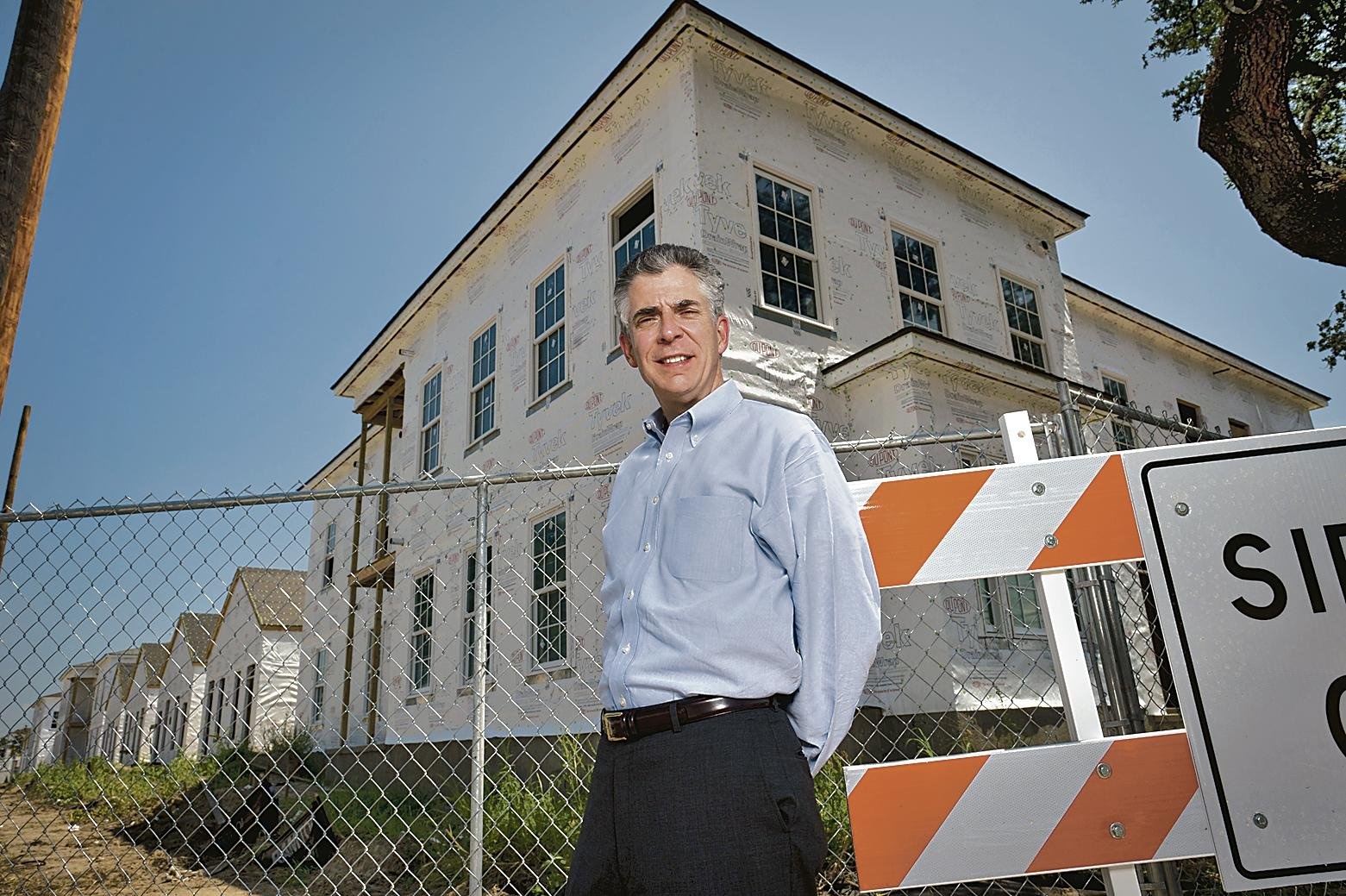
Part of that group’s redevelopment of the Lafitte public-housing complex—roughly 300 units—is in jeopardy because of the tax-credit deadline. Across the region, 6,200 units of housing are at risk.
An amendment to extend the deadline to the end of 2012 has been attached to several pieces of legislation in Congress this year, but so far none of the bills has passed.
Mr. Kelly says that without an extension, Providence will lose all of the money it has spent on planning the project
“And more importantly,” he says, “all of these people who could be coming back to the town they love, there’s not enough good, decent, affordable housing for them.”
—Nicole Wallace