May 5, 2013 | Read Time: 6 minutes
As an 18-year-old college freshman, Luis Márquez joined a group of volunteers to help provide tutoring services at a handful of East Los Angeles elementary schools.
“There were children in first and second grade who were already so significantly behind that, in a sense, they were already being boxed in as the next generation of dropouts,” Mr. Márquez says.
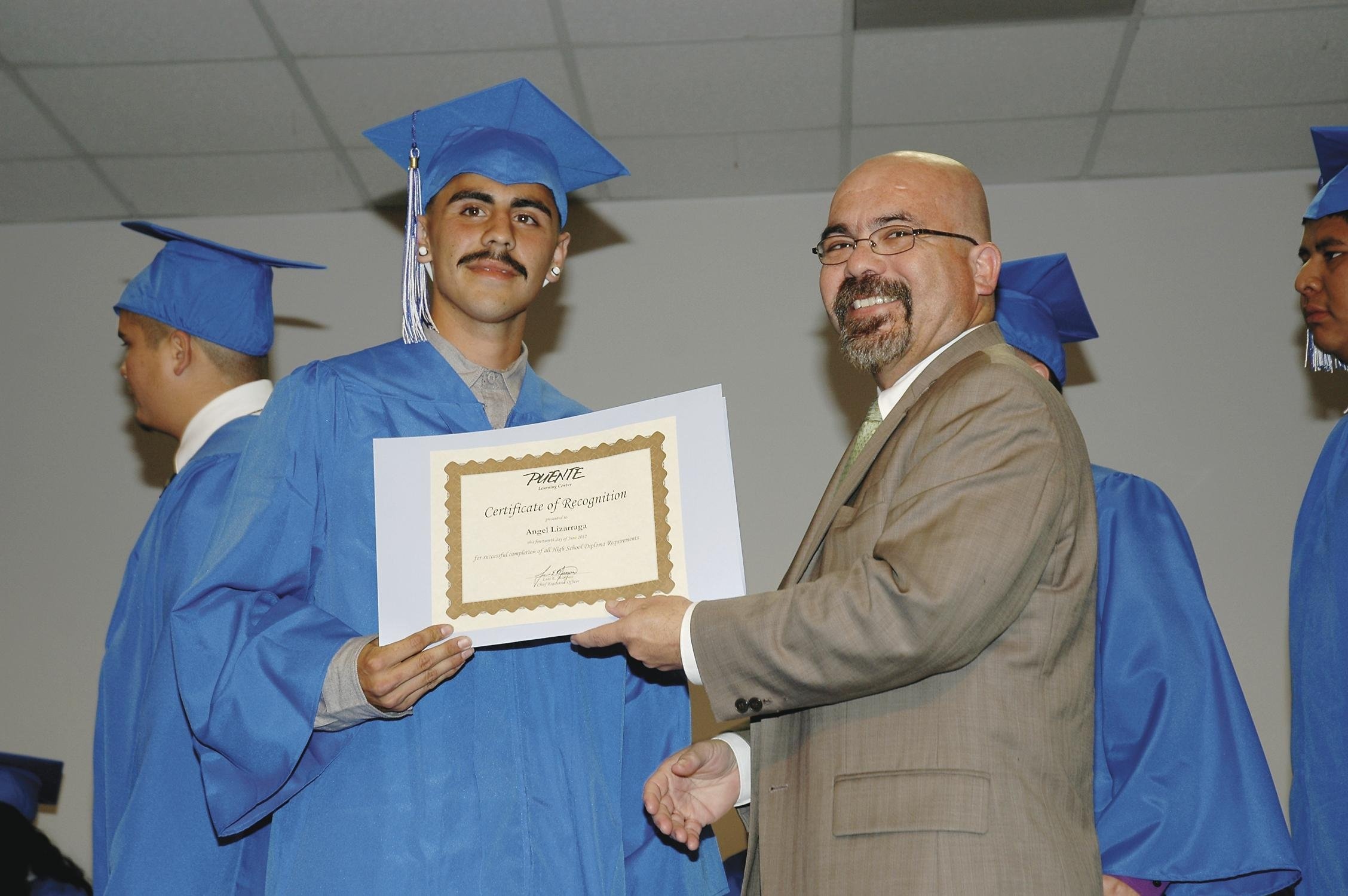
Fast forward 28 years: Today, this modest effort has grown into the Puente Learning Center, a Los Angeles educational charity with a $5-million annual budget, 64 employees, and a pair of its own school buildings to serve thousands of children and adults annually. And Mr. Márquez is now the group’s chief executive.
He took the top job in 2010 after years of working his way up the ranks but says a key reason for his ascent was the leadership development and training he received through Bank of America’s Neighborhood Builders program.
The same year Mr. Márquez became leader, Puente participated in the invitation-only Neighborhood Builders program, which provides an unrestricted grant of $200,000 over two years as well as a series of four three-day training workshops for senior managers of nonprofits.
When the organization entered the Neighborhood Builders program, Puente’s founder and chief executive, Sister Jennie Lechtenberg, was getting ready to retire.
Mr. Márquez, then Puente’s chief operating officer, initially had not considered taking her place until the training boosted his confidence.
“I thought my role was to be a strong No. 2 person, until I realized that I cared passionately about the organization. I needed to challenge myself and step up to help with its stability,” he says. “I learned I didn’t have to try to be a carbon copy of the founder. I was capable of developing my own leadership style.”
Succession Planning
Now in its ninth year, the Bank of America Neighborhood Builders program has provided $165-million for training and unrestricted grants, aiding more than 700 charities and some 1,500 of their leaders.
That is the largest sum any foundation has spent on nonprofit-leadership development, according to the Bridgespan Group, a recruiter and management consultant for nonprofit clients. The program operates in 40 U.S. cities where the bank maintains a significant presence.
Kerry Sullivan, president of the Bank of America Charitable Foundation, says the company decided to focus support on leadership development when it saw a series of reports suggesting that too little had been spent to prepare nonprofit executives.
“If you strengthen an organization’s leaders, you strengthen the community,” Ms. Sullivan says. “Frankly, we saw it as a way to have a lasting impact.”
What’s more, she says, the foundation worried about the growing number of nonprofit executive directors reaching retirement age.
“There is obviously a huge need to address the issue of who is going to lead these organizations moving forward,” Ms. Sullivan says. “The leadership deficit is a serious issue.”
The bank couples the training with a $200,000 grant to the leader’s organization, which allows grantees “the ability to implement plans and take new ideas and put them in practice,” Ms. Sullivan says.
Initially open to charities of all sorts, the bank decided in 2008 to limit the program to groups that provide necessities, such as food banks, and to those involved with education, job training, or housing.
The foundation picks 60 groups a year to get training, with advice from local bank executives, civic leaders, and organizations that have received the training in the past.
“This isn’t just bankers or the foundation deciding on the winners,” Ms. Sullivan says. “We really look for others in the community to validate that the selected organizations are not only strong but vital to the community.”
Emerging Leaders
The leadership training is offered to the charities in two tracks: one for executive directors, the other for “emerging leaders”—senior staff members that the organization selects to participate.
“Emerging leaders run the gamut,” Ms. Sullivan says. “We get folks that are in finance, development, or who run programs.”
The bank adjusts the training regularly after asking charities about the leadership issues that they are most concerned about.
Over the past few years, Ms. Sullivan says, nonprofits have increasingly sought training on emergency planning and fundraising in tough times.
Celena Roldán participated in the training in 2008 when she was director of child care at Erie Neighborhood House, a social-service charity in Chicago that primarily helps low-income Latino families. In 2010, she became the group’s leader.
“I was heading up our largest program at the time, but I was not thinking in terms of taking over as the executive director,” Ms. Roldán says. “After the program, I was more clearly identified as the person that was fitting into place for succession.”
She recalls how the final workshop brought the executive directors and emerging leaders together and provided a greater understanding of what it takes to lead a charity.
“The biggest challenge for emerging leaders is that most of us do our jobs day to day, maybe thinking a couple of months out at the most,” Ms. Roldán says.
“At the executive director level, you have to be thinking one, three, even five years out. That was definitely one skill that I learned.”
In addition, she says, she learned the importance of communication for nonprofit leaders: “As the director, you are the chief spokesperson and salesperson. It’s not enough just to be really committed and dedicated, you need to be able to effectively tell your story to individuals and the community.”
Support for New Plans
More important than the training, say some program alumni, is the $200,000 grant to put new ideas into place.
Puente Learning Center used the money to increase marketing and communications efforts to raise its profile, says Mr. Márquez. Erie Neighborhood House spent its money to help expand job-training programs to a new Chicago neighborhood, says Ms. Roldán.
The Rev. Becca Stevens, executive director of Thistle Farms, a charity in Nashville, Tenn., that helps women who are former prostitutes or drug addicts, just won a training grant this year. Her charity will use the $200,0000 in unrestricted money to start Thistle Café, a business that will be run by women the charity serves, Ms. Stevens says.
The leadership training will be helpful, she says, but just getting the award from Bank of America was a boost for her group’s morale. “It was a huge stamp of approval for our work.”
Neighborhood Builders
Sponsor: Bank of America
Who’s eligible: Nonprofits that work in community development, work force development, and education.
Cost to participants: Free. Organization receives a $200,000 grant from Bank of America; the nonprofit’s executive and one staff member receive leadership training.
To apply: Application is by invitation only.
Deadline for applications: Nominations are made during the summer.