August 17, 2006 | Read Time: 14 minutes
Foundations are answering the call for long-term post-Katrina support, but some leaders say more is needed
Days after Hurricane Katrina fiercely uprooted life along the Gulf Coast, Michael S. Liebaert,
|
ALSO SEE: Special Report: Rebuilding the World a Storm Destroyed Table: After Katrina: Big Foundation Donors Table: A Sampling of Foundation Grants for Katrina Recovery Article: Grant Makers Take Array of Approaches to Gulf Grant Making |
managing director of the Azby Fund, a family foundation in New Orleans, embarked on a spending spree to plant new seeds there.
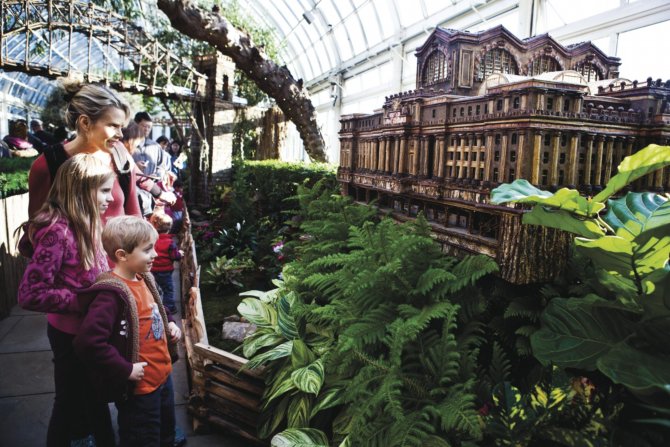
The largest chunk of the $2-million the foundation committed to help the region — nearly three times its typical annual spending — helped finance a whirlwind restoration of the city’s botanical garden, located in the devastated Lakeview neighborhood, in time for a popular holiday exhibit to open in December.
Mr. Liebaert, who worked alongside the crew planting new trees and flowers, hopes the resuscitated garden will help lure back residents considering abandoning their lives in the Big Easy.
“Now is the time we need to make an extraordinary effort,” he recalls telling a colleague shortly after the storm. “I don’t care whether we spend 25 percent of our net worth. If we don’t do something to help the city come back, there’s no sense in having a foundation.”
Over the past year, scores of private, corporate, and community foundations around the country have joined the Azby Fund to provide money for relief and recovery projects as well as to offer other types of support.
All told, grant makers have spent at least $577-million, according to a study released last week by the Foundation Center, in New York.
While that is one of the biggest expenditures made by foundations in the wake of a disaster, it falls well short of the sum pledged after the other major catastrophe on American soil this decade — the September 11, 2001, terrorist attacks.
Steven Lawrence, the Foundation Center’s director of research, says he expects the hurricane grant total to rise, but probably not close to the $1.1-billion foundations contributed after the terrorist attacks.
September 11 “was such a shock to the nation,” he says. “Emotionally, a natural disaster is something different. While the scale of the hurricane was unprecedented, the terrorist attack affected the nation’s psyche in a different way.”
Future Giving
Most of the foundation spending in the past year focused on providing immediate relief. Eighty-two percent of the 906 foundations in the survey supported emergency efforts, while more than 21 percent of foundations helped with longer-term recovery efforts.
And it is unclear whether many foundations plan to commit significant sums in the coming years to help the region rebound.
Nearly four-fifths of foundations said they had completed their Gulf Coast grant making by January, according to the Foundation Center report, and have no plans to make further gifts.
The news is disheartening for charity leaders, who say foundations need to continue playing a significant role in rebuilding the Gulf Coast, especially in areas where the government is not spending much money.
In particular, they say grant makers should put more money into efforts to assure that the Gulf Coast is rebuilt in a way that takes into account the needs of poor and vulnerable people.
Crucial to achieving that goal, some foundation and charity officials say, is supporting the development of strong nonprofit groups in a region that had relatively few charities and foundations before Katrina struck and counts even fewer now that many charities’ headquarters were washed away.
“A lot of foundations, because they want to act quickly and they see the immediate need and because they want measurement, fund the relief and repair work and they don’t think about the transformation and change that is needed, especially in low-resource communities,” says George Penick, the former head of the Foundation for the Mid South, who now directs the RAND Gulf States Policy Institute, in Biloxi, Miss. “Is that the best use of the rare philanthropic dollar?”
Steve Gunderson, president of the Council on Foundations, in Washington, agrees that the role of foundations lies in “long-term rebuilding” and he acknowledges that philanthropy missed some opportunities right after the disaster, particularly by not providing ample support for the efforts to decide how New Orleans and the rest of the region would be rebuilt.
“All of us in philanthropy, we are learning what should work, what didn’t work,” he says. “The reality is we face some of the same challenges of coordination that we criticize government for and we have to learn from that.”
To help encourage better coordination, Mr. Gunderson is considering whether the council should start a “philanthropy disaster response fund,” which would have a pool of donations ready to enable foundations to work together more speedily and easily in future crises.
Relaxing Rules
The urgency of the disaster prompted some foundations to drop their usual restrictions on grantees.
For example, last August the Lower Pearl River Valley Foundation, in Picayune, Miss., was preparing to use a $500,000 grant from the Robert Wood Johnson Foundation, in Princeton, N.J., to combat obesity and diabetes among the region’s residents.
But following the deluge, a Johnson Foundation official called and said to take some of that money and “go help some people,” says Ted Alexander, the River Valley Foundation’s president.
River Valley spent $100,000 to send nurses to hurricane-damaged cities and towns to tend to the sick and to buy groceries, ice, and medicine for residents who needed help.
“I marvel at the fact they responded so quickly,” says Mr. Alexander. “People aren’t concerned with being overweight when they are trying to stay alive.”
Other foundations offered manpower as well as money right away.
John G. Davies, chief executive of the Baton Rouge Area Foundation, received 500 e-mail messages a day following the storm and was quickly overwhelmed by the needs of residents and evacuees as well as by queries from potential donors.
The Irene W. and C.B. Pennington Foundation and the Huey and Angelina Wilson Foundation, both in Baton Rouge, gave $1-million each to the community foundation and lent staff members to the fund to get more than $600,000 in grants distributed in the 10 days after the hurricane.
“I give small foundations high marks for incredible support,” says Mr. Davies.
He has tougher words for national foundations.
“There are a lot of national funders that never got in the game because they didn’t know how to get in,” says Mr. Davies. “That is discouraging, frankly, because we needed help early and we still need help.”
Rebuilding New Orleans
Still, many national foundations have been heeding the call for help and sending money to the Gulf Coast.
In April the Rockefeller Foundation made a $3.5-million grant — more than the foundation has ever awarded to a domestic project — to the Greater New Orleans Foundation, to help the city of New Orleans develop a comprehensive plan for its future.
“This plan will hopefully ensure that we do not have neighborhoods that have the level of concentrated poverty that New Orleans had prior to Hurricane Katrina,” says Darren Walker, a vice president at the foundation and the director of Rockefeller’s work in the region. “This planning process offers the city the opportunity to redevelop itself in a way that expands opportunity for the folks in that city.”
Other foundations have also helped pay for plans for the rest of Louisiana to rebuild. The Richard King Mellon Foundation, in Pittsburgh, gave $1-million to support the work of the Louisiana Recovery Authority, a planning and coordinating body appointed by the state’s governor, Kathleen Babineaux Blanco, to help the state rebuild.
Several major grant announcements have been made this summer, evidence that national grant makers have not forgotten about the Gulf Coast.
In late June the Bill & Melinda Gates Foundation, in Seattle, made a $12.2-million grant to help libraries in Louisiana and Mississippi establish temporary facilities and plan for permanent ones, bringing the foundation’s total giving for hurricane recovery to more than $24-million.
In addition, the W.K. Kellogg Foundation, in Flint, Mich., awarded $12.5-million in grants last month, increasing its total giving to hurricane-recovery efforts to $36.3-million, the largest commitment among private foundations so far. However, James McHale, the foundation’s vice president of programs, is realistic about what the money can accomplish.
“At first you say, ‘Wow, $36-million. That is a lot of money,’” he says. “But when you think about the billions of dollars it’s going to take to rebuild the Gulf Coast, it’s really a pebble being thrown into the ocean. So you need to think about how can our dollars provide the greatest return.”
The Kellogg Foundation, which has a history of grant making in the region, decided to make some of its largest grants to support child care, education programs, and mental-health assistance for poor families and children affected by the storm because it felt that was where its money would make a difference.
“When you think of all the housing and infrastructure needs, it would take a lot more than $36-million to start addressing those efforts and it’s a better role for government,” says Mr. McHale.
The Ford Foundation, in New York, has so far spent $20-million on a mix of its longtime grantees as well as new groups, and plans to commit more to the region in the next decade.
Ford doesn’t usually focus on one region of the country, says Susan V. Berresford, the foundation’s president, but she says the institution saw a chance to help the Gulf Coast grapple with issues the foundation has long cared about, including, race, poverty, and the renewal of cultural institutions.
“These things are front and center in that region,” she says. “It’s an opportunity where people are thinking about this fresh.”
For example, the foundation made a $200,000 grant to Tulane University, in New Orleans, to start the Institute for the Study of Race and Poverty, which will study long-term solutions to poverty among minorities and work to change public policies that harm poor people.
Some foundations that have committed several million dollars to the hurricane-ravaged region are taking a wait-and-see approach to determine how much more to give.
No new grants from the Charles Stewart Mott Foundation, in Flint, Mich., are in the pipeline, but the foundation is “not prepared to put a bookend” on grant making for that cause, says Maureen H. Smyth, the foundation’s senior vice president of programs and communications.
Mott has spent nearly $4-million so far, with several of the largest grants supporting historically black colleges that sustained damage from last summer’s hurricanes, as well as economic-development programs.
Ms. Smyth says the foundation opted against supporting charities doing relief work, including the American Red Cross, in favor of groups Mott had previously aided.
“The needs are so overwhelming,” she says. “If you have to pick and choose it’s only logical to fund in areas where there is a need and where you have some expertise and contacts on the ground already.”
High Demand
While most foundations have not scaled back grant making for other causes to pay for assistance in the Gulf Coast, the Foundation Center said that 15 percent of the grant makers it surveyed did reduce funds for other programs to pay for grants in the region.
Some foundation leaders say they see the need for more assistance. The McCormick Tribune Foundation, in Chicago, contributed $1-million and received another $9.5-million in donations to its hurricane fund from the public. Those donations are now exhausted.
“If we had $100-million, there would have been 100 places for every dollar we raised,” says Catherine Brown, senior director of the communities program at the foundation, who visited New Orleans in March. “It was dismaying to see how much remained to be done.”
Nonprofit officials in the Gulf Coast region agree that the needs for money are vast, and they hope foundations will dig deeper to support major educational, health care, and other needs.
“Twenty-five thousand dollars to an organization is nice but at the scale we are dealing with, it’s almost inconsequential,” says Melissa S. Flournoy, president of the Louisiana Association of Nonprofit Organizations, in Baton Rouge. “I don’t want to be ungrateful to foundations but we really need a strategic investment of epic proportions.”
But foundations can only do so much, say some philanthropic leaders.
“In no way can foundation support substitute for government money,” says Martin C. Lehfeldt, president of the Southeastern Council of Foundations, in Atlanta. “We don’t want to duplicate what government is doing, we want to look for opportunities where foundation dollars can add value, fill a niche that government funding isn’t.”
The Louisiana Disaster Recovery Foundation, in Baton Rouge, hopes to identify niches that aren’t getting attention, in part by supporting advocacy groups that seek to ensure that the voices of low-income residents will be heard in the state’s rebuilding, says Sherece Y. West, the group’s chief executive officer.
Ms. West hopes the foundation, which was established by Governor Blanco with donations the state received after the storm and is now operating independently, can take a leadership role in finding ways for foundations to work collectively to support the Gulf Coast.
“We always talk in philanthropy about how do we work together, how do we talk,” she says. “Here’s an opportunity to do that in this region. This is a long-term effort and we will need folks every year for the next 20 years.”
|
||||||||||||||||||||||||||||||||||||||||||
|
A SAMPLING OF FOUNDATION GRANTS FOR KATRINA RECOVERY Annie E. Casey Foundation (Baltimore) Chatlos Foundation (Longwood, Fla.) Ford Foundation (New York) F.B. Heron Foundation (New York) JEHT Foundation (New York) W.K. Kellogg Foundation (Battle Creek, Mich.) John S. and James L. Knight Foundation (Miami) McCormick Tribune Foundation (Chicago) Needmor Fund (Toledo, Ohio) Open Society Institute (New York) Virginia G. Piper Charitable Trust (Scottsdale, Ariz.) Andy Warhol Foundation (New York) Note: The New York Regional Association of Grantmakers has published the “Donors’ Guide to Gulf Coast Relief & Recovery,” a 70-page booklet that lists both charities working on hurricane-recovery efforts and examples of its members’ grants in the region. The booklet is available free on the group’s Web site at http://www.nyrag.org. |