
Bill to Improve Government Support for Charities Faces a Tough Climb

By SUZANNE PERRY
Contributor
December 7, 2010 | Read Time: 4 minutes
Washington
A bill that seeks to improve the way the federal government works with charities will automatically die when the current Congressional term ends—and any new bill would face an uphill climb under the newly elected Congress that starts work in January.
The Nonprofit Sector and Community Solutions Act (HR 5533) would create two new bodies—a 16-member advisory council and a working group of federal-agency heads—to offer advice on how Washington can help charities do their jobs more effectively, for example by improving the procedures for awarding grants and contracts. It would also require the government to collect better data about nonprofits.
The bill has won praise from nonprofit advocacy organizations such as Independent Sector and the National Council of Nonprofits but has so far gained little support in Washington.
Only 22 House members, mostly Democrats, have agreed to co-sponsor the measure, and no senators have yet stepped forward to introduce a companion bill.
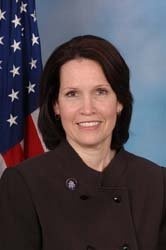
“We’ve got a long way to go,” says Bill Harper, chief of staff to Rep. Betty McCollum, the Minnesota Democrat who introduced the bill last summer.
Bill Called Too Sweeping
With Republicans taking control of the House, the slow-moving bill could face even steeper challenges.
The congresswoman, who must decide whether to reintroduce the legislation, plans to consult with nonprofit advocates to assess whether they can wage the kind of intensive lobbying campaign that would be required to push a new bill through—and what kind of changes might be needed to make it easier to pass, Mr. Harper says.
While Ms. McCollum had no problem winning re-election in November, her opponent, Teresa Collett, criticized the nonprofit legislation, describing it in a radio interview as “essentially a government takeover of the nonprofits.” While Ms. McCollum’s bill won widespread support in the nonprofit world, it also attracted some critics beyond Ms. Collett.
For example, the Alliance for Charitable Reform, a group that represents grant makers and donors, believes the bill is too far reaching, says Sandra Swirski, the executive director. While it seems designed mainly to help charities that get federal grants, she says, the text applies to all groups that have charity status. As a result, the bill would also cover some foundations that receive no government money and could even cover churches and other religious groups that now are exempt from providing the government with information about their finances that other charities must file.
Independent Sector, the coalition of charities and foundations, has endorsed the bill but is “talking to its members about any concerns they might have as well as about ideas for moving the legislation forward,” Diana Aviv, the group’s president, said in an e-mail message.
Moving It Forward
Among the bill’s biggest boosters is the National Council of Nonprofits, which represents more than 24,000 groups that are members of state nonprofit associations.
“It’s a very live issue among our state associations,” says David Thompson, vice president of public policy, noting that more than 500 groups have signed a letter declaring support for the legislation.
But he and others are mulling alternatives if the legislation proves impossible to move forward. Although his group does not advocate this approach, Mr. Thompson says, one option would be to attach parts of the bill to other pieces of legislation. And Mr. Harper says the bill’s supporters should explore whether President Obama could create the nonprofit council by executive order.
‘Current Political Reality’
Supporters say the bill was drafted to get bipartisan support, and the Republican takeover of the House does not mean its chances are doomed. Mr. Thompson says both parties should welcome getting better data about nonprofit groups, which would help Congress make decisions about issues like tax breaks for charitable gifts and spending on government contracts.
But Mr. Harper, referring to what he calls “the current political reality,” notes that Republicans have recently taken aim at some nonprofits, for example voting in the House to end federal aid to National Public Radio and waging a campaign against Acorn, the now-defunct community organizing group.
Supporters of Ms. McCollum’s bill are going to “have to take the temperature and assess where Republicans are on this,” he says. “There’s a lot of work to do,” he adds. “This is something that Congresswoman McCollum can’t do alone.”




