
Bipartisan Bill Would Require E-Filing for Nonprofits

By MICHAEL THEIS
Contributor
March 28, 2019 | Read Time: 2 minutes
New legislation overhauling the Internal Revenue Service would require all but the smallest nonprofits to electronically file their tax information, a change sought for years by charity watchdogs.
The legislation has attracted powerful co-sponsors from both sides of the aisle in both the House and Senate. Supporters include Chuck Grassley, Senate Finance Committee Chairman; Ron Wyden, the top Democrat on that committee; Richard Neal, House Ways & Means Committee chairman; and Kevin Brady, the top Republican on Ways and Means.
The provision is part of a broader package of tax legislation introduced in the House and Senate on Thursday by Democrat John Lewis of Georgia and Pennsylvania Republican Mike Kelly.
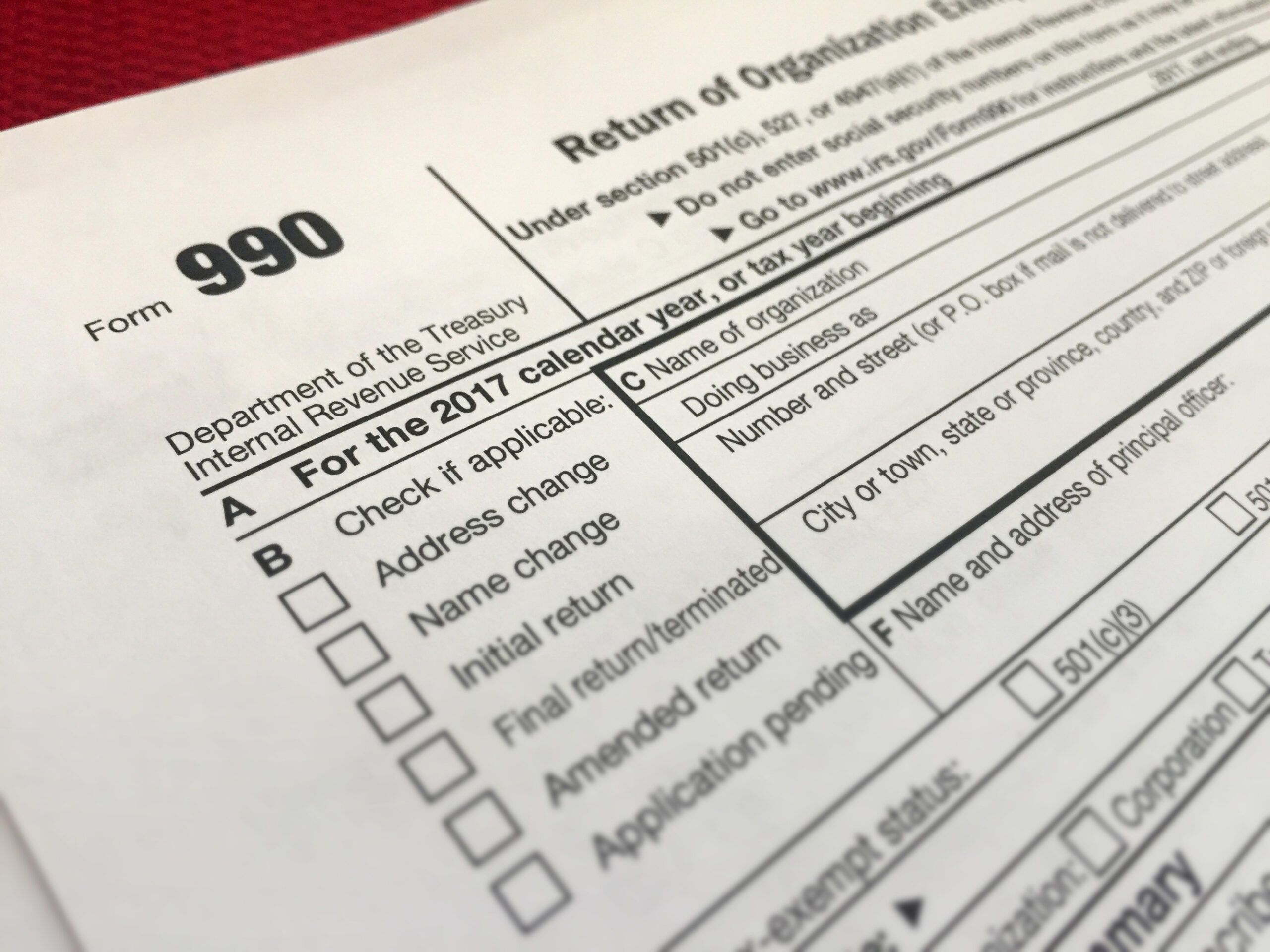
In theory, only the smallest charities are currently allowed to file paper returns. However, certain exemptions allow some of the largest groups to do so. Nonprofit watchdogs have been pushing for mandatory e-filing of 990s for years, arguing it would improve transparency for grant makers, regulators, and nonprofit managers.
“The time has come for 990 e-filing. It’s clear that there’s agreement about its ability to increase transparency, reduce fraud, and provide helpful information for citizens,” said Cinthia Schuman Ottinger, deputy director for philanthropy programs at the Aspen Institute, in an interview. “All of this will strengthen the nonprofit sector. So I am ecstatic at the introduction of this historic bipartisan, bicameral legislation.”
Exemptions to E-Filing
The IRS currently exempts nonprofits with less than $50,000 in gross receipts from filing electronically. Those groups have the option of filing a 990-N form electronically, or they can file more exhaustive 990 or 990-EZ forms on paper.
In 2017, more than 65,000 organizations filed their 990s on paper. Over all, the IRS said, 68 percent of all 990 and 990-EZ forms were electronically filed in 2017.
In 2016, after a lawsuit, the IRS began releasing electronically filed 990 returns in a machine-readable format, making troves of data available for the first time.
Charities with more than $10 million in assets are required to file their submissions electronically, but only if they also file at least 250 returns a year — things such as employment or excise-tax returns.
Private foundations have a slightly different rule. No matter what their asset size, they are required to e-file if they submit at least 250 returns a year.
Due to that threshold, several charities and private foundations with large assets are able to avoid e-filing if they have a relatively small number of employees, including such organizations as the Michael and Susan Dell Foundation and the Goldman Sachs Philanthropy Fund.
The legislation unveiled in the House on Thursday, along with its companion Senate legislation, would do away with those exemptions for larger charities.
Other proposals in the legislation call the for the establishment of an independent office within the IRS to handle administrative appeals of IRS decisions; requiring more advance notice to taxpayers before IRS auditors contact third parties during their investigations; and modifications to the IRS’s organizational structure.






