
Bloomberg, Gateses, and Other Big Donors Race to Fill Void of Clinton Global Meeting

By Alex Daniels
Contributor
August 29, 2017 | Read Time: 8 minutes
Scores of the nation’s major philanthropists will gather in New York next month to coincide with the United Nations General Assembly kickoff, as influential donors like Michael Bloomberg, Jeff Skoll, and Bill and Melinda Gates hold new gatherings that promise to update what used to be the philanthropic get-together of the year: the glittery Clinton Global Initiative, filled with celebrities, rich donors, high-level government executives, and lots of nonprofit leaders all on stage together, which produced more than $85 billion in aid pledges.
Other groups holding meetings that week to focus on the role donors and charities can play include the World Economic Forum, famous for its annual meeting in Davos, which for the first time since 2002 will set up camp in Manhattan.
Those events and others that have started in recent years, like the Concordia Summit and the Social Good Summit, are all part of Global Goals Week, a loosely coordinated assemblage of meetings designed to attract thinkers, financiers, and doers who want to put an ambitious set of policies into action. Known as the Sustainable Development Goals, the U.N. agenda for adopting $3 trillion in changes by 2030, focuses on health, climate change, human rights, and other issues.
For a dozen years, the Clinton Global Initiative was the main event attracting donors, but it held its last meeting in 2016, just weeks before Hillary Clinton faced Donald Trump in the presidential election. In its lifetime, wealthy donors, foundations, and corporations made some 3,600 commitments to do good.
It wasn’t unusual at the meetings to glimpse rocker Jon Bon Jovi or supermodel Iman or sit in on discussion with actor Angelina Jolie, the businessman Richard Branson, or Madeleine Albright, former secretary of state.
When it seemed that Hillary Clinton would win the election, she and her husband ended the annual gathering amid controversy about whether donors to the Clinton Global Initiative were using their contributions to curry favor with a potential president. That prompted many to wonder what, if anything, would replace the gathering.
“There’s not a vacuum left by CGI this year,” says Kathy Calvin, president of the U.N. Foundation, one of the Global Goal week’s organizers. “There’s so many things happening, because they helped create a dynamism during the week. The Clinton Global Initiative kicked off something serious.”
A Report Card on Progress
While the Clintons promoted the number of commitments made as a result of their gathering, this year meetings will focus mainly on what progress is being made on the Sustainable Development Goals.
Bill and Melinda Gates, for instance, plan to release a data-rich report the week before the General Assembly that will analyze progress and setbacks in 18 health and poverty indicators related to some of the goals. The couple would like to use the data to illustrate the lives that are at stake and showcase both successes and failures in international work.
During the week of the General Assembly, the couple will host an awards ceremony for people advancing U.N. goals. Separately, the Gateses will host a panel on sustainable development that will feature practitioners from around the world and heads of state, to be announced at a later date.
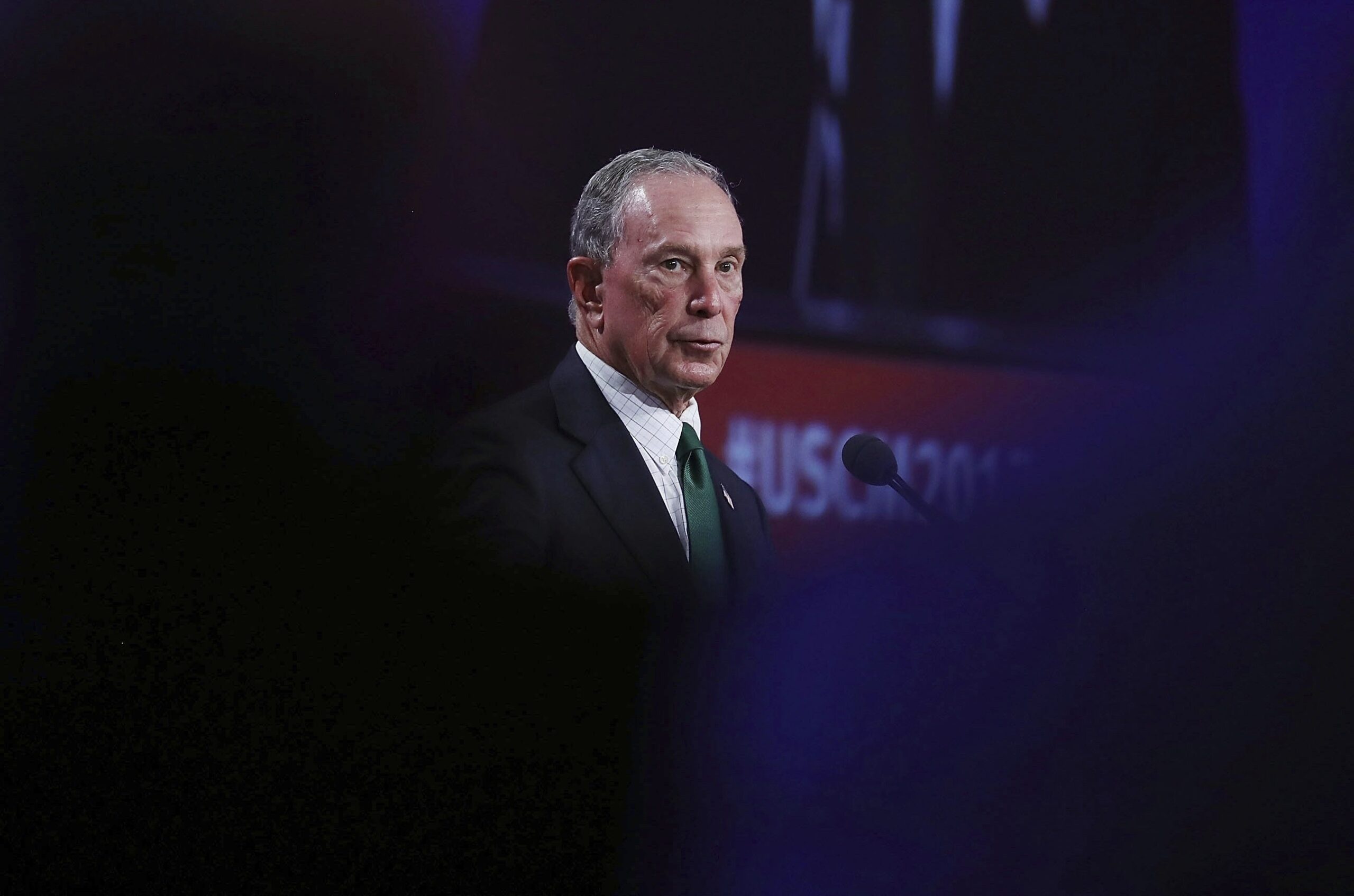
Meanwhile, the day after President Trump is scheduled to make his first speech to the U.N. General Assembly on September 19, Michael Bloomberg will welcome more than 100 business and government leaders to his Global Business Forum, an event he said is inspired in part by the Clinton Global Initiative. To reinforce the tie, Mr. Clinton is one of the featured guests.
The collection of leaders seems calculated to counter Mr. Trump’s “America First” economic nationalism with a dose of the “Third Way” mixture of public-private partnerships and globalism that Bill Clinton pushed. Many philanthropists and nonprofits are especially concerned by Mr. Trump’s promises to cut international aid.
“Global trade and investment are the most powerful forces we have for reducing poverty and spreading opportunity — but too often, business and government leaders don’t realize how they can help each other, Mr. Bloomberg said in a statement.
Ms. Calvin of the U.N. Foundation says involving business leaders is now “baked into” U.N. efforts around the world, thanks in part to the Clinton Global Initiative. The meetings, she said, laid the groundwork for the negative response many corporate leaders gave to Mr. Trump’s decision to pull out of the Paris climate-change accords. Mr. Bloomberg, for instance, offered $15 million to the U.N. to cover lost payments after Mr. Trump walked away from the agreement.
Perhaps during the general assembly Mr. Trump will take note of the enthusiasm some corporate bosses have for getting involved in social change, Ms. Calvin said.
“That kind of private-sector activism is a new form of reality,” she says. “Hopefully he’ll see some of that.”
Retaining Focus
In past years, participants shuttled back and forth between the U.N. headquarters and the Sheraton, where the Clintons held their meeting. Other events, like a private reception held by philanthropists Pierre and Pam Omidyar, were clustered around the Clinton gathering, making it easy for diplomats, corporate leaders, and nonprofit executives to mingle with donors.
This year, says, Heather Grady, a vice president at Rockefeller Philanthropy Advisors, participants will have a lot more to choose from. But the multitude of events scattered around town won’t mean the U.N. week will lose focus. This year, she says, all attention will be devoted to attaining the worldwide assembly’s sustainable-development goals.
“If you asked the average person what the CGI was about, they’d say the Clintons,” she says, explaining that the political family was the common thread of a broad set of themes offered at the meetings. “I don’t think lack of a focus is a problem” this year, she says.
Over the past several years, Ms. Grady has invited donors to meet with her and other members of the SDG Philanthropy Platform, a group dedicated to promoting the U.N. goals, at the Ford Foundation’s headquarters, right outside of the U.N.’s security perimeter. This year, Ms. Grady plans three meetings, each expected to attract about 100 people. Each meeting will address different aspects of the goals, including collaborating across different sectors, turning small projects into larger efforts to change social systems, and ensuring the goal of social justice is part of climate change work.
Members of the Trump administration will be part of the discussions happening throughout the city. For instance, Scott Pruitt, the EPA administrator, is one of three cabinet-level officials who will take part in the Concordia Summit, an effort that gathers business, government and nonprofit leaders to collaborate on a range of global activities. The summit is run by Concordia, a nonprofit that subsists on grants and membership fees.
Nicholas Logothetis, co-founder of the event, hopes to match 2,500 attendees the summit attracted last year, making it an anchor event for the week in the absence of the Clinton Global Initiative.
The proliferation of events is “all in the arena of good work” and should be encouraged, he said. But he predicted that others will find the logistics of getting a pack of world leaders in the same room during one of New York’s busiest weeks a challenge. He’d prefer a few big meetings rather than a diffusion of gatherings throughout the city.
“I won’t lie and say to you I don’t wish some of these guys would have come to us and said, ‘Let’s work on this together,’ ” he said. “If you have 10 events, it can be less easy to get things done than if you have two or three.”
Like Mr. Bloomberg, Mr. Logothetis found inspiration from the annual Clinton meeting.
“They had a laser-like focus on commitment, not just discussion,” he said. “Their legacy will be that they were action-focused, not talk-focused.” Concordia, too, has attempted to put a premium on action. Two major areas of focus: combating labor trafficking and promoting a sustainable food supply.
Lifting Charity Profiles
Another lasting legacy of the Clinton Global Initiative and its offspring, nonprofit leaders say, is that the events elevated the image of nonprofit leaders because they had opportunities to be on stage with heads of state and movie stars throughout the week. Between sessions, the Clintons would spotlight the work of individual groups in front of everyone assembled.
Take, for instance, Raj Panjabi, who in 2007 used $5,000 in wedding gifts to launch Last Mile Health, a nonprofit that trains community health workers in remote areas.
After Mr. Panjabi made an appearance at the 2012 Clinton meeting, a donor kicked in $100,000 to test the group’s work in a remote part of Liberia. Soon donations totaling more than $3.5 million flowed in from the government of Liberia, the Greenbaum Foundation, the Pershing Square Foundation, and others.
“It gave us credibility when we really weren’t known in the field” said Lisha McCormick, Last Mile’s chief operating officer.
The money helped take Last Mile’s limited test across Liberia and contributed to reducing the mortality there during the 2014 Ebola outbreak. A big reason for the nonprofit’s success, she said, is that the Clinton Global Initiative was active throughout the year, providing advice and asking for progress reports.
This year, Ms. McCormick said Last Mile is hoping to make more connections at the U.N. week’s events. She wouldn’t provide specifics but said she is confident the participants in this year’s gatherings will still carry the full-on commitment demonstrated by the Clinton Global Initiative.
“They realize there has to be life to this after people walk out of the room after the General Assembly.”
Correction: A previous version of this article said the World Economic Forum is being held next month in Manhattan for the first time. It held its annual meeting there in 2002.







