

June 18, 2013 | Read Time: 3 minutes
At a time when many national charities are closing or consolidating their local units, the U.S. Fund for Unicef is expanding locally. That approach—coupled with a dedicated effort to strengthen relationships with board members and tap their connections—helped the charity raise $502-million last year, an increase of 10 percent.
Unicef recently opened its seventh regional office, in San Francisco, and Barron Segar, the charity’s new national vice president for development, says he has his eye on Washington, largely to find new donors in the affluent suburbs ringing the nation’s capital.
Board Clout
Mr. Segar, formerly the chief fundraiser at Unicef’s regional office in Atlanta, attributes his charity’s fundraising success to the board members of its seven regional offices and their personal and professional contacts.
When he was in Atlanta, Mr. Segar said, his local board members’ connections to leaders at big companies with headquarters there, including UPS, Turner Broadcasting, and Delta Air Lines, all led to large corporate gifts.
But it’s not just board members of companies who are making a difference to Unicef. Mr. Segar recently traveled to Indianapolis to meet Tom DeJulio, president of the board at Kiwanis International. Then he invited Mr. DeJulio and his wife, Rosemary, on a trip to see Unicef’s work in Haiti.
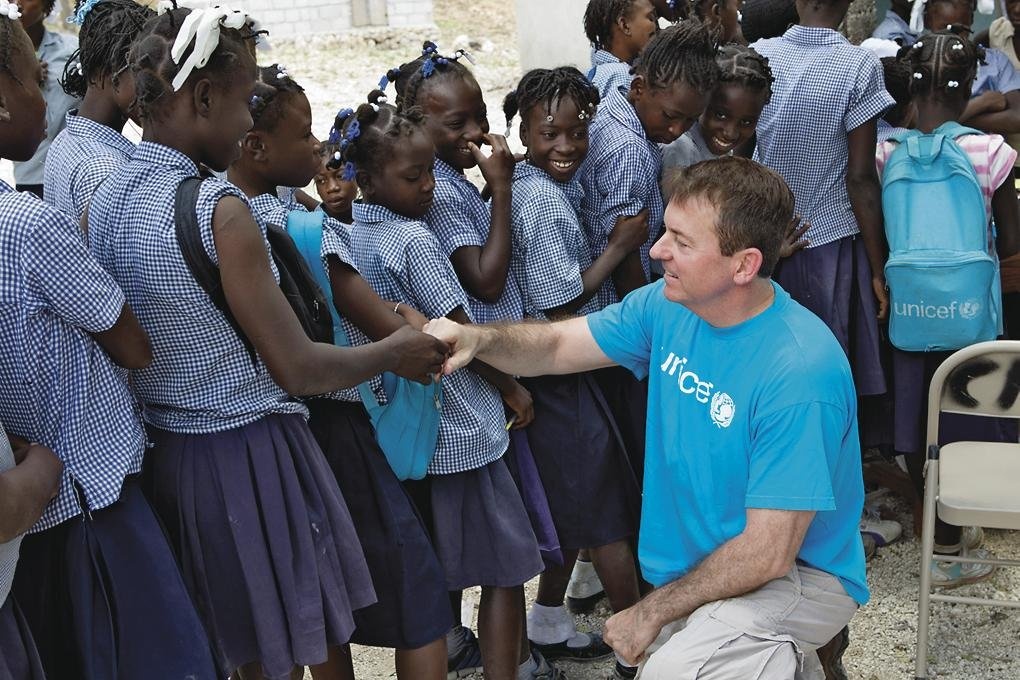
Although Kiwanis has had a longstanding partnership with Unicef to provide vaccinations against tetanus, a deadly disease that affects babies born in unsanitary places, no one from Unicef had taken Mr. DeJulio to see its work overseas. In Haiti, Mr. DeJulio met young women whom Haitian health-care workers had mobilized to get the shots to protect them in case they became pregnant.
Kiwanis doubled its donation of money to Unicef this year to help fight tetanus, from $4-million to $8-million.
[Editor’s note: The previous sentences have been corrected to show how the visit worked.]
Local Push
Even as he plans more trips with national leaders like Mr. DeJulio, Mr. Segar says he wants to keep strengthening Unicef’s local fundraising abilities, an effort begun two years ago when the regions started requiring new board members to make a minimum annual gift of $10,000. Each region now has a fundraising goal for the tetanus-eradication work and holds least one event each year to educate people about the plight of poor children globally.
The educational efforts got a big boost when a donor provided a million-dollar gift so each regional office could pay a stipend to new “global fellows” who speak to groups at local churches and schools about Unicef’s work and how issues such as human trafficking or natural disasters affect children.
Mr. Segar wants to do much more. For example, he wants to train fundraisers in how to pitch prospective donors for bequests and other planned gifts.
“Right now, planned giving is very direct-mail intensive,” he says. “If I could train them, they would be more comfortable talking to donors, not only about a major gift but how to include Unicef in your will or estate.”
He also wants to systematically assess relationships that Unicef’s regional board members have with other local movers and shakers.
“I need to do a better inventory of all of our contacts,” he says. “Board members have important contacts with individuals, foundations, and corporations.”




