
Breaking Down Barriers in a Segregated Region by Creating Green Space

By Caroline Bermudez
Contributor
October 3, 2010 | Read Time: 2 minutes
Racial riots. White flight. Disappearing manufacturers. High crime.
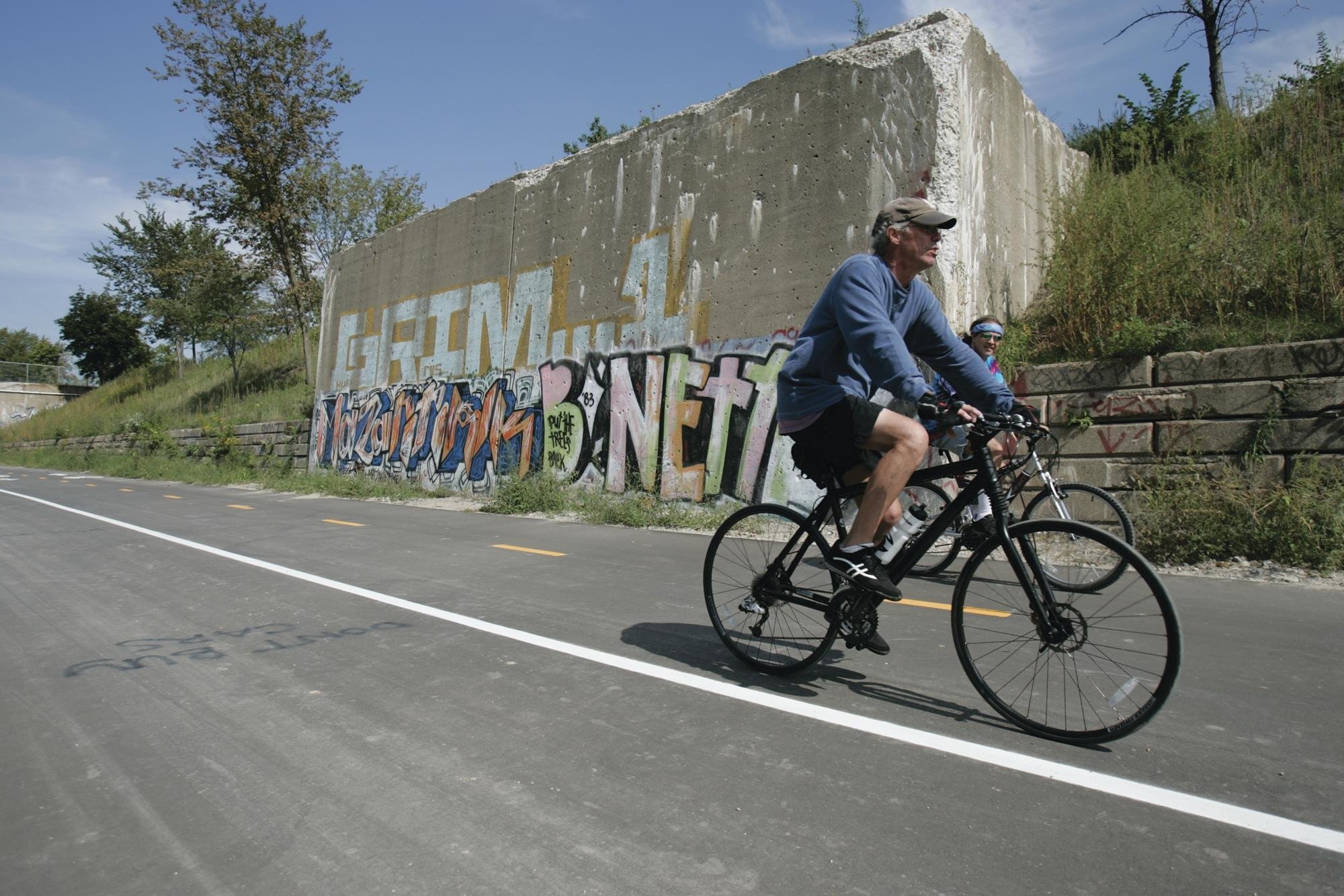
The Dequindre Cut was surely going to follow Detroit’s all-too-familiar tale of desolation and deterioration. The Cut was a long stretch of abandoned railroad lines that periodically served as a dumping ground for corpses—that is, until the Dequindre Cut was resurrected last year as a 1.35-mile-long urban recreational pathway that is a popular draw for bicyclists and picnickers who stop to admire its abundant graffiti art. Intended to connect the city’s riverfront and its Eastern Market, the stretch of land was developed thanks to support from the GreenWays Initiative, at the Community Foundation for Southeast Michigan, which awards grants to projects that create trails and paths that will improve access to culture, spur economic development, or protect the environment.
Begun in 2000, the program has awarded about $18-million in grants to 75 projects carried out primarily by municipal governments. At least 100 miles of greenways have been created in the past 10 years.
Despite the program’s name, its main purpose is not environmental conservation, says Tom Woiwode, its director. “For us, GreenWays is a bit of a euphemism in that the connection—the link—is the most important for us. The green part is actually not quite as significant as making those links between communities.”
Such links are important because of the racial divisions that Detroit has endured for decades. The city is the most segregated major metropolitan area in the country, according to the most recent Census figures. GreenWays was conceived as a means to help break down those barriers, says Mariam Noland, president of the Community Foundation for Southeast Michigan.
To that end, the program has been successful. Almost a third of the region has developed interconnected greenways and about $100-million in government support has been used to build them.
Mr. Woiwode says that he has encountered doctors who have moved their clinics closer to the greenways as part of encouraging patients to exercise; some restaurant owners near the paths say they have seen their revenues increase by as much as 30 percent; and businesses have begun to offer additional services such as bicycle rentals to accommodate demand. The GreenWays program has garnered the attention of other cities, such as Charlotte, N.C., interested in creating similar efforts.
However, the money to continue supporting the GreenWays program, which the Community Foundation for Southeast Michigan raised largely from private foundations, has almost run out. Unless it can secure more financial support, says Ms. Noland, the community foundation will stop supporting the program for now.
Ms. Noland says that GreenWays is essential to erasing the barriers the region has erected over the span of decades. “What we’re building is a spider web of these connectors, where people get on a bike and they don’t know if they crossed the boundary into Detroit or into a suburban area,” she says. “So it is a community-development strategy that is playing out on the landscape and changing behavior.”




