
Breaking Down the Color and Gender Barriers of Outdoor Sports

By NICOLE WALLACE
Features Editor
December 5, 2017 | Read Time: 2 minutes
Theodore Wirth Park in Minneapolis is a space almost as vast as New York’s Central Park, with amenities that include golf courses, a lake, and off-road bike trails. Though it borders a largely low-income neighborhood that’s the city’s most racially and ethnically diverse, the park’s patrons are typically affluent whites, many of them men.
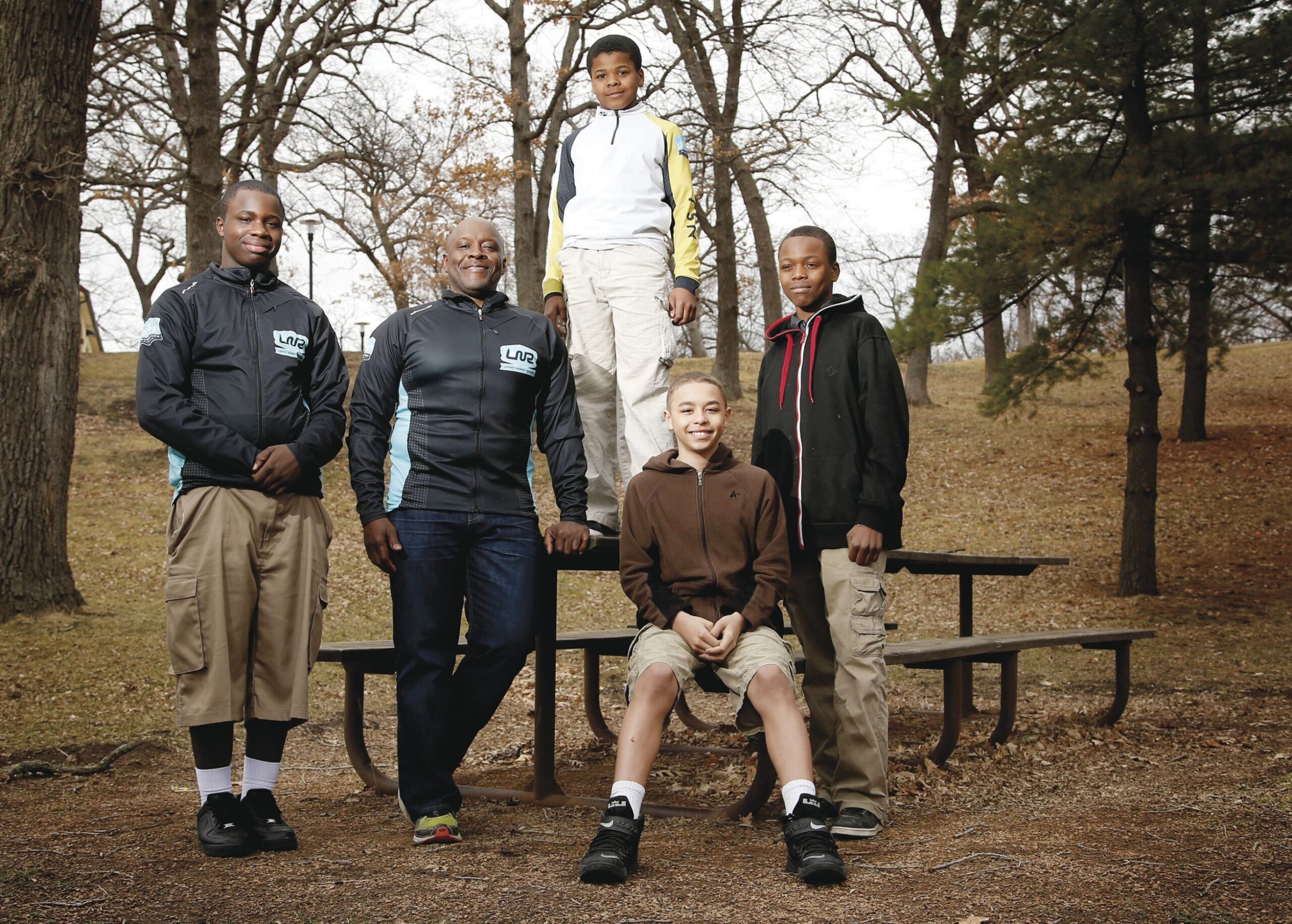
Anthony Taylor, 58, adventures director of the Loppet Foundation, a nonprofit based in the park, is committed to changing that. A chemical engineer by training and a former entrepreneur, Mr. Taylor (pictured, second from left) is part of the vanguard of a movement to spur women as well as people of color or modest means to get outdoors.
Loppet’s youth programs introduce neighborhood kids to nontraditional sports like mountain biking, orienteering, and cross-country skiing.
Parents often view the sports as something “that white people do,” but they warm to them when they realize Mr. Taylor or one of his minority coaches is in charge. “Parents see the adults they want the kid to grow into,” he says. “That’s when the light switch really goes off.”
Another way Mr. Taylor is luring people outside: Slow Roll Minneapolis, a series of easy bike rides that explore neighborhoods with a rough reputation. Mr. Taylor says the rides, which attract cyclists of all ages, are a powerful way for residents to reconnect with the neighborhood and the outdoors.
Too often, outdoor enthusiasts equate nature with the wilderness. But you can connect with nature in your own neighborhood, he says. “Often it starts with people taking a picnic, but I want people to be more active.”





