
Budget Impasse Cripples a Few Charities, but Bigger Cuts May Follow

By Alex Daniels
Contributor
September 22, 2013 | Read Time: 7 minutes
Phone calls from homeless people and domestic-abuse victims keep pouring into Community Information and Referral Services. But increasingly the phones ring and ring with no answer.
The Arizona group, which directs callers to nearby shelters and other charities in the state, is experiencing the effects of the automatic spending cuts that are starting to squeeze nonprofits—and could soon become a larger problem unless Congress and President Obama make a deal to cut the budget deficit.
The group lost 10 percent of its budget because of gridlock in Washington. It had no choice but to let the phones ring, and that means 40 percent of calls are left unanswered at peak times of the day.
Cuts for Years to Come
Budget problems like those facing the Arizona charity are the result of the deal Congress and the president made in 2011 to force automatic spending cuts, split evenly between domestic and defense budgets and imposed automatically whenever Congress doesn’t meet spending-reduction targets.
Unless Congress decides otherwise, the annual cuts will remain in place through fiscal 2021 and will total $984-billion.
Some nonprofit leaders’ biggest concern is the longevity of the cuts.
“If it was a one-year, 5-percent cut, OK, everyone can deal with that,” says Robert Lynch, president of Americans for the Arts, which advocates for cultural organizations. But cuts spread out over a decade are different, he says: “It has an impact on future thinking, future planning.”
Cumulative Effect
So far, most of the cuts charities have faced have been relatively small, but a few groups have already had to make sharp trims in services.
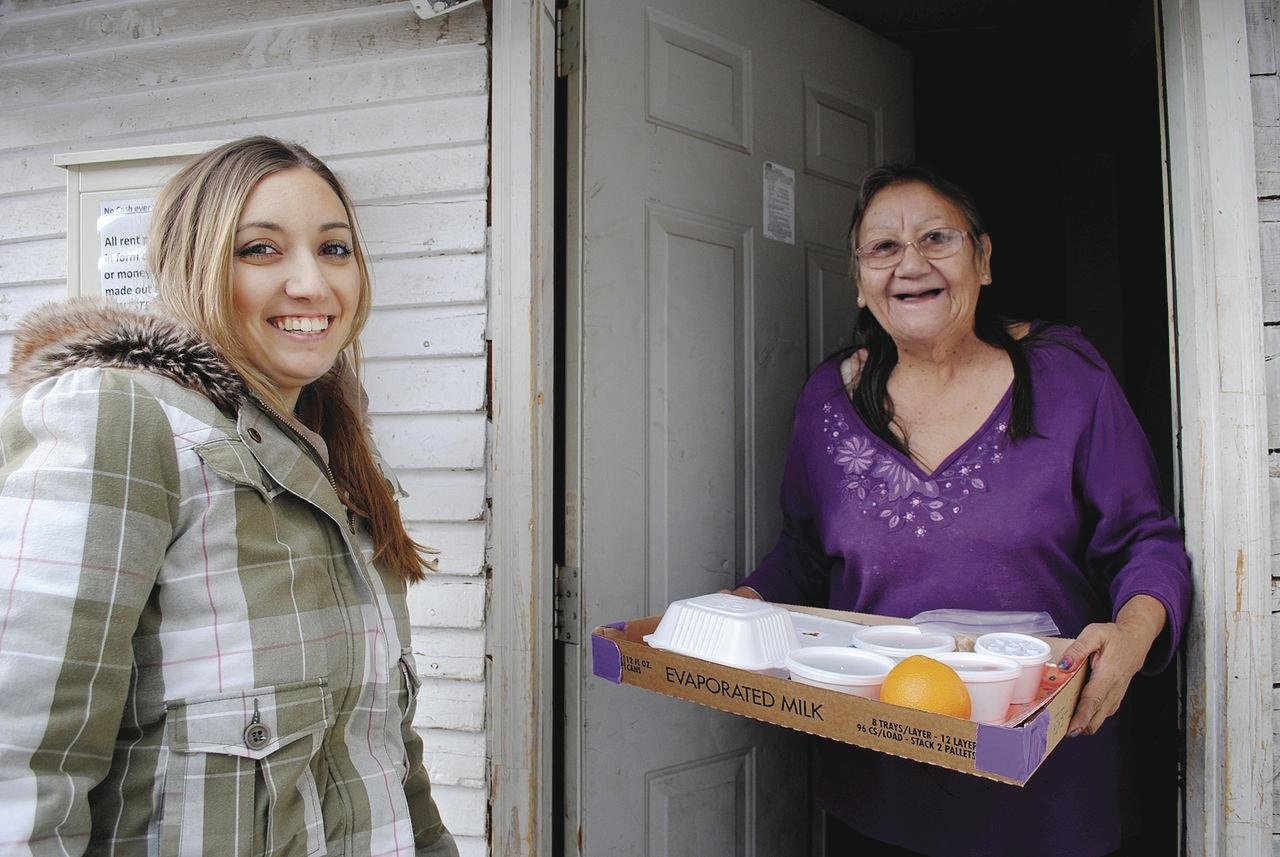
Among them: Meals on Wheels programs, 70 percent of which report having reduced the number of meals they serve, according to the national organization. And Head Start programs, which receive money ahead of other federal programs so they can plan for the school year, reported they were turning away tens of thousands of students this past summer.
Because the spending cuts have so far not been large, most nonprofits say they have found ways to absorb them. But most groups expect to start feeling the pain soon.
Paul Castro, chief executive of the Jewish Family Service of Los Angeles, says his organization has lost $44,000 out of an annual budget of $552,000 for a program that delivers meals to older people in their homes and at the group’s dining hall.
The Los Angeles City Council used money from other programs to restore $1-million to the meals program, which is provided through the federal Older Americans Act.
But that extra money was probably a “one-shot” effort, says Mr. Castro. He worries about how his group will maintain services if Congress doesn’t do something to avoid automatic cuts over the next eight years.
“The likelihood we’ll have that response from the city in the future is slim,” he says.
Mr. Castro says he’s trying to deal with the budget cuts in a way that is as painless as possible. He isn’t filling staff positions when they come open, and he has started waiting lists for people who want to get meals delivered.
That is what he suspects other groups are doing as well. He says nonprofits will take every step they can to scrape by rather than close their doors to people in need.
“We are masters of managing through cuts,” he says.
But he worries about the cumulative impact of the cuts as each nonprofit pares its programs. Because the cuts are coming gradually, and are spread out among hundreds of government programs and nonprofits that receive federal funds, Mr. Castro says it is hard to communicate the impact to lawmakers and the public.
Meanwhile, the budget disagreements in Washington persist, and nobody expects anything to change anytime soon.
The uncertainty has forced nonprofits into a “wicked no-man’s land,” says Tim Delaney, president of the National Council of Nonprofits.
Charitable organizations, he says, can either scale back now and start rationing their services in the expectation that the cuts will be permanent or they can “give people what they need now and hope Congress wakes up and realizes how insane this is.”
Staggered Reductions
In Atlanta, the federal standoff on deficit reduction is just the latest in a set of federal-aid reductions that are hurting efforts to shelter people who have AIDS.
Charlie Frew, executive director of Jerusalem House, in Atlanta, was faced with a $1.2-million cut because fewer residents in the city qualified for aid from the U.S. Housing and Urban Development’s Housing Opportunities for Persons with AIDS program.
Then the group was hit with across-the-board cuts caused by the lack of a budget-deficit deal. That led to a $1.1-million loss. The cuts have meant that for the two-year grant cycle that began in July, the Jerusalem House budget shrank by about one-third, to $4.1-million.
Beginning last November, when it became apparent the federal government was about to impose cuts, Mr. Frew stopped replacing tenants who left the group’s federally supported rental apartments.
About 50 of the 190 rental units were cleared when tenants found other living arrangements, got kicked out because they didn’t follow the rules, or died. But that wasn’t enough. Mr. Frew says he will have to force three more people to leave the program this month.
Atlanta’s federal housing grants are staggered, meaning about half the charities that provide them won’t face budget cuts until next July. Mr. Frew says he is warning social-services organizations to get ready now.
Seeking Other Sources
Some nonprofit leaders like Catherine Rea, executive director of Community Information and Referral Service, the Arizona group that helps direct needy people to social services, are trying to find other sources of money.
The hit to the organization’s revenue came in July when it lost aid from three major sources: the cities of Glendale, Phoenix, and Scottsdale.
Each city provided the group with cash received through the federal Community Development Block Grant program.
In total, the three cities contributed $71,250—more than 10 percent of the group’s budget.
But the municipalities decided that with federal funds dwindling, they needed to focus on providing grants to charities that interact directly with victims and homeless people by providing them with food, medical care, and a place to sleep.
“They assured us it had nothing to do with our performance,” Ms. Rea says. “But we were seen as a support service.”
In response, she says, she has held off on hiring a full-time employee as she had planned.
Ms. Rea says that when Arizona’s legislature gathers in January, her group plans to ask it to impose a one-cent surcharge on Arizonans’ phone bills. Doing so, she said, would raise the $1.5-million necessary to operate the system statewide without having to let calls go unanswered.
It’s better than looking for grant money to fill the gaps, she says.
“We don’t want to compete for grants with our customers,” she said, referring to the dozens of charities to which her group refers callers in need. “Going after $5,000 grants doesn’t add a full-time employee. We need sustainable funding year after year.”
Marketing Meals
Ted Trainer, of the Southern Maine Agency on Aging, is also looking to replace revenue once provided by the federal government.
Mr. Trainer, who oversees the group’s nutrition program, is coping with a 5-percent cut to the organization’s nutrition budget caused by automatic spending cuts.
One reason the cuts don’t have a more damaging effect is that his organization has been working steadily for several years to attract donations from private sources.
Mr. Trainer has been able to secure nearly one-third of his group’s budget from foundations, corporations, and individuals. That increase has allowed the organization to expand its services to include weekend deliveries and meals for disabled clients who are under 60.
But the federal cuts have meant that the organization has had to “reverse our expansive mode,” Mr. Trainer says. Because of the federal cuts, he says, deliveries to clients under 60 have been halved. And weekend deliveries are only about one-quarter of their peak level of 11,000 a week.
“We’ve sharply curtailed desserts,” he says. “Our next step is to cut delivery days and put up a waiting list.”
The cost of each of the group’s meals is $6.50, and Mr. Trainer suggests that Meals on Wheels participants donate $3.50.
With cuts promised for nearly the next decade, Mr. Trainer said he is hoping to start marketing the group’s meals to customers willing to pay full price.
“Can’t we take this product we have, which is a pretty nice meal, and market it to a new group?” he asks. “We’re going to have to develop new markets and new ways of thinking, which is a little more like a business.”







