By Reaching Out to Amateur Players, a Symphony Gets in Tune With Its Audience

By Maria Di Mento
Senior Editor
May 16, 2010 | Read Time: 3 minutes
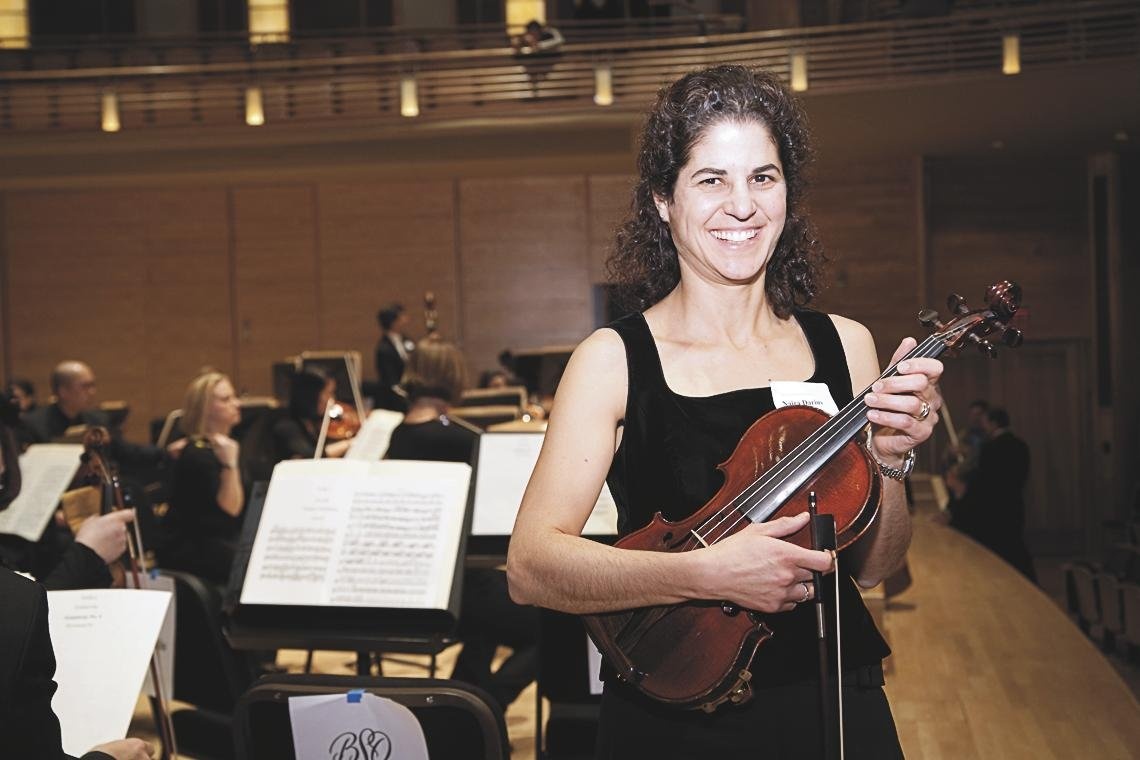
The Baltimore Symphony Orchestra invited about 400 adult amateur musicians to play side by side with its professional musicians in a concert of works by Tchaikovsky and Elgar in a two-night event in February called Rusty Musicians. When the symphony’s music director, Marin Alsop, first suggested the Rusty Musicians idea as a way to forge connections with the orchestra’s current and potential audience, some of her professional players balked at working with amateurs. But Ms. Alsop prevailed, and within days of the program’s announcement, nearly 700 eager applicants flooded the orchestra’s Web site to sign up.
The professional players found themselves unexpectedly moved by the Rusty performances, says Jane Marvine, the orchestra’s English hornist and chairwoman of the BSO Players’ Committee.
“It was such an emotional experience for the participants,” says Ms. Marvine. “People broke down in tears. Some said it was one of the most important, profound experiences of their lives.”
Seed of an Idea
Now the orchestra is taking its Rusty Musicians experience several steps further to create a classical-music education program that is unusual in its intensity and its focus on adults rather than children.
Next month the orchestra will embark on its first annual BSO Academy, a weeklong camp for adult, amateur musicians. The organization has high hopes that the academy—which is financed largely by a $950,000, three-year grant from the Andrew W. Mellon Foundation—will over time become an additional source of revenue, as well as a way to connect with and reach potential new supporters.
In 2003 the orchestra’s musicians began discussions about ways to offer the public more education programs, but their ideas didn’t take shape until 2007, when Ms. Alsop joined as music director and proposed the Rusty Musicians program. The conductor won a “genius” grant in 2005 from the John D. and Catherine T. MacArthur Foundation; among other attributes, the grant maker cited her “extraordinary ability to communicate” with not only her orchestra but also her audience.
The players had originally talked about creating some sort of a mentor program for young students, Ms. Alsop says, but the success of Rusty Musicians changed their minds.
Now, for one full week next month, about 50 adults, who have an average age of 47, will spend roughly 10 hours a day observing and rehearsing with the orchestra and Ms. Alsop.
The amateur musicians will attend specialized classes taught by BSO musicians on topics such as breathing techniques for wind-instrument players and baroque practice for string-instrument players.
The program, which costs $1,650 per participant, culminates in a final performance concert in which academy participants will play with the professionals.
The orchestra hopes the academy will eventually be able to provide the public with a variety of programs for various age groups.
Expanded Audience
The Baltimore Symphony Orchestra is no stranger to the deep and painful financial cuts most orchestras are currently facing. But with salary freezes and reductions, and other cost-saving measures, the orchestra eliminated a $5.6-million deficit and entered fiscal 2010 with no debt. As of March 31, its endowment stands at $46.8-million.
And while programs like the academy could end up increasing revenue, and cultivating new subscribers and donors, Ms. Alsop points out that money is only one part of the equation.
Her hope is that academy participants will come away from the experience with an in-depth sense of what it takes to be a serious, devoted professional musician, and a sense of accomplishment.
In addition, she says, she hopes the orchestra expands its number of fans and that other orchestras will follow her group’s lead.
“The more people that are engaged in classical and symphonic music, the better it is for all of us, and the deeper the level, the more wonderful, the richer the experience for everyone,” says Ms. Alsop. “That’s part of why we feel we exist, not just to play great music for a very defined number of people but also to be an access point for people.”