February 29, 2016 | Read Time: 2 minutes
Amidst the bombings and the fighting and the crushing hunger, life is fragile in Syria. But a baby could also die from something as simple as the power being cut off to a hospital’s incubators.
Five years into the devastating civil war, the United Nations estimates that more than 250,000 people have been killed and more than half of the country’s citizens have left their homes. More than 6 million people are displaced inside Syria, while 4.6 million people have fled the country.
“It’s pretty horrendous,” says Michael Klosson, vice president for policy and humanitarian response at Save the Children. “Potentially you could lose a generation who are going to be needed to rebuild the country.”
Save the Children provides support to schools and clinics inside Syria, and to local groups that provide food, clothing, blankets, and other necessities and that run vaccination campaigns.
Outside the country, the charity works to reunite families who were separated as they fled Syria and to protect young people who are making the trek to safety by themselves. It also provides humanitarian aid in refugee camps and runs safe spaces for children in the camps to play. Young people often draw or paint pictures to express their feelings and show what their families have gone through, says Mr. Klosson.
“Nobody was asking them about their journey,” he says. “These child-friendly spaces were a place where kids could tell their story.”
Last month Mr. Klosson visited Greece, Serbia, and Macedonia, where Save the Children provides aid to refugees who have made the treacherous crossing into Europe.
He says one sign of refugees’ growing desperation is the increase in the number of young people traveling alone, especially adolescent boys: “Think of the Hobbesian choices that their families have had to make, whether they’re in Syria or in Afghanistan, sending a young son on his own to make this journey.”
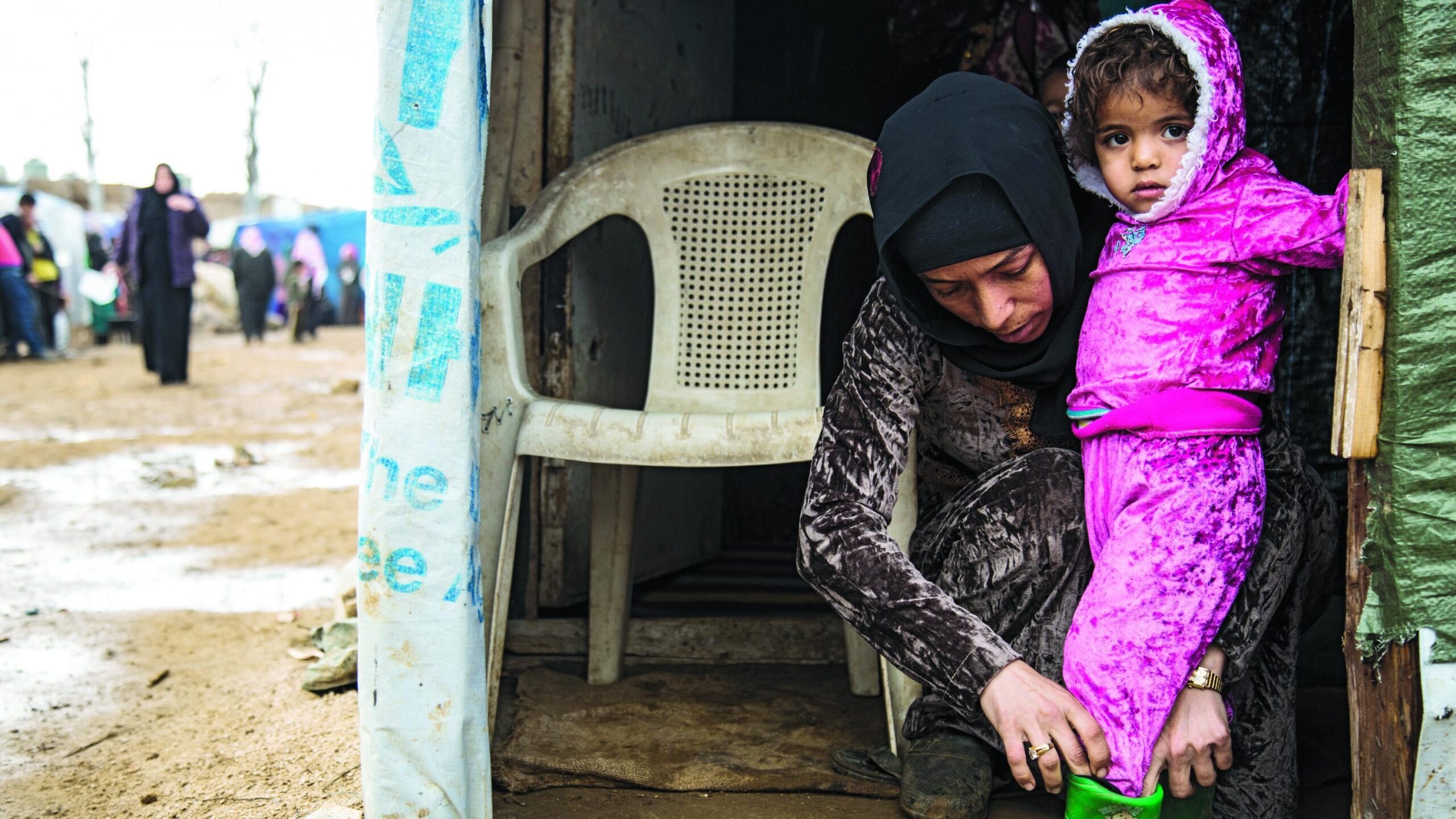
Here, a Syrian family in a refugee camp in Lebanon has reinforced a tent for winter with wood and plastic sheeting.