

June 26, 2011 | Read Time: 2 minutes
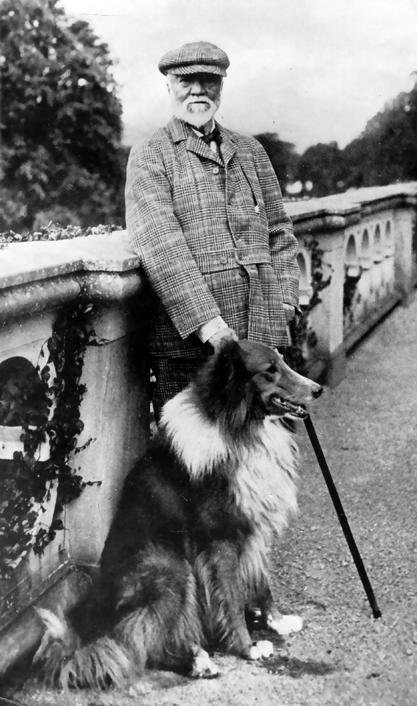
To commemorate its 100th anniversary, the Carnegie Corporation has reissued The Autobiography of Andrew Carnegie, its founder’s memoirs. The Chronicle spoke with Vartan Gregorian, the corporation’s president, on Mr. Carnegie’s legacy.
Why was the book reissued?
Because I love him. Not too many people are familiar with his autobiography.
Why do you admire Andrew Carnegie?
Because he was short, poor, and without formal education, and yet he came to the United States and accomplished the American Dream. But he was not satisfied with that. He expanded that dream to give equality and hope to individuals who would like to improve themselves.
What were some of his key contributions?
He was a trustee of Cornell University, but he found that faculty were paid $400 but no pension, so he decided to do something about it. So with an $11-million loan, today we have the $450-billion TIAA-CREF fund for nonprofits and other institutions to provide retirement benefits.
And as such, he did more to improve American higher education at the time than anybody else. He had the imagination for the important things in life, for humanity.
What do you think is Mr. Carnegie’s most lasting contribution?
He put education at the forefront of our society and democracy. He’ll always be remembered, even though he failed, for promoting international peace.
He laid down the foundation of the United Nations and before that the League of Nations—he suggested that there ought to be some international organization that moderates conflicts.
How has the Carnegie Corporation been faithful to its benefactor’s vision?
He believed in progress. He believed that opportunities are not frozen, so he wanted trustees to take advantage of those opportunities.
Frankly, he has left such a broad mandate—education, international peace, creation of knowledge—that gives leeway for anything we wanted to do, but we have respected his wishes in terms of spending the bulk on American institutions rather than foreign institutions.
How has Mr. Carnegie influenced society?
Carnegie is a role model.
He taught that with wealth comes responsibility, and that if you elevate the destitute from their poverty into a new situation in life you help rebuild society.
How did he influence philanthropy?
The Carnegie Corporation was the first one to have an annual report.
He thought it would signal not only commitment but also responsibility.
There was no income tax at the time, there was no federal supervision—it was his money. But despite that, Andrew Carnegie believed in promoting accountability: The public should know how you’re helping the public cause.




