Carnegie’s New Leader Expected to Maintain Status Quo but Add Spark to the Foundation

By Alex Daniels
Senior Editor, Foundations
November 18, 2021 | Read Time: 4 minutes
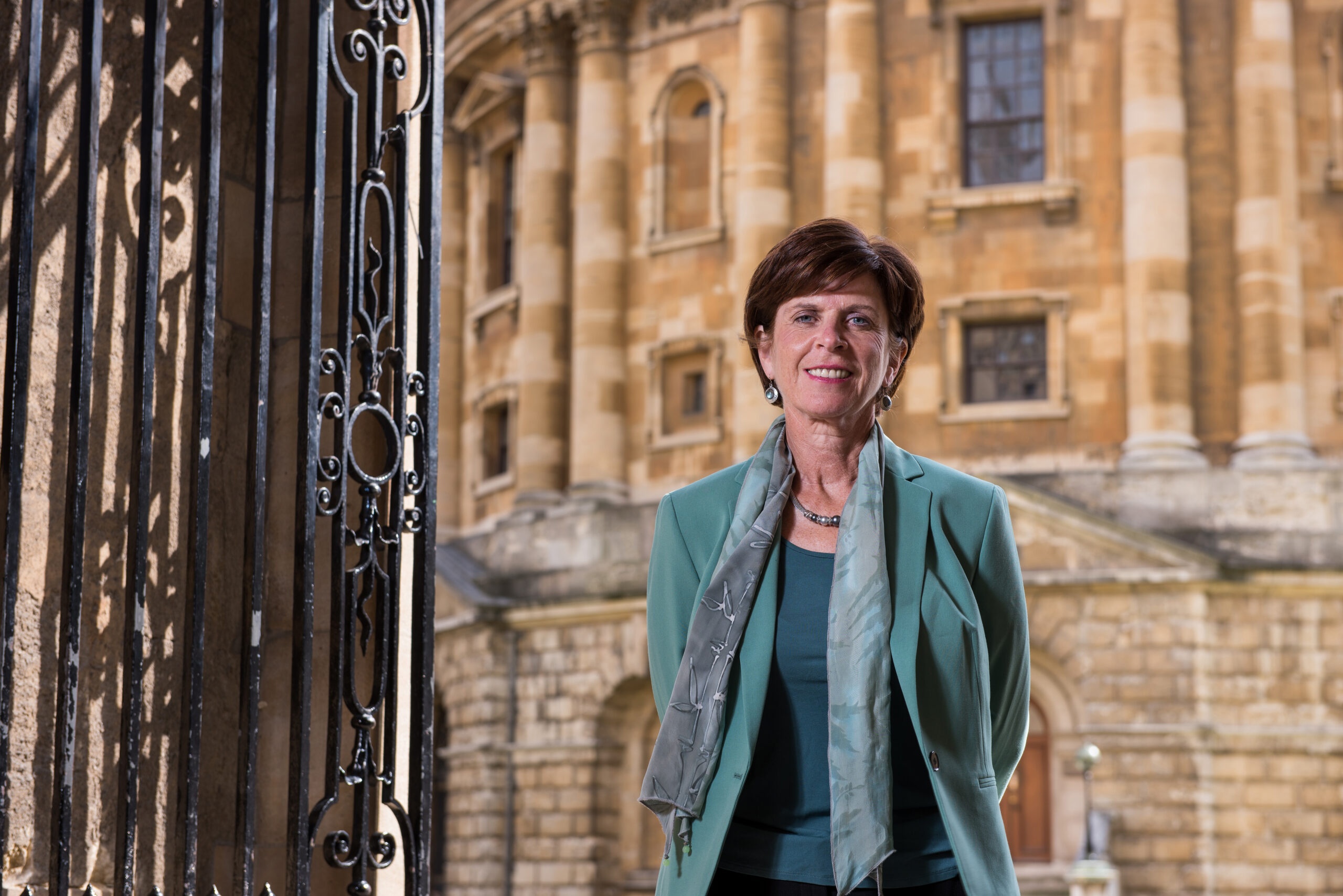
In selecting Louise Richardson, vice chancellor of the University of Oxford, to lead the Carnegie Corporation, the philanthropy’s board members chose a respected, mainstream academic leader, one who is unlikely to take the activist stance adopted by some of today’s foundation leaders.
Richardson succeeds Vartan Gregorian, a dynamic presence who led Carnegie with his intellect and personal gusto for nearly 24 years, before his unexpected death in April.
In an interview, Richardson did not offer specifics about any changes she would make to Carnegie’s grant making. She said she was dedicated to the “lodestar” established by the industrialist Andrew Carnegie more than a century ago to support education and promote peace. A board member of the corporation for nearly a decade, she was hesitant to name any specific ways it might shift how it operates.
“Every change is an inflection point for an institution,” she said. “And I think the arrival of a new person, of course, injects some dynamism into an organization. It’s an opportunity for the organization to re-examine itself.”
‘Conventional Choice’
Over the past several years, many of the largest U.S. foundations have chosen leaders, like Darren Walker of the Ford Foundation and Elizabeth Alexander of the Mellon Foundation, who are people of color committed to achieving social justice.
In picking Richardson, who previously served as principal and vice chancellor of the University of St. Andrews, in Scotland, and taught political science at Harvard University for 20 years, Carnegie chose a member of the “mainstream elite” rather than a social-justice warrior, said Stanley N. Katz, a historian at Princeton University and president emeritus of the American Council of Learned Societies.
Richardson will be the first woman to lead Carnegie, he noted. But nothing about her career suggests that she will take Carnegie in a different direction, Katz said. “This is a extremely conventional choice.”
“She’s not really breaking the mold.” agreed Ellen Condliffe Lagemann, a visiting scholar at New York University’s Steinhardt School of Culture Education and Human Development.
Nonetheless, she cheered Richardson’s selection, saying she could energize the foundation with a “new spark.”
The idea that Richardson may not be a leader in the mold of someone like Ford’s Darren Walker could be a positive, she said.
“If Carnegie can kind of play a different role than Ford and many of the other big foundations, that would be quite healthy,” Condliffe Lagemann said. “One of the things you don’t want in philanthropy is to have all the foundations lining up in the same direction.”
Both Richardson and Thomas Kean, who chairs Carnegie’s Board of Trustees, emphasized that the foundation, which currently has $4.7 billion in assets, has always been a champion of social causes. They pointed out its support of migrants globally and its support of education to help people advance economically.
Kean, a former Republican governor of New Jersey, said he first met Richardson when he was chairman of the 9/11 Commission and she was at St. Andrews. Her expertise in the subject of terrorism and international relations will be indispensable leading the philanthropy, he said.
The top five finalists for the job included a “very important person in government,” Kean said. The board members decided to give the job to Richardson not because they preferred an academic to a politician, he said, but because Richardson was by far the most qualified for the spot.
Interim Leadership
Richardson will stay at Oxford until January 2023, which Katz said was a “terrible idea.” But Kean — who since Gregorian’s death has been running Carnegie’s operations together with Janet Robinson, the board’s vice chair and a former president of the New York Times Company — said the board does not plan to make major changes in the interim.
“Carnegie presidents stay long term,” he said. “A year or two doesn’t matter to us if you get the best.”
Carnegie’s endowment, while substantial, in the past decade or two has been outpaced in growth by big philanthropists and foundations who are commiting significant funds to philanthropy. Even so, Condliffe Lagemann said Carnegie has increasingly played a useful “design role, rather than a bankroll.” Its name has attracted heavyweight intellectuals who can define problems and possible solutions, which larger foundations can help support.
It’s a role Richardson seems eager to sustain.
“Smaller institutions can be more effective if they’re focused, … if they’re disciplined, and if they’re open to innovation,” she said. “And I think our size enables us to be more flexible than some larger institutions have been able to be.”
One thing Richardson said she would not miss from her time at Oxford: the British news media.
“I’m looking forward to working with people who are dedicated and just getting things done without constantly having our motives questioned and constantly being criticized in the press,” she said.
“Healthy skepticism is fine, perhaps. We need to be held to account,” she added. “It’s a great privilege to have these resources at our disposal.”