
Charities Can Benefit by Harnessing the Energy of Youthful Volunteers

By Michelle Gienow
Contributor
October 6, 2013 | Read Time: 7 minutes
My New Red Shoes provides clothing and school supplies to homeless and needy students in the San Francisco Bay Area and operates on a shoestring budget. But last year, the charity was able to produce a professional-quality promotional video about its program, courtesy of a teenage volunteer.
The five-person staff would never have had the time to learn video editing, much less be able to divert funds to buy a camera and production software, says Becca Moos, the charity’s manager of community outreach and education.
“We simply lacked the resources,” she says. “But then this really young volunteer steps forward completely unexpectedly with all the necessary skills and equipment, and we are like, ‘Yes, please!’”
My Red Shoes has since used the video in fundraising activities and featured it on its Web site and in e-mail newsletters.
These days, more charities are taking advantage of the energy and talents of teenagers. Plenty of them are available, in part because many American high schools and an increasing number of middle schools now require students to perform community service to graduate.
Even so, some organizations shy away from enlisting young volunteers because they worry about violating laws on child labor and aren’t always sure what skills young people can bring.
But legal concerns shouldn’t get in the way, says Susan Ellis, president of Energize, a management consultancy in Philadelphia that focuses on volunteerism. “Volunteering is not covered by child-labor regulations and is essentially unlimited,” notes Ms. Ellis.
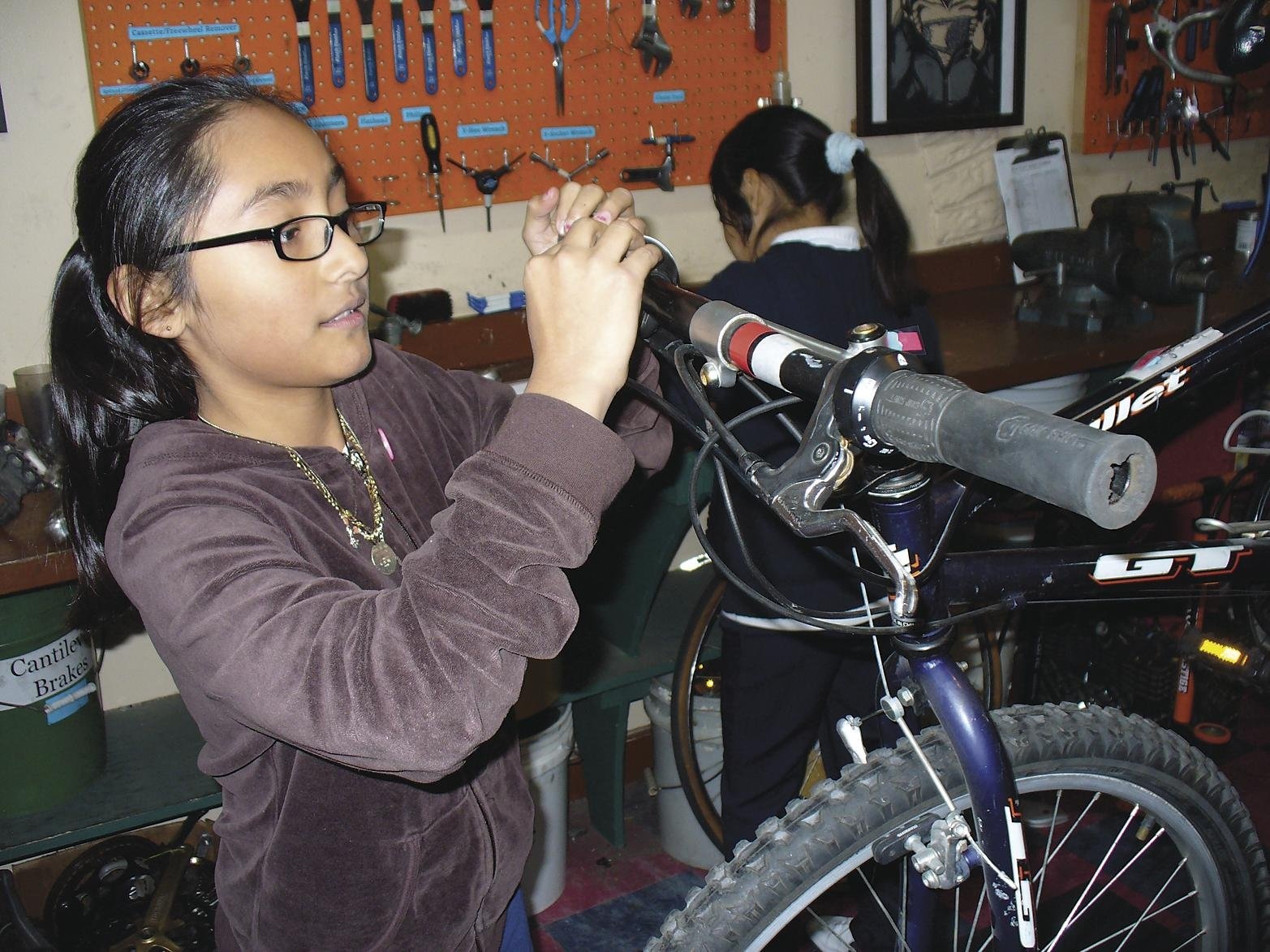
Besides adding extra hands, young people from local schools are often more ethnically and racially diverse than the organization’s staff, says Tzippy Rhodes, director of youth programming at the Recyclery Collective, a Chicago group that repairs and distributes donated bikes.
Bringing in local students, she says, can be “a great way to get your workers and your clients looking more alike.”
Among the other suggestions from nonprofits that have attracted young volunteers:
Recruit at schools. “Many schools have coordinators who connect students with service opportunities, and they will be delighted to hear from you. Students want to get those hours checked off,” says Marie Schwartz, founder of Teen Life, a company that matches students nationwide with local volunteer opportunities.
Tailor volunteer jobs. Some teenagers are interested mostly in one-shot or short-term service events, while others have the potential to stay involved for a long time.
For those students seeking mostly to rack up service hours quickly, nonprofits can organize frequent one-day or half-day open volunteer events designed for unskilled labor, advises Ms. Schwartz. Think simple tasks, like sorting toiletries into gift bags to distribute at a homeless shelter or cleaning up a local waterway or playground.
Next, set up a schedule of such “open volunteering” days and contact local schools to publicize it. Don’t procrastinate, Ms. Schwartz advises: “These kids’ calendars fill up fast. You need to get on there as early as possible.”
Give older kids autonomy. Some charities require children under age 15 to volunteer with a parent. By late adolescence, however, most high-school students are mature enough to work on fairly complex tasks independently.
“If you tailor your recruitment efforts to find teens with an affinity for the work, they will stick around longer and be able to take on more complicated tasks,” says Karen Coltrane, president of the Children’s Museum of Richmond, in Virginia, whose organization uses about 600 student volunteers annually.
Look for signs of motivation. Academic performance shouldn’t be the only way charity managers decide who is qualified to do what.
The children’s museum asks young volunteers to write a 500-word essay describing, for example, a situation in which they encountered an obstacle and how they overcame it. The essays aren’t evaluated for spelling or style, Ms. Coltrane says, but are used to get a feel for a student’s work ethic, creativity, and ability to persist in a task.
“It can be self-selecting. Not every applicant is willing to sit down and write an essay, but that is the point,” she says. “We are putting a lot of resources into our volunteers, and we want them to give the same level of commitment and dedication in return.”
Seek recommendations not only from teachers but also from other community figures who know the prospective volunteers, says Ms. Ellis. She also suggests gauging their interests by asking them about their involvement in church or other social groups, hobbies, even favorite television shows.
Ask about transportation. How are they going to get to their volunteer jobs: by bicycle, bus, or Mom’s taxi? Transportation can be a big obstacle for young people, nonprofit managers say, and can hobble their reliability.
Be flexible. Remember that teenagers’ days are structured differently than those of adults.
“Think about scheduling around the academic calendar. Summer can be a time of great availability; the school months, less so,” says Ms. Schwartz.
She recommends creating different “packages” to offer potential volunteers, such as a two- or three-month commitment for 15 to 20 hours a week, which fits well with summer break, and a longer-term commitment allocating “bite-size” chunks of volunteer hours spread out over six or more months.
Other nonprofit managers say that offering take-home tasks that can be done after hours is another way to squeeze volunteering into a teenager’s jam-packed schedule.
Tap their creativity. Young people can be fountains of good ideas, say many managers of volunteers. “They’re at a very generative stage of life,” says Ms. Coltrane. “Giving them opportunities to create and maybe even implement solutions, rather than just being told what to do, can really pay off.”
She recommends setting it up as a problem to be solved. For example, “We never have enough food on the fifth day of the month when people come into the food bank. What can we do?”
Provide context. Kids need to be told why their task is important and what it will help accomplish, says Melissa Williams, vice president for learning at Chicago’s Shedd Aquarium, who works with teenage volunteers. “Even if they’re just stuffing envelopes, if they know it’s a campaign to raise $1,000 to bring a new animal to the aquarium, they will connect their work with a tangible outcome,” she says.
Teach young people about philanthropy. My New Red Shoes collects the clothing and school supplies it gives away in part through drives led by students at local middle and high schools, though Ms. Moos says she has also worked with volunteers as young as preschool age.
Aside from planting the seeds for future philanthropy, Ms. Moos points out the long-term benefits for all nonprofits in teaching children how organizations like hers work.
“A lot of kids assume that if you’re a charity, everything is free. They don’t understand that charities need to raise money,” she says.
Her program also emphasizes the social issues underlying the gift of a backpack filled with new shoes and school supplies. “Teaching them the impact of poverty, living on less than a dollar a day: It’s like sneaking vegetables into their dinner when you couple these social issues with fun activities,” says Ms. Moos.
Check liability insurance. Many insurance policies don’t cover minors, so check your policy’s fine print before starting a youth-volunteer program.
Challenge young volunteers. “Don’t be afraid to give them above-grade-level tasks to reach for. When given the opportunity to step up, they mostly will,” advises Jowharah Sanders, founder of National Voices for Equality, Education and Enlightenment.
Ms. Sanders’s anti-violence group in Fort Lauderdale, Fla., recruits and trains student “peace ambassadors” to reach out to other young people in city schools and trusts them to work on their own. “Teens are capable of more than most people think,” she says.
Her main advice, however: “Don’t create a program for teen volunteers unless you have a lot for them to do. The only thing teenagers really fear is boredom.”
Resources for Managing Young Volunteers
- Do Something, a nonprofit that encourages teenagers to volunteer, conducted a national survey of young volunteers, “The DoSomething.org Index on Young People and Volunteering: The Year of Friends With Benefits From 2012,” which offers insight into what motivates youths to donate their time.
- Points of Light Foundation offers tips on recruiting youth volunteers and designing programs to keep them involved.
- Children as Volunteers: Preparing for Community Service, by Susan Ellis, Anne Weisbord, and Katherine H. Noyes, discusses the legal issues involved in working with volunteers under 18 and shows how to recruit, train, and design tasks for younger volunteers.
- J-Serve Teen Leaders Handbook, produced for organizers of J-Serve, a day each year on which Jewish teenagers across the country perform acts of community service, offers information on working with teenagers and publicizing service events in a guide that can be adapted for a variety of charities.




