
Charities’ Collaboration Can Help Combat Donor Fatigue, Says Award-Winning Fundraiser

By HEATHER JOSLYN
Contributor
April 13, 2018 | Read Time: 9 minutes
Washington
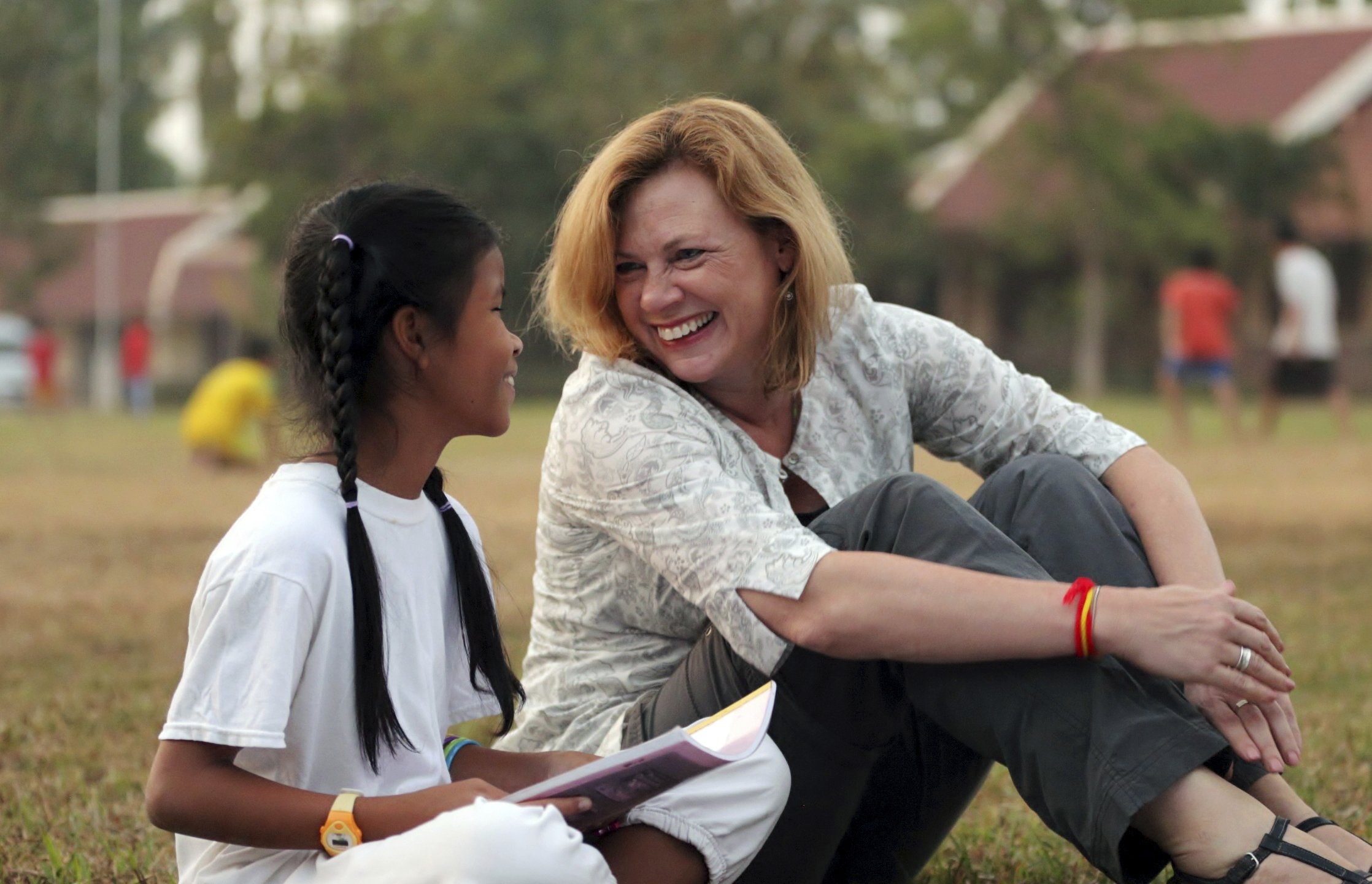
Lynn Croneberger leads SOS Children’s Villages-USA, an organization that provides family homes for orphaned or abandoned children around the world.
During her six-year tenure, donations raised in the United States have leapt from $4.6 million to about $12 million annually. The veteran fundraiser has long been known as an authority on cause marketing and a turnaround specialist: A few years back, when she oversaw development at Reading Is Fundamental, then heavily reliant on a single federal grant, she helped diversify its revenue, boosting the charity’s corporate support by 400 percent.
Such achievements have vaulted her into public prominence, and on Sunday she will receive the 2018 Outstanding Fundraising Professional award from the Association of Fundraising Professionals at the organization’s annual conference, an unusual honor for a chief executive.
In addition to Reading Is Fundamental, her career in fundraising has included stops at hospital foundations and at the South Florida branches of the American Heart Association and United Way, making for a varied résumé. What’s the common thread? Kids, she says. All of the programs she’s raised money for in those jobs have been to benefit children.
Croneberger, 54, grew up in Detroit, the daughter of a librarian father and a mother who died when the future charity leader was 16. Part of her childhood was spent in an Episcopal commune; the supportive extended family that experience created made her particularly sympathetic to SOS’s mission.
She entered fundraising by happenstance. While studying marketing and communications at the University of Memphis, she interned at a local public television station. During pledge campaigns, “at those times when the talent wouldn’t show up, they would throw me in front of the camera,” she recalls. The young woman made a career shift, intrigued by “what donor support could do and what donor support looks like.”
The SOS Children’s Villages role is her first time as CEO. Collectively, the international SOS organization, based in Vienna, raises more than $1 billion annually. For the U.S. operation, half of all gifts come from corporate donors like Hasbro, Johnson & Johnson, and Radisson Hotels, with the rest coming from individuals. With 65 million people now displaced around the world, SOS is housing 80,000 kids in Children’s Villages spread across 134 countries. Croneberger lights up when she talks about visiting children at some of the charity’s 571 villages: “When they’re at the villages, they’re finally safe, so they’re happy. They’re kids again.”
From her cozy corner office near the White House, decorated with dolls from around the world and photos of the seven kids she sponsors in Cambodia, Malawi, Russia, and elsewhere, Croneberger talked to the Chronicle. Following are excerpts from the interview.
It’s a very challenging time with this huge refugee crisis. How is S.O.S keeping up with that demand?
Fundraising in this country around that issue is difficult because donors are becoming worn out. They keep hearing “crisis” all the time, and it’s hard to keep responding to every crisis at the same level. I think donors feel helpless. You know, how much more can I give? What else do I need to do to help?
How do you partner with other organizations?
We’re locally led and so we work a lot with community-based organizations. Those are a huge part of what we do, but we also partner with international organizations like the U.N. agencies and Unicef.
We just opened a program in Damascus with Unicef, providing a safe place for children living through the conflict. So it’s really important for us to collaborate — not any one organization can do it all. And I also think that’s another part that’s really important to donors. They want to see that collaboration and that efficiency. And so for SOS, we’re the “child place” in these disasters, and we can supplement a lot of other organizations’ work.
How did you get this particular job?
When I got the call, I thought, I’m not sure I really want to do this. I thought this was just running the development team for another large national organization. And then what I didn’t realize was, no, this was the CEO position. So it was my first real CEO job.
I have an amazing team here. It’s great. I found people along the way that I really enjoyed working with, so they’re here now. I like to say that one of my skills is identifying good team members. So that was key.
The other was, I love working with boards of directors. I feel like I’m the conduit between people who really want to give back and who don’t have the opportunity to do this work. They’re in a business job, and I get to connect them with the people in the world who need help.
A lot of CEOs don’t like working with their boards. What are some of the secrets to getting along?
I think about our chairman, who wasn’t really engaged before I got here. And the reason was he wasn’t engaged, he wasn’t being asked to do the right things. He wasn’t asked to help with things that he could help with, and so he didn’t really feel like he was making a difference, and he felt like he was wasting his time.
You can’t waste a board member’s time. You need to help them be successful. They’re not going to keep helping you if they’re not successful. So make sure that the types of things they are being asked to do are really critical and worth the time.
And the mission has to fit, right? If they’re passionate about what you’re doing, they’re more likely to be committed.
What fundraising opportunities and challenges do you see now, not just for SOS but for everybody?
It’s really crowded. It’s why I think collaboration is so important, so that we’re not as a society just creating over and over again similar types of organizations that are doing similar work.
We really want to try and encourage philanthropists and social changers to look at existing organizations and see how you can help them grow, so we’re not dividing up the pie into such small parts that it’s just not effective anymore.
That makes it really challenging for those of us who have been here for a while, who are doing the consistent long-term work. It’s hard to stay sexy. But when it’s critical work, you have to be. It’s almost like we have to keep creating new programs, new ways of doing things, even if we have something that’s consistent and does a lot of good.
We’re raising 80,000 children right now. That core work is really, really important. But most of the donors I talk to want to do something new. Right? They want to make a statement. They want to build their legacy. And I absolutely understand that. But who’s going to take care of the children year after year who need a home and a mom?
Packaging and repackaging so that it’s new and exciting takes a lot of energy and resources. And that makes it harder, but you have to do it. It would be great if we could just say, Just keep giving to the same thing, we’ll keep doing the same work, and all will be well. But that’s not the way that it works.
During the recession I was hearing about collaboration from the grant makers’ side a lot. But I feel like I’m hearing more of it from the nonprofit side now. Are you sensing from your peers a little more enthusiasm for that?
And willingness. Because that is a new way to make it new. If we can extend the program by working with another organization, then we both can go talk about this new collaboration.
Like we did with Unicef in providing this center and in Damascus, bringing both our resources toward this project. It’s something new I can go talk about.
Do you worry that donor fatigue is going to continue to be a problem?
I do think it’s a problem. It’s going to push some organizations out. That’s why, not to beat a dead horse, but collaboration is so important because there are some efficiencies to be had. If we were pulling resources and kind of tightening up across this country, I think we could still do a lot of the same work.
Part of that challenge is to continue to do the really, really good work and warrant the support. And make sure we’re telling the personal stories and doing everything we can to show how relevant and how necessary we are.
What do you see as the immediate plans for the organization?
We’ve been growing pretty rapidly. My goal is to keep going.
We’re still far away from being a household name in this country, like we are in Germany or Norway or Austria. We have been around for 60 years for a reason. What we do really works. So for me, it’s really educating the U.S. market to the fact that we’re here, we’re tried and true and successful for our kids. We’ve got villages in Illinois and Florida, and they’re really successful programs. We’ve got a 95 percent [high-school] graduation rate in our villages, which is incredible, especially when you think that these are foster-care kids.
Some of these kids have gone through some terrible things. Are you able to leave that behind you when you go home in the evening?
It’s hard. We get updates almost daily about the crisis going on with our kids, and that gets really hard when you read the stories of what’s happening.
The first alum I met, Gabre Egziabher, who is now in his 30s: When I met him, he told me his story. He was 3 months old when he got dropped off during the famine in Ethiopia; his parents had deceased. His SOS mother didn’t think he was going to make it. He survived the famine, and he did really well scholastically.
We have a prep school in Ghana, and he went there and then he got a scholarship to Harvard. And he graduated Harvard, and now he’s working in the energy field, doing energy trading. And I go talk with him now whenever I can.
I get to know a lot of the “what happens after” stories, and so I try and think about them when I hear of a new incident.
What helps me sleep better at night is trying to remember that even with these horrible things going on, with the right amount of intervention, there can still be happy stories on the other side. I hope.
This interview has been edited for length and clarity.





