October 10, 2013 | Read Time: 4 minutes
Washington
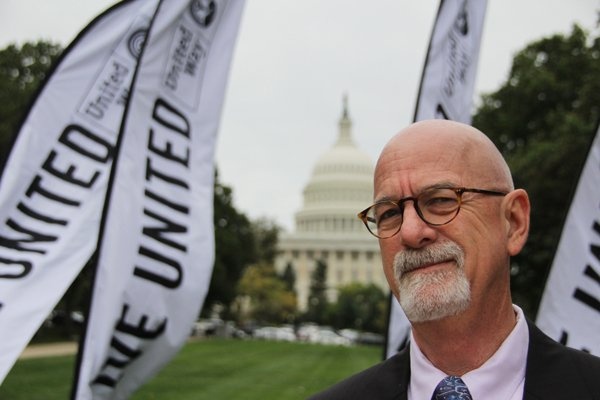
United Way executives from across the country gathered near the Capitol on Wednesday morning in an attempt to show Congress how communities as politically different as Georgia and Pennsylvania or Illinois and South Carolina manage to work together to tackle issues.
Standing in a chilly wind swirling around the Capitol and Congressional offices, nearly 50 United Way leaders then spent the day meeting with elected officials to urge them to end the nine-day government shutdown that this week will begin to cut off food to low-income mothers and their babies when the federal Women, Infants and Children food program runs out of money.
Other groups such as the Coalition on Human Needs are also working to alert Congress to the impact the shutdown will have on nonprofits that receive federal dollars to deliver social services.
The coalition held a Webinar yesterday with Sen. Barbara Mikulski, a Democrat from Maryland, to kick off a campaign asking its members to call Congressional leaders with pleas for finding a bipartisan solution. And the Center for Nonprofit Management posted a message on Twitter that said the White House has asked it to help gather examples about how the shutdown is hitting nonprofits in Southern California.
Private Sources Can’t Keep Up
United Way officials already have such stories.
“We are seeing the call volume increase” to United Way offices in South Carolina, said Timothy Ervolina, president of United Way Association of South Carolina.
He said the $100-million allocated for the WIC program in South Carolina through September 30 (the last day of the federal fiscal year) will be fully tapped out later this week once emergency allocations and state money runs out. Even if all of his 28 United Way local offices spent every penny they raise— $60-million—they couldn’t meet that need. In addition, the automatic budget cuts that took effect because of the Congressional impasse over deficit spending will start to sharply reduce benefits to food-stamp recipients on November 1. United Way is sending letters alerting its offices about that change and to expect an increase in demand.
“We’re coming into the traditional season when people experience food shortages,” Mr. Ervolina said. “We’re really in a place where we are tapped out. To say that the private sector is going to do this is living in an alternative universe.”
Display of Bipartisanship
Steve Taylor, senior vice president for public policy at United Way Worldwide, orchestrates such visits to the Capitol each year and said the shutdown nearly scuttled this year’s trip. But the nation’s largest charity moved ahead anyway in hopes of showing members of Congress that United Way communities, despite including liberals and conservatives, organized labor leaders, and business executives alike on their boards, continue to work together.
“All these people come together to solve the communities’ problems,” Mr. Taylor said. “We think Congress ought to be thinking of that model because what they’re doing is clearly not working.”
Peter Manzo, chief executive of United Ways of California, said grocery stores in the state are starting to turn away customers who rely on WIC because they fear the federal government will not reimburse such subsidized purchases.
The shutdown is also hitting nonprofits in Pennsylvania that had been preparing applications for Race to the Top grants from the Department of Education. The grants are designed to help communities improve their schools.
“People can’t get answers to questions they have about grant proposals,” said Tony Ross, chief executive of United Way of Pennsylvania.
Greg Millette, executive director of United Way of South Central Georgia, was scheduled to meet with representatives from both parties, especially his state’s two representatives on the House Committee on Agriculture: Austin Scott, a Republican, and David Scott, a Democrat.
Federal scientists researching peanuts in Georgia may miss the opportunity to harvest their crops, wasting years of research, Mr. Millette said. That would have a far-lasting impact on top of the shorter-term hit to social programs.
“We know it’s coming,” Mr. Millette said of cuts to food programs for the poor. “It’s like a big wave ready to crash.”
He said he hopes that Sen. Saxby Chambliss, a Georgia Republican who worked with Democrats in the so-called Gang of Six in 2012 on a deficit deal, could inspire further bipartisanship among other members of Congress to end the shutdown.
“I believe he has bipartisanship in his heart,” Mr. Millette said. Other members need to “find a way to reach across the aisle.”
Read more about how the government shutdown is affecting charities.