
Charities Find Creative Ways to Recruit New Donors in Tough Times

By Holly Hall
Contributor
January 9, 2011 | Read Time: 7 minutes
Finding new donors has become increasingly tough in the bad economy. But for charities that have succeeded, their new donors may be worth more over the long haul than supporters recruited in better times.
Donors who started giving to a charity for the first time during the recession give 10 percent more, on average, and for longer periods than people who started giving before the financial crisis, according to Avalon Consulting, a Washington fund-raising company that has examined the fund-raising returns of the cultural, environmental, and social-change groups it advises.
“Donors we acquire in these hard times tend to have a better return on investment, and they stay longer, so they are better donors,” says Ann Herzog, Avalon’s president.
Even so, most charities say they have never faced such a struggle to win first-time donors.
“These are very challenging times,” says Cindy Lappetito, a vice president at Epsilon, a Dallas company that helps charities with fund raising. Even as other types of fund raising are beginning to fare better, “donor acquisition has not recovered.” She adds: “Looking ahead to 2011, it is going to take a long time to return to pre-recession levels.”
Trying New Approaches
A big reason for the problem is that direct mail, the main way most charities seek first-time donors, isn’t working as well as it once did—but few charities have found anything that fares much better.
Poor direct-mail results were a main reason that the number of new donors declined by a median 15 percent from 2007 through 2009, according to a study of 82 large charities by Target Analytics, a Boston research company.
And while things improved some last year, much of the increase in new donors was from people making one-time gifts to charities that provide aid to Haiti earthquake victims rather than individuals who went on to become loyal supporters. Many charities are trying alternatives to direct mail, such as sidewalk canvassing, e-mail, and social networking, but for many organizations, those extra activities have yet to produce much.
“We are trying alternative programs, we have an online program and e-communications, and we have done social media, but the jury is still out on whether this works,” says Susan Loth, director of fund raising at Disabled American Veterans, which sends tens of millions of mail appeals to would-be donors every year and collects about $100-million annually in direct-mail contributions.
Still, many charities are finding ideas that work to recruit in and keep new donors:
Telemarketing. Like many other international -aid organizations, Doctors Without Borders was inundated with gifts from new donors after the Haiti earthquake.
From January through March last year, the charity attracted 287,000 new supporters. But because many donors tend to stop giving once news about the tragedy fades, fund raisers at Doctors Without Borders decided to try something new: calling the new Haiti donors and asking them to become “field partners” who make monthly gifts.
That telemarketing campaign is one reason Doctors Without Borders now has 50,000 donors who give $13 each month, on average, up from 38,000 monthly donors before the earthquake, says Melanie West, director of marketing.
The charity also won repeat gifts by sending the Haiti donors direct-mail appeals that it designed specifically for people who have never given before.
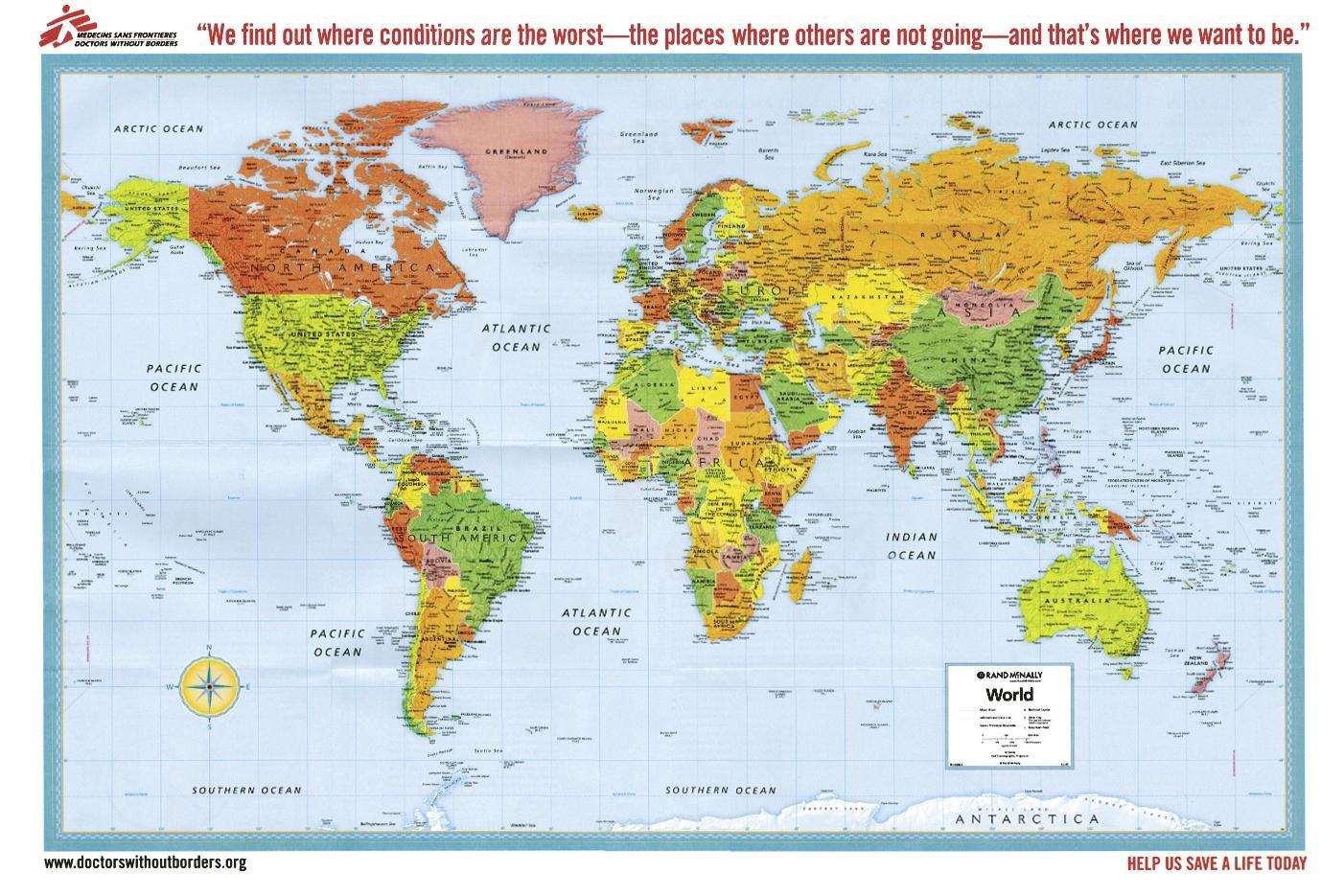
The appeals include a poster-size world map; on the back of the map, the charity provides a snapshot of its accomplishments in seven regions worldwide.
By October, 10 months after the earthquake, Doctors Without Borders had received a second or third gift from 10 percent of people who first gave during the Haiti crisis.
After the Asian tsunamis, when the charity sent new donors the same appeal as other previous supporters, it got repeat donations from only 6 percent of people in the 10 months after the disaster.
Soliciting beneficiaries of charitable services. The HealthWell Foundation, a Gaithersburg, Md., charity that provides financial assistance to people whose insurance won’t pay for treatment for life-threatening or chronic diseases, until recently had a lackluster response to direct-mail appeals to potential new supporters. Like many other charities, the foundation was doing well to get a return gift from 0.5 percent of the new people it solicited through the mail.
Then, in late 2008, the foundation decided to send a holiday card and solicitation to thousands of patients who had benefited from its aid, and that mailing garnered gifts from 5 percent of the recipients. Since then, the charity has recruited nearly 10,000 new donors, mostly patients or their friends and family members.
Of 4,800 new donors recruited this year alone, the majority are patients and their relatives. And many patients give more than the suggested contribution, says Shela Halper, director of marketing. For example, one mailing to 15,000 patients in October prompted an average gift of $23 even though the foundation had asked people to give $5 or more.
“Originally we didn’t think to ask our beneficiaries,” says Ms. Halper. “But they want to give as well as receive. They want to help others.”
Spending more on direct mail. At a time when many charities have cut back on direct mail to recruit new donors, Catholic Relief Services is planning to increase its mailings by 60 percent over five years. The international – relief charity now sends 15 million appeals annually to find new donors, and that number will grow to 23 million pieces by 2015, says Jean M. Simmons, director of annual giving.
This fall, after its first increase in recruitment mailings, Catholic Relief Services says the total number of new donors has grown. Even with the added expense of additional mailings, she says, the charity has achieved a revenue gain because more donors are contributing, and they are giving larger sums than the charity attracted in the past. Ms. Simmons credits the increase to a combination of the improving economy, choosing better mailing lists, and other internal management practices that have led to more efficient use of the charity’s budget for recruiting new donors.
“We are all about providing a steady stream of unrestricted revenue, and the best way to do that is acquisition,” says Ms. Simmons.
Appealing to donors who have stopped giving. Instead of focusing on seeking new donors, some groups are putting more attention on winning back people who have not made a gift in a long time, many direct-marketing consultants say. Charities use varying methods to choose which of their past donors are worth approaching: Some select previous donors who resemble their current supporters in terms of demographic characteristics like age and zip code. Others look for past donors with certain characteristics, such as those who have made multiple gifts or donated at least a specific sum.
“We have done a lot more of this in the recession, it is an efficiency-gaining strategy,” says Amy Koop, vice president of Paradysz Matera, a direct-marketing consulting company. “It is like looking through the couch cushions” and choosing past supporters who would normally not be included in recruitment efforts.
She says she worked with one client, a large national charity she declined to name, that raised netted $1.5-million, after expenses, from a November recruiting campaign that included more than 500,000 past donors, as well as other new recipients.
Making it easier for online donors. A growing number of charities are making sure that donors find them online through search engines such as Google and Yahoo, says Kevin White, vice president for media at Russ Reid Company, a fund-raising consulting firm in Pasadena, Calif.
In addition to using a free service that enables charities to ensure their organizations will pop up when people search online for content related to their cause, many charities now also pay to get more exposure on search engines, particularly during the year-end holiday season, “If you spend $1,000,” Mr. White says, you can see an average $2 actual return, and sometimes the return is much higher, like $4 to $1.”
Operation Smile, which helps children get surgery to repair cleft palate and other facial deformities, has found new donors online by using a mix of free search terms donated by Google and paid search results on Google, MSN, and Yahoo. For example, in the first half of December, it received an average of $3 in online gifts for every dollar spent on Google and MSN, according to Scott Vooss, the charity’s director of marketing. “We are seeing some really positive results,” he says. “We are looking to invest further in 2011.”




