

February 19, 2012 | Read Time: 8 minutes
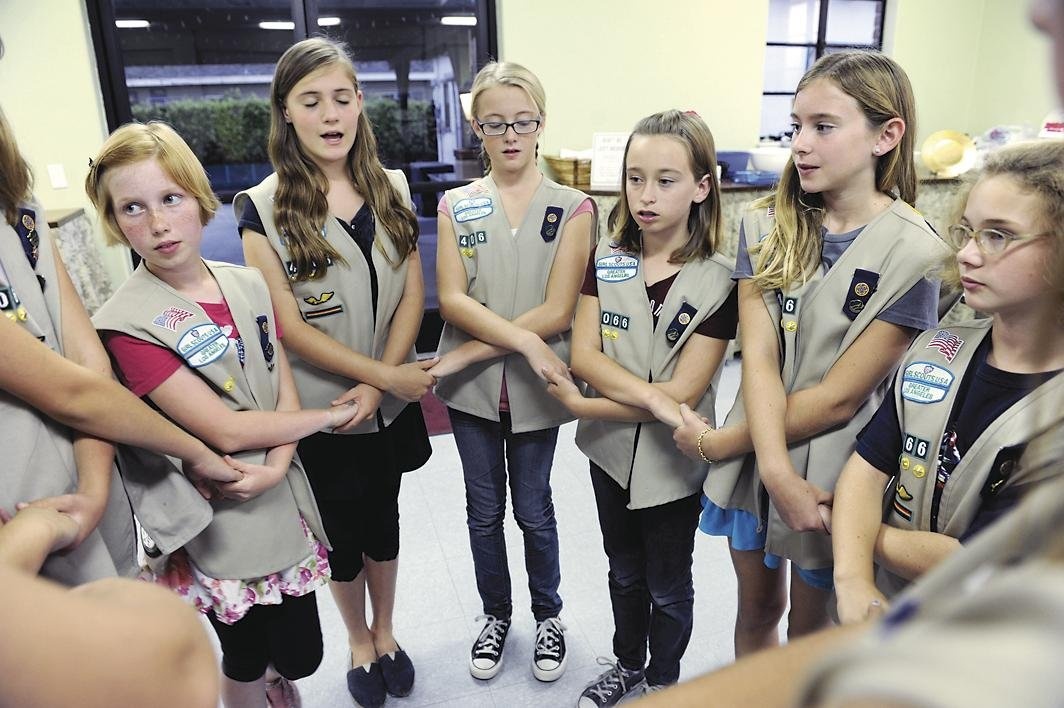
Cultural controversies can engulf some very unlikely charities. When a Girl Scout troop in Colorado admitted a transgender scout in November, Girl Scout troops nationwide came under attack and faced a cookie boycott.
The Scouts are far from the only group to find themselves drafted into America’s “culture wars,” skirmishes that are gaining in ferocity thanks to the Internet, the still-struggling economy, the presidential race, and the importance of charities in American society.
“Nonprofits have always been at the center of some of society’s most contentious cultural debates,” notes Diana Aviv, head of Independent Sector, a coalition of charities and foundations.
But now the tools at their disposal, such as the 24-hour news cycle and social media, all have helped them to spread their messages more broadly and faster and encourage stronger support and action—or accelerate damage to their causes during a crisis.
“It’s the new world that charities must deal with today,” she says. “Fights in real time, out in the public square for everyone to see and take part in, is very new.”
A Polarized Climate
Nonprofit leaders warn that the culture wars will only grow more consuming for a wide range of organizations—and urge groups to arm themselves for future battles.
“We are living through the intense politicization of everything,” says Grant Oliphant, chief executive of the Pittsburgh Foundation. “It has consumed Americans’ understanding of government, and it is now threatening to consume Americans’ understanding of the nonprofit sector.”
Fundraising Windfall
Charity leaders across the country watched nervously this month as the culture wars drafted another unexpected player: Susan G. Komen for the Cure, which pulled its support from Planned Parenthood.
It wasn’t much of a match: Planned Parenthood Federation of America, a seasoned veteran of the culture wars, came away from the skirmish with restored Komen grants and a secondary fundraising windfall (more than $3-million in four days), and Komen lost its vice president for public policy, Karen Handel, who stepped down in the midst of the controversy.
Before the dust had settled on that match, new players were on the field: the Obama White House versus America’s Catholic bishops. The issue was whether large Catholic hospitals, colleges, and other charities can withhold contraceptives from their insurance plans under the new federal health-care law.
After an attack from the bishops, the White House quickly decided to direct insurance companies to offer free birth control directly to employees of religious organizations, bypassing the employers. But the issue still festers, and within hours after the compromise this month, Republican presidential candidates were criticizing it.
Cookie Boycott
As the Komen and contraceptive debates demonstrated, nonprofit leaders no longer have the luxury to step back and calmly plan a response to a cultural controversy, which can now burn out of control within the hour. It’s a world suited for quick decision makers and communicators.
The Girl Scouts have fought a series of culture battles in the past two years, at a time when the group would have preferred to have been working on plans to celebrate its 100th birthday this year, says Michelle Tompkins, spokeswoman for the national organization.
Instead, the group has spent thousands of hours debunking myths on the Internet and explaining its values.
In 2010, online rumors flew that some New York Girl Scouts attending a workshop at the United Nations were handing out pamphlets on safe sex produced by the International Federation of Planned Parenthood.
The incident never happened, Scout officials say, and that year, despite a boycott from some quarters, the Scouts raised more than ever before from cookie sales, $714-million. It broke that record the following year with $760-million in sales, says Ms. Tompkins. But that doesn’t mean an aggressive campaign isn’t still needed to quash those rumors.
The charity defends itself on its Web site, and many troops provide its young cookie sellers with handouts to explain Scout positions such as inclusion and diversity.
“We have to get the truth out farther, wider, and more loudly than perhaps in the past,” says Andrea Bastiani Archibald, developmental psychologist at Girl Scouts of the USA, where she directs research on the organization’s programs.
Fighting attacks against the charity’s character has become a way of life, according to Ms. Bastiani Archibald. It’s upsetting to her, she says: “We don’t want children in the crossfire while these [attack] groups try to further their own agendas.”
A ‘Dangerous Time’
Other charity leaders may also be upset, and for good reason, nonprofit officials say. It’s an “extremely dangerous time,” when nonprofits are being attacked on political grounds, not on their work or missions, says Mr. Oliphant, of the Pittsburgh Foundation.
Looking ahead, Mr. Oliphant points to some corners of the nonprofit world that he believes will probably be the next hot spots in the culture wars.
The recent fight over family planning in Catholic organizations, he says, opens the door to the possibility that social-service charities that provide basic birth control could become targets. “You can’t draw a neat line where this stops,” he says.
Another issue already getting the attention of presidential candidates and likely to gain momentum in the coming year, according to charity leaders: adoption of children by gay people, a byproduct of the same-sex marriage debate now spreading to more and more statehouses.
In November, Catholic dioceses in Illinois discontinued their adoption and foster-care services in a dispute with the state over its regulations that require child-welfare nonprofits to work with same-sex and unmarried couples.
The whole point of politicizing everything is to stop organizations, to “muzzle them,” Mr. Oliphant says.
Nonprofits, he says, have a responsibility to advocate for things they believe to be right and necessary, he says. They should not let a robust public debate prevent them from doing their work, Mr. Oliphant says: “For example, if their mission leads them to funding embryonic stem-cell research, which is controversial, then they shouldn’t be embarrassed.”
Political Gains, at a Cost
For those who just want to get the work done in charities, hyperpartisanship has made things more complicated than in the past, says Jon Pratt, executive director of the Minnesota Council of Nonprofits.
“There is a shrinking nonpartisan space where organizations are being pushed,” he says. “What had been seen as nonpartisan activities just a few years ago are questionable.”
For example, this year, voters in his state will take up a constitutional amendment that would ban same-sex marriage.
Mr. Pratt’s organization has opposed the prohibition since 2006, but he expects this year that amendment supporters will file, for the first time, a complaint to the state Campaign Finance and Public Disclosure Board, saying his group is violating the Internal Revenue Service rule on lobbying.
Mr. Pratt says his group’s stance is within the rules. He expects complaints will be made against other nonprofits, too.
Such a polarized climate comes with a cost, he says: “Pitting people against each other can make political gains, but it tears up society.”
William Schambra, director of the Bradley Center for Philanthropy and Civic Renewal at the Hudson Institute, says that many conservatives today don’t accept the view that nonprofits are beyond politics.
“There is now deep suspicion of elites, including foundations, big nonprofits, and think tanks,” says Mr. Schambra, a Chronicle columnist. The fact that some charities receive government money paints even larger targets on their backs, he suggests.
As he sees it, “culture wars are here to stay.”
Charities in this new era need to be prepared to answer questions on their ideological leanings, he says. They also need to be ready to deal with more of those kinds of explosions.
“I hope they are ready for all the unintended consequences,” he says. “They are playing right into an era of heightened awareness of the political activities of nonprofits.”
Emmett Carson, chief executive of the Silicon Valley Community Foundation, says it’s easy to see only the negative when talking about culture wars. He views the debates as a healthy sorting of the issues.
Says Mr. Carson: “Individuals care deeply about their values, and they want organizations to represent those values.”
But the timing is wrong for the culture-war debates to rage now, argues the Rev. Jennifer Butler, executive director of Faith in Public Life, a Washington nonprofit that was involved in the recent debate over birth control and health insurance, representing both groups that favor and those that oppose legal abortion and contraception.
“At a time when our public debates need to be focused on American families and their ability to cope with the most severe economic downturns we have seen since the 1920s and ’30s, we are now focused on hot-button issues in the most sensationalized way possible,” she says.
The religious leaders she works with tell her that issues of abortion and reproductive health are extremely important, but they want to find practical solutions and a way forward.
“Unfortunately, the conversation we are having now is ideological, not practical,” Ms. Butler says. “When we see this kind of hype, especially during an election year, we should be reminded in some way: There are political interests.”





