
Charities Step Up Security for Special Events After Boston Bombings
Most groups aren’t changing their plans and expect fundraising to continue at the same pace

By Raymund Flandez
Contributor
April 17, 2013 | Read Time: 5 minutes
Nonprofits around the country are increasing security for their athletic fundraising events after the Monday bombings at the Boston Marathon spurred anxiety about copycats.
But most groups, including many planning events this weekend and in coming weeks, aren’t changing their plans and expect fundraising to continue at the same pace as past years.
The National Multiple Sclerosis Society is stepping up safety measures for its 800 special events, including Bike MS and Walk MS, both of which raised a total of $132-million last year.
“Safety measures we’d provide would depend on specific guidance of local authorities in the different markets,” says Arney Rosenblat, a spokesman, in an e-mail to The Chronicle. She adds that the organization has a comprehensive safety plan in place.
Depending on the advice of local authorities, “there may be budget implications in some of our markets, but we can’t determine that as yet,” Ms. Rosenblat adds.
But the organization acknowledges that some supporters who have signed up for an event may bow out in the wake of the Boston tragedy. It posted a statement on its Web site Tuesday that says: “We also respect each individual’s choice about participation.”
A ‘Reality Check’
Charities say they don’t expect donations to suffer because of what happened in Boston. “The tragedy that happened yesterday is a reality check for everyone, but I don’t think it’s going to change the passion of our fundraisers,” says Kristin Judd, director of Team JDRF, a unit that oversees volunteers who raise money for the Juvenile Diabetes Research Foundation.
In fact, in less than 24 hours after the bombings, the organization has received $2,000 more in donations for the 21 runners raising money for the diabetes group at the Boston marathon, bringing the total to $143,000.
Autism Speaks said the organization has reviewed its security arrangements with staff members and local authorities ahead of its biggest event of the year in Los Angeles this weekend. The Walk Now for Austism Speaks is expected to gather about 40,000 participants.
“All measures of safety for our families and teams are being taken very seriously with the Rose Bowl, City of Pasadena and the [Los Angeles] Police and Fire Department,” says Paul Irwin-Dudek, vice president for program and event development, in an e-mail to The Chronicle. “We have been in constant communication with these partners as well as communicating these conversations with our families and teams.”
The International Festivals & Events Association, whose members include nonprofits, says fundraising races and similar events usually have safety and security measures already in place, and its members have mostly been doublechecking that they follow those procedures and are working with law-enforcement officials to strengthen them.
So far, though, “we’re not hearing any cancellations,” says Steven Schmader, the group’s president.
Conferring With Police
Charities have come to rely heavily on athletic events for revenue. Last year, the top 30 fundraising races, walks, and similar events took in $1.68-billion, down 1.1 percent from 2011, according to the Run Walk Ride Fundraising Council.
The slight decrease was driven by a 32-percent drop in money raised by Susan G. Komen’s 3-Day walk program, due to the breast-cancer charity’s controversial decision to first rescind and then restore support for Planned Parenthood’s cancer screenings.
But 2012’s donation total was also buoyed by double-digit percentage gains from smaller yet growing fundraising events, like Pelotonia, an Ohio cycling event supporting cancer research that increased revenue by nearly 29 percent last year.
Here’s what other charities are doing with their athletic events after the Boston incident:
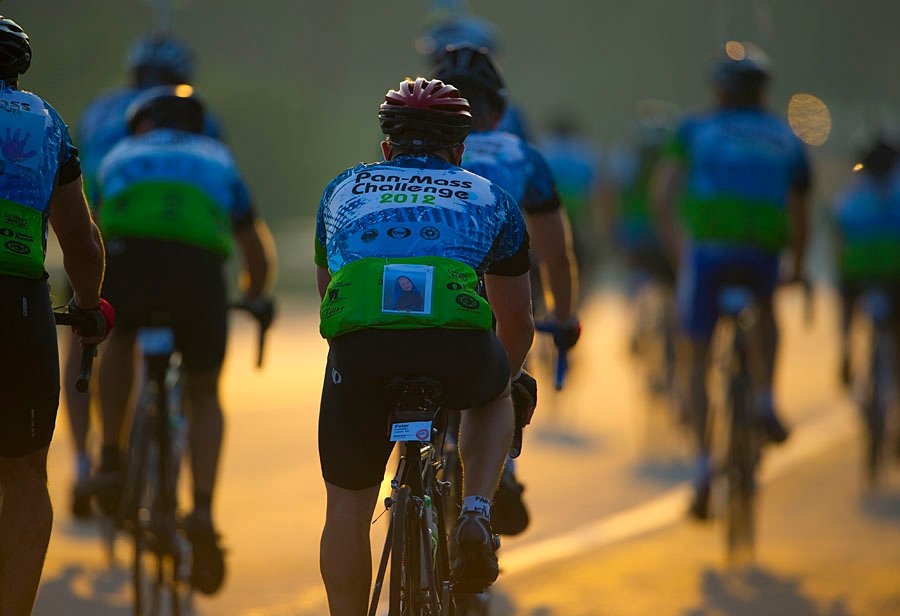
• The Pan-Mass Challenge, which holds an annual bike-athon that raises money for Boston’s Dana-Farber Cancer Institute through its Jimmy Fund, says it is reviewing “operations plans in light of this week’s tragedy,” says Billy Starr, founder and executive director, in a statement. But the event, scheduled for early August, will go on as planned, with a $38-million goal. It has raised $2.6-million so far this year.
• The American Cancer Society, which raised $408-million last year in its “Relay for Life,” says it’s too early to make any enhancements to its safety and crisis procedures, but it is reviewing them. “At this point, we are not aware of any negative impact on anticipated participation in our planned events scheduled for the summer,” says Greg Donaldson, national vice president for corporate communications, in a statement.
• The American Diabetes Association’s Tour de Cure, which raised $26.5-million in 2012, says it is “coordinating and working directly with local law-enforcement agencies in our local areas to ensure that the highest level of safety possible is provided to everyone,” says Nicole Preston, director of special events, in a statement.
• The American Heart Association says its staff members in cities across the country will review their safety plans and work closely with law enforcement, fire departments, and first responders to make any necessary changes. “We anticipate our volunteers and supporters will continue to turn out in great numbers,” says Tanya Edwards, senior vice president for field campaigns, in a statement.
• Susan G. Komen for the Cure has three Race for the Cure events this weekend, in Indianapolis; Ocean City, Md.; and Spokane, Wash. “Our affiliates are working, as they always do, with local police on security matters,” says Andrea Rader, a spokeswoman, in a statement. “The safety of our participants is, of course, paramount to us, and we’ll be guided by the recommendations of local authorities for these races and events going forward.”
• The ALS Association, whose “Walk to Defeat ALS” raised $21.8-million last year, says it isn’t making any changes this year, and its walk will go on as scheduled.
But, says Carrie Martin Munk, chief communications and marketing officer, in a statement, “obviously, when something like this happens, it raises a lot of important issues that we will be discussing in the coming days and weeks.”




