Charities’ Text-Message Success Shakes Up the Fund-Raising World

By NICOLE WALLACE and Ian Wilhelm
February 7, 2010 | Read Time: 7 minutes
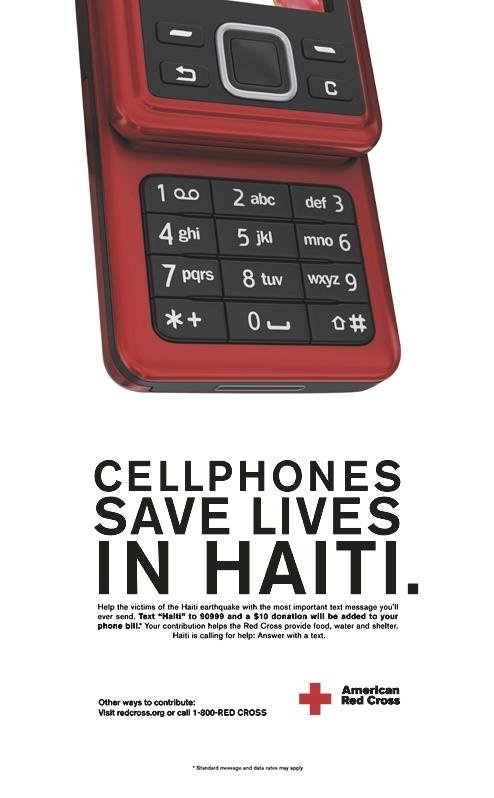
The deadly Haiti earthquake disaster—for which American groups have raised more than $644-million—marked the first big fund-raising test for collecting charitable gifts via text messaging. More than $37-million so far has been contributed, usually in increments of $5 or $10, using a cellphone.
The response has fund raisers throughout the nonprofit world examining relief groups’ experience with the new medium and asking tough questions about potential drawbacks.
The large share of donations directed to the American Red Cross has also drawn scrutiny, with some observers calling for a pooled disaster fund.
Fast Pace
In the first days after the catastrophe in Haiti, the pace of donations was faster than after other recent large disasters. But after three weeks, overall contributions for Haiti are ahead of where they were after a similar period of time for the Asian tsunamis but less than after the September 11 terrorist attacks and Hurricane Katrina.
Some relief organizations, including the American Red Cross, have reported that while the total number of gifts they have received from individuals to aid Haiti is higher than after the tsunamis, the average size of those gifts is smaller.
In the first 10 weekdays after the earthquake, Mercy Corps received 61,505 contributions, compared with 49,561 donations during the same period after the tsunamis.
But the average size of the Haiti gifts was $109, compared with $208 for the tsunami gifts.
The Portland, Ore., relief and development organization attributes the smaller average gift size to the difficult economy.
The average size of Haiti donations to Brother’s Brother Foundation, in Pittsburgh, has been $137, compared with $176 after the tsunamis. For other charities, however, the average gift size has been higher for Haiti.
So far, the average size of donations to the Catholic Medical Mission Board for its work in Haiti is $147, compared with $125 after the tsunamis.
Red Cross’s Role
As with Hurricane Katrina and other pressing humanitarian emergencies, the Red Cross is the primary recipient of the country’s generosity—garnering about $231-million of the more than $644-million raised for Haiti so far.
Some aid experts question whether any one organization should receive such a significant portion of contributions, while others wonder if America should use a “joint appeal” for disasters.
“It’s very difficult for a donor to make a decision between CARE, Oxfam America, Save the Children, if you’re not familiar with these organizations,” says Tony Pipa, a philanthropy consultant who founded the Louisiana Disaster Recovery Foundation.
He says a pooled fund like the British Disasters Emergency Committee, an umbrella organization of 13 charities, would cut fund-raising costs for groups that now compete for dollars and make sure that the money goes to the charities that are in the best position—such as those with the right expertise and good relationships already established in the country—to respond to a particular disaster.
Mr. Pipa points to the Clinton Bush Haiti Fund and the Hope for Haiti telethon, both of which will divide the money they raise among a number of relief groups, as a sign that donors would respond to a consolidated appeal.
The Red Cross disagrees.
“I don’t think taking the choice from the donors is what the donors want,” says David Meltzer, the Red Cross’s senior vice president for international services. “When the donors choose the American Red Cross, they are expressing confidence in our ability to spend their money wisely.”
He emphasizes that in Haiti and other global disasters, the charity works closely with other Red Cross and Red Crescent groups and will give the money to other charities if needed.
After tsunamis struck parts of South Asia in 2004, the Red Cross raised $581-million, but 46 percent of that money went to non-Red Cross organizations, says Mr. Meltzer.
‘Coming of Age’
The Red Cross and other groups raised significant amounts of money for this disaster via text messaging.
The Red Cross has received more than $31-million through its campaign to encourage $10 gifts through texts. By contrast, the organization raised $200,000 from texts during the 2008 hurricane season.
“This is the coming of age for mobile giving as a disaster fund-raising tool,” said Mark Rovner, president of Sea Change Strategies, a fund-raising consulting company in Takoma Park, Md. “There are people who will only give when there is a disaster, so finding ways to make it easy and convenient are extremely important.”
Despite the impressive results, some observers have expressed concerns about the potential downsides of text-message gifts.
Katrin Verclas, co-founder of MobileActive.org, worries that some of those $5 and $10 gifts might be coming at the expense of donations that would have been larger had the donor gone to the charity’s Web site.
“For something like Haiti, which is so catastrophic and so massive in size and need, it might have the effect of people feeling like, ‘Oh, but I already gave,’ ” says Ms. Verclas.
Time Lag
How quickly relief groups will receive the money is also an issue.
Typically when a donor makes a contribution by text message, it’s 60 to 90 days until the charity actually receives the money. The reason for the lag: Cellphone companies wait until after they have received the money from their customers through their monthly phone-bill payments before sending on the gifts.
Because of the scale of the catastrophe in Haiti, cellphone carriers decided to speed up the delivery of text-message donations to the American Red Cross but not to all other relief organizations.
Caryl M. Stern, chief executive of the U.S. Fund for Unicef, urged donors to make contributions online rather than via text message, saying the speed with which relief groups receive donations is critical after a major disaster.
“We’re not banks,” she says. “We really need the money. We need it now.”
Fund raisers also question whether they can use text messaging to build lasting relationships with donors, given how few choose to receive additional messages after making a text gift.
Of the people who have given text gifts to support the American Red Cross’s relief efforts in Haiti, roughly 6 percent gave the charity permission to send them additional text messages.
After donors make a mobile contribution, they receive another message that asks if they would like to receive additional messages from the charity. If the donor says yes, the only piece of information that the organization receives is the donor’s cellphone number.
The percentage of text donors who give charities permission to follow up with them is “pretty low across the board” and varies widely from campaign to campaign, says Tony Aiello, chief executive of mGive, the Denver company that is running the Red Cross’s Haiti campaign.
“We’ve seen a few campaigns that have been in the 20 percent range, which is very exciting, very amazing,” he says. “We’ve also seen some down in the 3 percent range.”
But Mr. Aiello thinks it’s too soon to make judgments about mobile giving, based on “opt-in” rates.
“The more people get used to this way of giving, the higher it’s going to get,” he says.
Experimentation
Catholic Relief Services, in Baltimore, has experimented with two approaches to text messaging to raise money for Haiti.
Like most of the large relief groups, Catholic Relief Services has a short code donors can use to make an automatic $10 donation via text, but it also has another number donors can use to connect to the organization’s call center.
More than 4,900 people have connected to the call center via an initial text, but at this point, Catholic Relief Services has not been able to tally how much of the money that it has received by telephone came from people who initially texted to connect to the call center.
Both text-messaging approaches have advantages and disadvantages, says Mark Melia, the group’s deputy vice president for charitable giving.
The text-to-give option is “extremely easy,” while the text-to-connect option has several additional steps. But when donors connected to the call center, they were “able to give whatever amount they would like,” says Mr. Melia. “They weren’t limited, and then we could follow up with additional messages.
Proponents of mobile fund raising think charities should start collecting cellphone numbers from their supporters and build those relationships.
Text messaging, they say, can be a valuable form of communication for advocacy and donor engagement, whether or not an organization uses it for fund-raising appeals.
Building a group of supporters who are accustomed to receiving information via text message will stand a charity in good stead when its cause draws the news-media spotlight, says Jed Alpert, co-founder of Mobile Commons, a New York company that helps nonprofit groups run cellphone campaigns.
“Sometimes you know six months in advance when your issue will be up,” he says, “and sometimes you just don’t know.”