Charities Urge Congress to Scrap Changes to Federal Charity Drive

By Doug Donovan
Contributor
July 11, 2013 | Read Time: 4 minutes
Congress should scrap the Obama administration’s proposal to overhaul the federal government’s annual charity drive next year with changes that could “devastate” the campaign, a United Way official told lawmakers at a hearing Wednesday.
Federal employees donated $258-million in 2012 to nearly 25,000 charities through the Combined Federal Campaign’s 160 local drives, which are managed mostly by local United Ways.
The three changes proposed by the federal Office of Personnel Management that have been generating the most concern from charities would:
• Eliminate cash and check gifts by requiring everyone to give online.
• Charge a fee to all groups that apply to be eligible to receive campaign donations.
• Replace local campaigns managed by charities like the United Way with a regional systems managed by the Office of Personnel Management.
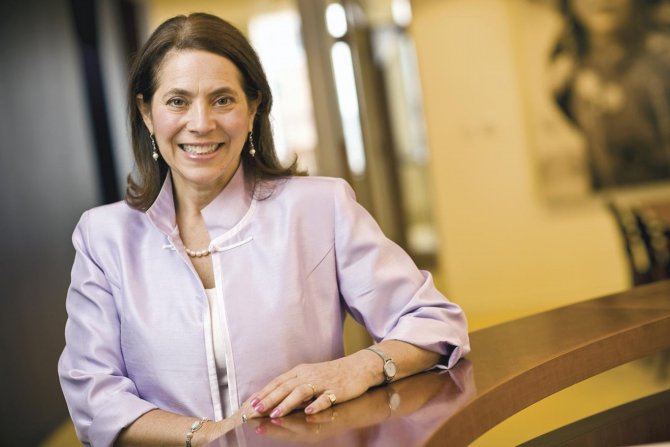
“United Way requests that Congress instruct OPM to go back to the drawing board on these proposed regulations,” Debby Hampton, president of United Way of Central Oklahoma, testified to a subcommittee of the House Oversight and Government Reform Committee.
Mark Lambert, associate director of the Office of Personnel Management, testified that the changes would help the campaign avert a downturn in the amount of giving and number of employees who donate.
Donations have declined from a high of $282.6-million in 2009 to last year’s $258-million. But the share of federal workers who give plummeted more significantly: In 1967, 85.6 percent of employees gave through the campaign; by 2010, the number had fallen to a quarter.
“Taken together as a whole, these changes are needed to not only streamline operations but to increase program effectiveness, while ensuring its continued growth and success,” Mr. Lambert said.
Commission Ideas
The Obama administration’s proposal was based on ideas from a 28-member commission established in 2011, although many people involved in the process say the plan did not reflect all of the commission’s concerns.
And some charities are also unhappy with the commission’s composition. Ms. Hampton said she was concerned that it included only two “midlevel” local United Way employees. Although United Way is “the largest CFC partner by far,” it “was not meaningfully included in the process,” Ms. Hampton said.
Local United Ways manage 80 percent of the 160 local campaigns that make up the CFC. And its local campaigns generated half of the $258-million raised.
“It’s not too late for us to work together for the benefit of the local communities supported by the Combined Federal Campaign,” she testified. “But our view is that this process needs to start from the beginning to ensure meaningful involvement by organizations with greater expertise in workplace charitable giving.”
‘Deeply Concerned’
The charities that testified against the three changes received support from Rep. Blake Farenthold, a Texas Republican who chairs the subcommittee. He said he agreed with their contention that online-only giving and replacing local management by charities with government employees would diminish the power of personal appeals.
“I’m deeply concerned with the doing away of paper donations and the personal ask,” Mr. Farenthold said.
Mr. Lambert said the local presence of organizations like the United Way in managing the campaigns would not be entirely eliminated. The regional system would still include a local presence.
“They still will have that local touch,” he said.
Impact of Fee
Lawmakers on the subcommittee Wednesday also said they shared the charities’ concern that an application fee could push smaller nonprofits out of the campaign.
The proposal does not say how the fee will be calculated, but if it is meant to cover the costs of running all of the local campaigns, it could be significant. The national campaign operates with about a 10-percent overhead cost, or $25.8-million, last year.
The fee is designed to “give the impression that there is no cost associated with distribution of charitable gifts to a community,” Ms. Hampton testified. “In fact, Mr. Chairman, you will not be surprised to hear that there is a cost associated with operating a charity. This proposal does not shift the cost, it just hides it.”
If the fee is between $500 and $1,000 as some have speculated, it would be devastating to the 77 Oklahoma charities that receive less than $2,000 from the campaign, she said.
“I predict it would discourage about 40 percent of the local charities from applying to know that up to half of their donations would go to offset an application fee,” Ms. Hampton said.
Donors would also be deterred by being forced to give online, especially if there was no local effort to solicit the donation.
“From my 21 years of fundraising experience, if the new OPM-proposed rule is passed for online solicitation, it would eliminate the current infrastructure and personal face-to-face appeal,” said Ju’Coby Pittman, chief executive of the Clara White Mission, a Jacksonville, Fla., charity that serves veterans and homeless people.
In the 2012 campaign, 20.8 percent of pledges, or $53.84-million, were made electronically. Cash accounted for more than 10 percent, or $27-million.
“This is a substantial sum to risk sacrificing for administrative convenience,” Ken Berger, head of Charity Navigator; “$27-million is certainly significant enough to keep the nonelectronic donation option in place.”