Charity’s ‘Embedded’ Fund Raisers Work With Local Affiliates to Secure Big Donations

By NICOLE WALLACE
Features Editor
March 7, 2010 | Read Time: 8 minutes
All too vividly, John P. Cerniglia recalls the times he visited wealthy donors as head of the Cincinnati Habitat for Humanity, only to learn that they had recently been solicited by a fund raiser from Habitat’s national office.
“Forget about how I felt as the local executive,” says Mr. Cerniglia. “Imagine the awkwardness the donor felt, feeling positioned between the national organization and the affiliate.”
When Mr. Cerniglia took a job at the national office overseeing Habitat’s effort to win big gifts, he set out to overhaul the charity’s approach so that it reflected the way donors think about Habitat for Humanity—as a single entity, rather than an international headquarters with a network of more than 1,500 affiliates across the United States. And so far it seems to be working.
Mr. Cerniglia wanted to turn what had been a source of tension between local chapters and the charity’s headquarters into an area of cooperation.
To that end, Habitat for Humanity International over the last four years has “embedded” 11 fund raisers at affiliates in large metropolitan areas to work with the local groups to seek large donations and strengthen donors’ ties to the housing charity.
The fund raisers work in the affiliates’ offices and solicit gifts for both local and international projects. The organization hopes to expand the number of cities with embedded fund raisers to include more of the affiliates that have expressed an interest, but it has put those plans on hold until the economy picks up.
Each year participating chapters pay $30,000, a portion of the fund raiser’s salary and expenses, in part to show their commitment to the collaborative effort. In cities where the fund raiser works with more than one affiliate, the local groups split the price tag.
Under the new system, all of the gifts that fund raisers help secure count toward their annual performance goals, whether the donor decides to make the contribution to headquarters or tothe local affiliate. Previously regional fund raisers got credit only for donations to Habitat for Humanity International.
“It’s a change in attitude,” says Mr. Cerniglia, who served as senior director for leadership giving until January when he joined CARE USA, to oversee its big-gift fund raising. He says the charity’s goal is to instill “a presumption of abundance” rather than worrying about a scarcity of money and who gets how much.
Promising Results
While Habitat’s effort to collaborate on local and national fund raising is still new, early results have been promising.
In its first year, the charity’s 2007 fiscal year, the effort known as the leadership giving program brought in $3.5-million.
Despite difficult economic conditions, total contributions made through the program have continued to increase, growing to $4.1-million in 2008 and $7.4-million in 2009.
During that time, fund raisers also secured $10-million in deferred gifts, plus a $100-million promised bequest from J. Ronald Terwilliger, former chair of the national office’s board of directors.
The amount of money raised is still a very small portion of Habitat for Humanity’s overall fund raising. In 2009 the national office and its more than 1,500 affiliates received $703.7-million in private contributions.
Overcoming the wariness and suspicion that often mark the relationship between local affiliates and the national office, especially when it comes to fund raising, hasn’t been easy.
A robust reporting system has been one of the most important ways that Habitat for Humanity has sought to build trust.
Every time one of the embedded fund raisers meets with a donor, he or she writes a report about the visit on a secure online system the charity built. When the fund raiser hits submit, the report is automatically sent to both the local affiliate and the national office.
Fund raisers also post to the site the names of the donors from whom they are seeking money, their approach to building closer ties with each donor, the amount of money they plan to ask for, solicitation dates, and other information. A portion of the fund raisers’ annual review focuses on how well they reported their fund-raising activities.
“If we fail to maintain the trust of the local affiliate leaders, they will then shut down the fund raiser’s access to the board, which of course cuts off access to some of our top donors in a local market,” he says.
The same reasoning drives the program’s approach to hiring and supervising the embedded fund raisers. Officials at the affiliates conduct the first interview with candidates, and frequent conference calls allow representatives from the local groups and the national office to discuss the search.
The leadership development officers are employees of Habitat for Humanity International, so headquarters has the final say on who gets hired. But, says Mr. Cerniglia, the national office has a strong incentive to choose someone the affiliate approves of, because the chapter holds valuable information about local contacts.
For affiliates, one of the program’s chief draws is the opportunity to bolster their fund-raising efforts.
Many Habitat affiliates do not have a lot of experience seeking large gifts. Of those groups that do, few have fund raisers who focus on them exclusively.
At Twin Cities Habitat for Humanity, in Minneapolis, the group’s chief executive and two other officials are responsible for seeking large donations from specific donors, but no one on the staff is dedicated full time to big gifts.
Jennifer A. Kahlow, the leadership-development officer who works with the affiliate, says that she can reach out to the people the staff has not had time to woo and start building ties to donors who have the means to make larger gifts.
“You get somebody who’s giving a $100-a-year gift or a $1,000-a-year gift, but they have tremendous capacity,” says Ms. Kahlow. “Until somebody figures out how to get to them and how to start cultivating a deeper engagement, you won’t realize that capacity.”
Martha Parrish, a retired art-gallery owner, had been quietly giving $5,000 to $10,000 annually to Habitat for Humanity-New York City for 15 years when Steve Milbauer, the embedded fund raiser working with the affiliate, called to ask if he could meet with her.
In the year and a half since their introduction, Ms. Parrish’s involvement with Habitat for Humanity, both at the local and international levels, has blossomed.
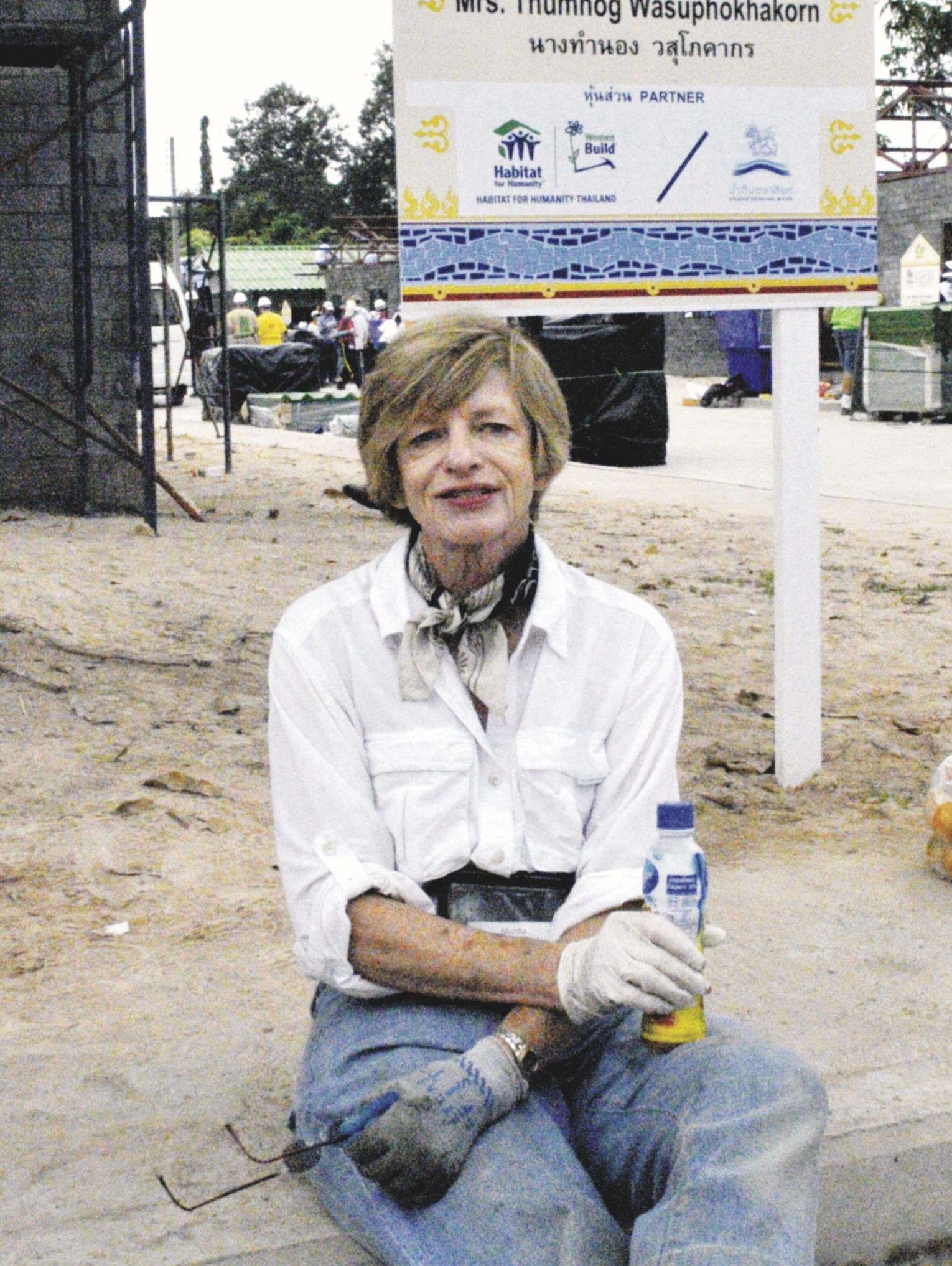
Ms. Parrish is now a member of the New York affiliate’s board of directors. In November she traveled to Chiang Mai, Thailand, for a weeklong project to build homes for the needy, and she is part of an international cabinet of volunteers who are helping to raise money for Habitat for Humanity’s capital campaign.
She has also made a six-figure gift to the campaign, which she divided equally between the New York affiliate and Habitat for Humanity International.
Ms. Parrish says that she always planned to get more involved with the charity after she retired but that before she started talking to Mr. Milbauer, her vision of what that would look like was much more limited in scope.
“When I began supporting Habitat in the small way that I did, I thought that one day I was going to help them build houses,” she says. “That was my goal: to get connected with an affiliate and then go out on a build. I saw myself going every day for a month.”
A Successful Visit
Taking the time to understand what donors want to accomplish through their giving—rather than trying to sell them on a particular project—is the key to maximizing their relationship with Habitat for Humanity as a whole, says Court Clayton, a leadership-development officer who has worked at Habitat for Humanity Greater Boston for almost four years.
Mr. Clayton remembers the first donor visit that he and the affiliate’s chief executive made together. They met with an older couple he had been visiting for several months. In the past, the couple had given to Habitat’s international programs. But the more the longtime Bostonians talked, the clearer it was that they wanted to make a gift that would make a difference in their hometown.
In the end, the couple made a large gift toward a house built by the local affiliate.
That visit was successful, says Mr. Clayton, because they asked the donors probing questions and helped the couple think through their goals.
Even when a donor decides to give to an international project, the visit is still valuable to the local affiliate because it’s a new relationship that could lead to a future contribution, says Lark Jurev Palermo, chief executive of Habitat for Humanity Greater Boston.
“I now have that relationship too,” she says. “I’ve met the people. I understand what they’re interested in.” Several donors, she says, who initially contributed to international projects later came back and donated to the local group.
Better Relationship
Stationing fund raisers who work for the national organization in local offices has helped strengthen the overall relationship between participating affiliates and Habitat for Humanity International, says Mr. Clayton.
“It’s always easier to trust someone when you see them,” he says. “They can have a beer after work. They can attend a staff meeting. All those little intangibles really, really make a difference.”
Mr. Clayton says he learned to always make time to field questions from local Habitat staff members, whether they are about fund raising or not.
Close connections with the local employees, he says, help him do a better job as a fund raiser.
“I don’t have time to screen every Steve Smith in our database,” says Mr. Clayton. “But I do have time to have the construction staff say, ‘Steve Smith showed up in his Ferrari today, and was totally ecstatic about what we were doing.’”
Habitat’s Tips for Winning Big Gifts From Donors
- Ask probing questions. Help donors flesh out their philanthropic goals.
- Let the donors take the lead. Don’t try to “sell” them on a particular project.
- Get board members and donors involved either asking for gifts or introducing fund raisers to prospective donors.
- Work to maintain ties to donors who have said they cannot make a large donation now because of the economy.