

February 8, 2015 | Read Time: 2 minutes
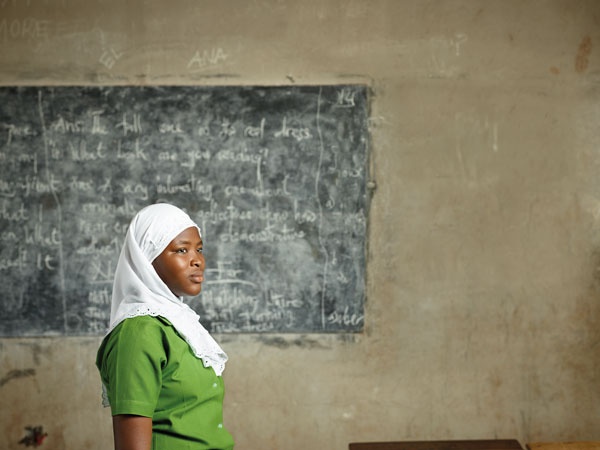
Born in Ghana to a family with numerous medical problems, Layusha decided at the age of 8 that she wanted to become a doctor. Now, with a scholarship from Camfed, a charity dedicated to educating African girls, Layusha has a shot at achieving her dream.
When Ann Cotton went to Mola, Zimbabwe, in 1991 to study why there were seven boys for every girl in local secondary schools, the prevailing wisdom was that families were resistant to educating girls.
But the British educator’s research led her to a very different conclusion.
“Parents wanted education for all their children but couldn’t afford it,” Ms. Cotton says, noting that secondary school in Africa costs an average of $300 per year for each student. “Because boys have a better chance at paid work and can go farther afield to seek work, girls dropped out to help out at home.”
So in 1993 Ms. Cotton started Camfed—short for Campaign for Female Education—to pay the school fees for 32 girls in Zimbabwe.
“It wasn’t about changing a cultural dynamic, it was about coming up with the money,” she says.
Since those early days, the nonprofit has expanded to provide scholarships in Ghana, Zambia, Tanzania, and Malawi. In all, Camfed has provided scholarships to more than 1.2 million students, including some boys. The charity now serves about 100,000 children each year, with an annual budget that exceeds $47-million.
One of the organization’s biggest supporters is the MasterCard Foundation, which has pledged $41.7-million through 2022 to provide full scholarships each year to more than 6,000 girls in high school or college.
One measure of Camfed’s success is the generosity of former scholarship recipients. In 1998, about 400 of them—teachers, nurses, doctors, and businesswomen—formed an alumni association, with many volunteering alongside teachers to be role models for the girls. Women in the alumni group, which now has nearly 25,000 members, have also made donations to help pay for the education of more than 63,000 children outside their own families.
“Alumni have lived in the prison of poverty and have been freed from it by education, so their experience and perspective are absolutely fundamental,” Ms. Cotton says. “Alumni have become philanthropists themselves, so you have a virtuous circle.”
On a trip to Ghana last year, Ms. Cotton interviewed Layusha, 15 other students, and three adult volunteers for a booklet that was distributed at the White House last summer during a summit that brought together African and American leaders.
“I wanted these young women to be seen and heard by powerful people,” Ms. Cotton says. “Their dignity shines through.”




