June 15, 2006 | Read Time: 9 minutes
Alternative college in San Francisco lets students put their ideas on social change to work in the real world
When Darrick Smith was an undergraduate at the University of California at Santa Cruz, he found plenty of support from his faculty mentors as he created his own educational program for black boys. Trying to Uplift My Folks, or TryUMF, as it is commonly called, is a series of elective public-high-school courses that combine critical social theory with character development.
But when he began pursuing a graduate degree in sociology at California State University’s East Bay campus, he found little support for his plans to write his master’s thesis on the program.
The problem, he recalls, was that his faculty advisers said he was too immersed in the world of activism. “They told me what I was doing wasn’t sociology,” he says, because he was running a program for social change “rather than studying someone else doing it.”
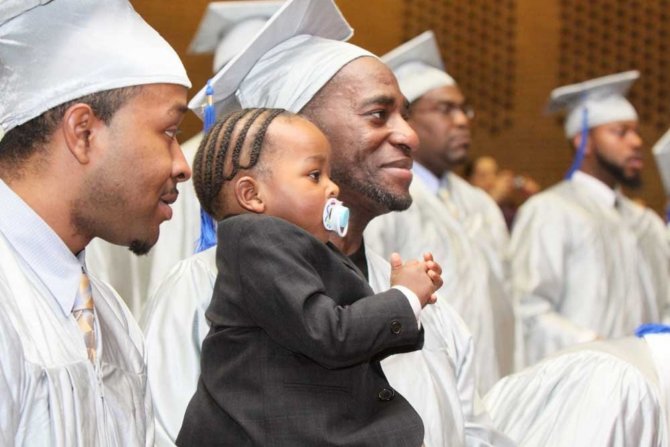
Mr. Smith left Cal State two years ago for a new and less traditional academic venue: the activism and social-change program at the New College of California, located in the Mission district of San Francisco.
The program, which was introduced in 2003, offers fully accredited bachelor’s and master’s degrees and is designed for students who want to integrate academic work with direct involvement on issues such as civil rights or the environment. It offers courses in the history and analysis of social movements and radical social change, and gives students the opportunity to design their own research projects or activist programs.
It was exactly the kind of environment Mr. Smith sought. “I never thought I would be comfortable again in a university,” he says. But “New College has been a huge part in keeping my project going.”
In fact, New College has become a financial sponsor of the TryUMF program, overseeing the foundation grants that make up about one-third of the fledgling organization’s $150,000 annual budget. (The rest comes from participating schools.)
The college will continue in this role, Mr. Smith says, until he earns charitable status for the program from the Internal Revenue Service, which, he says, he hopes to do next year
With support from his teachers and sponsors, Mr. Smith has been able to expand TryUMF into a broader curriculum about diversity and social issues for about 100 black, white, Asian, and Latino students at Oakland Technical High School, in Oakland, Calif.
Mr. Smith’s experience is fairly typical among New College’s students, according to Kai Lundgren-Williams, who teaches social and political thought and helps administer the activism and social-change program.
“Generally speaking,” he says, “students come here out of a certain frustration with their academic training, and a real desire to draw connections between their theoretical understanding of issues and their traction in the real world.”
In more traditional university settings, Mr. Lundgren-Williams says, students of fields such as historiography (the study of the writing of history), race and gender studies, or critical theory don’t receive much support for applying those ideas in the world outside academe. In New College’s activism and social-change program, by contrast, he says, “we are trying to provide a community of support that authorizes and gives legitimacy to that connection between theory and practice.”
This climate, he says, enables master’s students to pursue activist projects that would have been unwelcome in traditional graduate schools. By contrast, he says, students in the undergraduate program — a weekend bachelor of arts completion course for those who have already earned some college credits — often arrive with years or even decades of practical experience, but a need for credentials in order to advance in their work.
Interdisciplinary Effort
Founded in 1971 by Jack Leary, a Jesuit priest and philosophy professor, New College was part of the larger alternative-education movement of the era, and has always aimed to integrate an interdisciplinary humanities education with a focus on social change.
Although the activism and social-change degree program is only three years old, it is actually the latest and most cohesive version of several earlier “community studies” offerings at New College, according to Michael McAvoy, the institution’s academic vice president.
The original inspiration for the activism degree, Mr. McAvoy says, was the community-studies program at the University of California at Santa Cruz; he notes that several other institutions also offer community-studies programs, including the University of Colorado at Boulder and the University of Connecticut.
But putting the word “activism” into the very title of the New College program underscores its mission to marry theory and practical skills, Mr. McAvoy says. “In renaming the program, we’re highlighting the fact that we want our students to be effective agents of social change when they go out into the world,” he says.
At the University of Colorado at Boulder, Jamie Rezmovits serves as outreach coordinator for the INVST community leadership program, a two-year program for undergraduates that offers a mix of theory, skills, and work at nonprofit groups to students who want to pursue social-change careers. INVST, she says, has much in common with New College’s activism program in terms of connecting theory with practice. However, she says, “integrating the word ‘activism’ into the [New College] program says a lot in the way of validating the work,” especially to the larger world, which may not understand or appreciate the academic knowledge that underpins today’s activism.
Mr. McAvoy notes that New College’s location — the Bay Area is home to many charitable organizations as well as to a strong culture of political activism — enables the program to recruit both permanent and adjunct faculty members with experience in organizing, building coalitions, and lobbying. (The program’s faculty and administrators have graduate degrees in fields like anthropology or urban planning, but also extensive experience working on issues such as human rights, health care, gender equity, and prisoner rights.)
The New College’s relationship with local activists enables its students to work with social-change groups as part of their education. For example, last spring, Tom Hayden, the former state senator and renowned civil-rights and antiwar activist, taught at New College. He led a seminar on the history of social movements, through which he supervised an ambitious student project to draft a procurement policy for the City of San Francisco that prohibited contracts with sweatshops. The students in Mr. Hayden’s seminar helped build a local coalition of labor, human-rights groups, and other community organizations, and lobbied the city to adopt the no-sweatshop policy, which it ultimately did.
Erich Albrecht, who has been enrolled in the master’s program on and off, says that his experiences in the anti-sweatshop campaign, and in similar projects and internships, have been the most valuable aspects of his studies at New College.
His experiences and contacts at New College, he says, helped him land a job on the campaign staff of Leland Yee, a candidate for California’s Senate. Mr. Albrecht, whose career plans include nonprofit organizations as well as politics, says he will be enrolling again at New College as a part-time student in the fall. “And hopefully,” he says, “I will also have a job as a district representative in the State Senate.”
The Need for Activists
Although New College provides a very different kind of education than, say, a nonprofit-management program, a portion of New College students either already work or plan to work for a nonprofit organization.
Michael Cortes, who recently left his post as director of the Institute for Nonprofit Organization Management, at the University of San Francisco, says that activism skills are an essential part of a well-rounded professional education for nonprofit managers and leaders.
Such skills have become increasingly important for nonprofit workers, he says, as charities have come to rely on government aid for their own operations and because demand for nonprofit services often increases when government cuts back its support to the needy.
He adds that federal regulations have made it easier for nonprofit groups to engage in legislative lobbying. “Therefore,” he says, “we might expect an increased interest among some nonprofits to develop staffs with policy-advocacy knowledge and skills.”
Recently, Mr. Cortes noted, the University of San Francisco has added electives that focus on public policy, lobbying, and advocacy.
Still, where a more traditional program, like San Francisco’s, focuses on pragmatic skills, like grant-proposal writing and fund raising in a politically neutral setting, the New College approach puts students’ political and social commitments front and center, according to Karen Shain, administrative director of Legal Services for Prisoners With Children, in San Francisco.
Her organization has employed three student interns from the activism and social-change program and several others from other divisions of New College, including its public-interest law school. The activism and social-change program, she says, “attracts students who are much more serious about the activism side of things than the administrative side of things.”
The students who worked for her organization were involved in fund-raising tasks, she says, but also involved in hands-on organizing. Two former New College interns, she says, now work as organizers with other nonprofit groups focused on incarceration and its impact on communities.
“I think there’s a sector of the nonprofit world that we jokingly call the ‘nonprofit industrial complex,’ that is most concerned with questions of funding and tax write-offs and how much is going into administration versus programs, and frankly isn’t that different from the corporate world,” says Ms. Shain. “I came at this work from an activist point of view in the 1960s, and back then we never talked about sustainability or tax issues, we barely understood fund raising, but we were doing this out of passion for the work and not as a job.
“Serious change in this world comes from people who aren’t doing it for a living,” she adds, and these are the kinds of students she sees coming out of New College.
At the same time, she says, being connected with functioning nonprofit organizations enables idealistic New College students to gain at least some of the same skills offered at more traditional programs. For example, she says, two of the interns from New College who worked with her group arrived with no real interest or desire to learn about fund raising. But, she notes, “they learned about it because it’s central to the work they want to be doing.”
As for Mr. Smith, he says that perhaps the most important thing he has received from his New College program is a strong sense of validation for the work he is doing through TryUMF, and plans to continue doing for the long haul.
“I can’t say that there’s one particular set of skills that a New College student will come out with,” says Mr. Smith, who earned his degree last month, “but if there’s something that you’re looking for — whether it’s to do more stomping on the pavement, get more active in a particular area, or just get a larger understanding of the history of social movements and resistance — they have the resources here.”