
Coalition of 200 Organizations Seeks to Fight Poverty and Create Opportunity

By SUZANNE PERRY
Contributor
October 16, 2011 | Read Time: 4 minutes
When Catholic Charities USA started a campaign four years ago to cut poverty in the United States in half by 2020, about 37.3 million people lived below the poverty line. Today, the shaky economy has made that goal even tougher to reach.
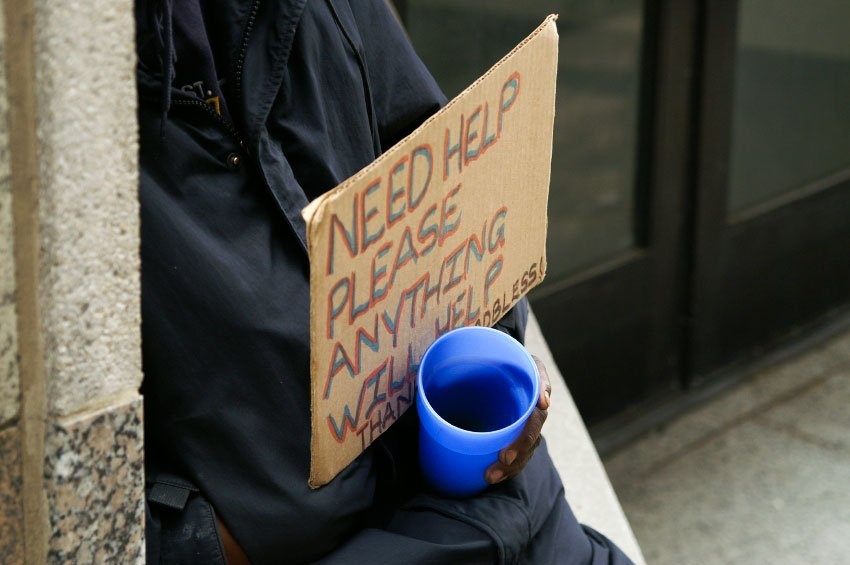
Nearly 46.2 million people were in poverty in 2010, according to the U.S. Census Bureau (meaning they had an income of less than $22,314 for a family of four). And a bigger percentage of people, 15.1 percent, are living in poverty than in any year since 1993.
Despite these grim numbers, Catholic Charities is not giving up on its goal. But its president, the Rev. Larry Snyder, says policy makers and nonprofits must change their approach if they want to provide more lasting solutions for the nation’s poor.
“The safety net is great in the sense that it does catch people who are really living on the edge,” he says. “But that’s just it—it catches them. There’s no incentive or initiative to get them out of poverty.”
Next month, Father Snyder will share his ideas with several hundred nonprofit, foundation, academic, business, and government leaders at a conference in New York to explore ways to create more economic opportunities—with an emphasis on policies that can win support from both the political left and right.
Renewed Efforts
The meeting will mark the public debut of Opportunity Nation, a coalition of about 200 nonprofits, businesses, and universities led by Be the Change, a group in Cambridge, Mass., that was started by Alan Khazei, now a candidate for the Democratic nomination for U.S. senator in Massachusetts.
The effort is modeled after ServiceNation, a group that promotes national service and held a similar conference in 2008. Opportunity Nation has raised $3.5-million from grant makers including the Boston Foundation, Annie E. Casey Foundation, the California Endowment, and Ford Foundation; nonprofits including AARP and United Way Worldwide; and companies including Staples, State Farm, and Time. Mark Edwards, executive director of Opportunity Nation, says the coalition will issue at the conference a set of policy ideas, developed with help from both conservative and liberal scholars, that it hopes will be “conversation starters.”
The group will release the results of a poll of low-income Americans on the barriers they encounter when trying to move up economically and socially. It will also unveil the Opportunity Nation Index, an annual scorecard of how every U.S. county measures up in areas such as jobs and economic opportunity, public health, civic involvement, and educational standards.
Rethinking Programs
In describing its goals, Opportunity Nation shies away from using the word poverty, instead favoring language associated with the “American Dream.”
“One of our goals at the summit is to reframe the dialogue away from poverty and toward opportunity,” Mr. Edwards says.

Conference speakers will discuss a range of ideas for tackling what has been a stubborn problem. One of the speakers, Stuart Butler, a fellow at the conservative Heritage Foundation, says he has been sharing with the coalition his research findings on the key things that give people economic mobility.
For example, he says schools, churches, neighborhood associations, and employers could all play a role in persuading people to save money, no matter how little income they have, so they can build up wealth over time.
He says that overhauling the country’s public-school system, which he calls “a total disaster,” is also critical since students need to have the tools to graduate from college so they can get better jobs.
Catholic Charities, meanwhile, has concluded that the federal government needs to rethink the way it spends money on social programs—and has even drafted legislation to show how it can be done.
The bill—which was introduced in Congress in 2010 and reintroduced in September by Sen. Robert P. Casey, Democrat of Pennsylvania—would set up pilot projects in 10 communities to pool money from federal safety-net programs like food stamps, energy assistance, and Head Start to create “local opportunity funds.”
Local boards would then tailor programs to the needs of the individuals in their communities and draw up ways to measure results. Father Snyder said that such an approach is better than efforts to fight “poverty in a box from Washington and everybody has to fit into that.”
Broad Approach
Another scheduled speaker, Luis Ubiñas, president of the Ford Foundation, says helping low-income people build economic security will require “a broad array of efforts by nonprofits, business, and the government.” He adds: “We just really have to focus on it.”
He said in an e-mail that Ford’s grant making reflects some possible approaches. It is paying for efforts to introduce financial-planning products for low-income people; encourage authorities in metropolitan regions to work together on issues like jobs, housing, and education; get states to streamline the way they deliver government benefits; and build a national coalition to expand the learning day for schoolchildren.
The 2008 ServiceNation conference attracted John McCain and Barack Obama, then Republican and Democratic presidential candidates. The Opportunity Nation gathering does not yet promise that level of star power, although Michael Bloomberg, New York’s mayor, and Deval Patrick, the Democratic governor of Massachusetts, are scheduled to speak.




