Creative Spirit and Marketing Savvy Pay Off for Literacy Charity

By PETER PANEPENTO
Contributor
October 26, 2006 | Read Time: 10 minutes
When viewers of NBC’s Today show turned on their televisions one late November morning in 2003, they were
|
ALSO SEE: DATABASE: Philanthropy 400 Table: First Book Article: A Year of Big Gains Article: Largest Charities Focus on Campaigns’ Aftermath Article: Charities Find It’s Wise to Spend More on Fund Raising Article: Emphasis on Accountability Lifts Returns for International Aid Charity Article: Estate’s Diverse Collections Draw a Variety of Donors to Campaign Article: How The Chronicle Compiled Its Annual Philanthropy 400 Rankings |
greeted by the typically smiling faces of Katie Couric and Matt Lauer. But there was something different about the appearance of the popular TV duo: Both were wearing floppy red-and-white striped hats.
The hats were part of a promotion cooked up by a little-known charity called First Book, as part of a marketing effort to tie in with the opening of the Universal Studios movie The Cat in the Hat. While wearing the hats, Ms. Couric and Mr. Lauer spoke about the film, the Dr. Seuss children’s book on which it was based, and First Book, a nonprofit organization here that works to get books into the hands of needy youngsters.
The segment triggered a donation of 5,000 books to First Book, which, in turn, distributed the books to children.
The promotion was copied by anchors at morning newscasts in many of the country’s 25 largest cities — and by the broadcasting icon Oprah Winfrey.
By the time the promotion was over, more than 31.5 million people had heard about the film, the book, and First Book.
By all accounts, it was an ingenious promotion — yet it didn’t come from the mind of a marketing executive. Instead, it was the brainstorm of a nonprofit leader.
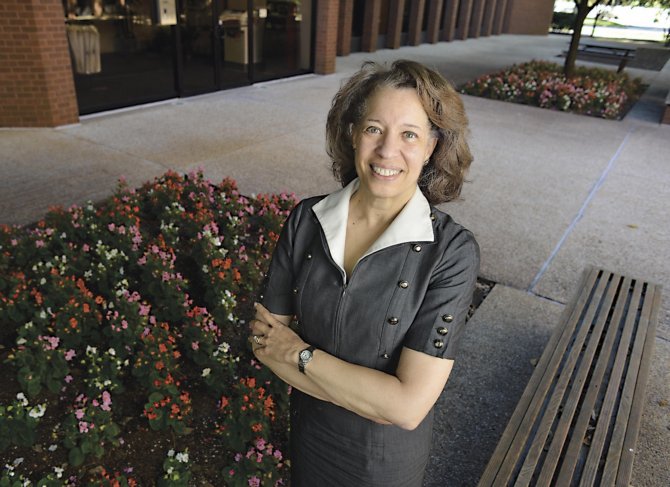
Kyle Zimmer, First Book’s chief executive officer, has been turning marketing efforts into financial gold for her organization since 1992, the year she and two colleagues decided to create a charity that would promote literacy by directing new books to children who otherwise could not afford them.
First Book lands at No. 289 on this year’s Philanthropy 400, a newcomer to the list, after raising more than $54.2-million from private sources last year, including $49.5-million in donated books. Roughly three-quarters of that came through corporate marketing deals such as the promotion tied to The Cat in the Hat.
A Steady Climb
First Book does not employ a development officer, nor does it use traditional methods like direct mail or telemarketing to solicit donors. It seeks only selected grants from foundations and government. It uses a fund-raising model that relies heavily on companies to donate money and new books. In return, the charity provides exposure for its corporate benefactors — and copious amounts of good will.
To date, the approach has been successful for the 14-year-old charity, which says it has distributed 40 million new books to children in the United States.
The charity’s revenue has been climbing steadily throughout the organization’s short history, but 2005 marked a watershed year in which donations from private sources increased by 63 percent, from $33.3-million the previous year. More growth is also expected as First Book plans programs in Canada, India, and Mexico and looks to significantly expand the number of cities it serves in the United States.
David Hessekiel, president of Cause Marketing Forum, in Rye, N.Y., says the charity has become one of the trailblazers as nonprofit marketing efforts get more sophisticated, and he expects First Book to build upon its recent success.
“Nobody could accuse First Book of being stuck in a rut,” Mr. Hessekiel says. “They are constantly reinventing themselves and that’s good news for the organization, the children they serve, and the businesses who work with them.”
Opening the ‘Gateway’
First Book’s unconventional approach stems from the background of those who helped start and lead the organization, Ms. Zimmer says. The charity was conceived after she volunteered as a tutor at Martha’s Table, a Washington social-services charity. At the time, she had a lucrative legal career and was heavily involved in political organizing.
Ms. Zimmer had worked as an adviser in the presidential campaign of Walter Mondale. In her law practice, she represented corporations, state and local governments, and the Navajo Nation. She later became the director of state affairs for an alliance of consumer groups and insurance companies. In that role, she designed and carried out legislative campaigns in more than 20 states.
Her experience as a volunteer, though, ignited a new passion. After spending time in inner-city Washington, Ms. Zimmer discovered that children growing up in poverty were largely unable to obtain books. She also learned that many children’s books that didn’t sell could be made available to those children — if a mechanism were in place to deliver them.
“It opened my eyes in an unmistakably tangible way to the resources that were not available,” Ms. Zimmer says, and she decided that she would come up with a system that would turn waste into a resource that would improve the lives of impoverished children. “We know what happens in the life of a kid when they are given a book. There is something profoundly important that happens when you open that gateway.”
First Book was created a short time later using many of the approaches Ms. Zimmer and her co-founders — fellow corporate lawyers Peter F. Gold and Elizabeth Arky — honed in their work as political organizers. They created local boards of volunteers to screen prospective recipients of donated books and build relationships with companies in their communities. Today, volunteers are working in more than 250 cities and towns to find children who qualify to receive books; in many cases, First Book distributes books through Head Start programs and other nonprofit groups that serve those in need.
‘Trying to Break the Mold’
The founders also decided that they would not be able to succeed without significant support from business.
Instead, First Book wanted to give businesses something of value in return for their good will.
“Otherwise, they will do it in the good years, and in the bad years they won’t,” she says. “We are trying to break the mold here. If we go after traditional sources, we will find ourselves in the same old hole that many others have fallen into.”
The result was a charity with an entrepreneurial mind-set. It would find out what might motivate businesses to give money, time, or books, then it would create marketing plans that would give something of value back to the companies to reward their generosity.
“I have a firmly public-sector heart and private-sector head,” Ms. Zimmer says. “Everything about First Book recognizes you can love business or hate business, but it’s the jet engine that fuels everything out there.”
For First Book, that fuel comes from corporate benefactors such as Borders, Disney, Google, Lincoln-Mercury, and Scholastic.
Borders has been one of the charity’s largest supporters, taking part in a four-week donation drive in late 2005 that raised more than $460,000 for First Book. The campaign was simple — clerks at Borders bookstores asked customers if they would like to add $1, $3, $5, or more to the sale, all of which was directly donated to the charity. The company plans to run an extended version of the promotion from November 1 through the end of 2006.
First Book has, in turn, helped drive traffic into Borders stores. For example, the charity sent its other corporate supporters and everyone on its e-mail lists discount coupons that could be used in any of the company’s stores during a summer weekend. Ten percent of the proceeds from sales associated with those coupons was donated to First Book — providing $270,000 to the charity.
Michael Tam, chief marketing officer and senior vice president of Borders, says the charity’s efforts have helped both his company and First Book.
“First Book does a wonderful job in reaching out to their supporters via e-mail, as well as through the First Book Blog on their Web site,” Mr. Tam says. “First Book’s local advisory boards tirelessly spread the word through grass-roots marketing during the 2005 holiday campaign, encouraging people to come into our stores to donate. We enjoyed working with their advisory boards so much that many Borders employees across the country have joined them and a few have even started their own.”
A Simple Mission
First Book officials spend a lot of time figuring out how they can best give a company what they want, says Jane Robinson, the charity’s chief financial officer.
In most cases, First Book’s most prized commodity is its ability to get news coverage for its marketing efforts. And that commodity is more valuable now, as TiVo, the growing number of cable television stations, and the explosion of the Internet has made it much more difficult than in the past to get widespread exposure, Ms. Robinson and Ms. Zimmer say.
“This is our window: our capacity to harness the consumer movement in a positive way that is going to drive change,” Ms. Zimmer says. “Not every social-sector organization can do this.”
First Book can, she says, because it has a simple, uncontroversial mission and approach. It simply gives books to youngsters who cannot afford them.
The charity recently started a program called “First Book Marketplace,” through which it purchases lots of books from publishers at a big discount — then turns around and sells the books to nonprofit groups for roughly $2 apiece, a fraction of what they would cost retail.
Ms. Zimmer sees the Marketplace program as the ultimate intersection of charity and business. The books that are sold through the program are overruns that would typically be thrown out by publishers because they could not find a cost-effective way to distribute them. The charity works with the United States Coast Guard and Verizon Communications to transport, store, and track the books that pass through the First Book Marketplace program.
Expansion Plans
Ms. Robinson says First Book will probably need to search for foundation or government grants to provide the money to expand its Marketplace program to its full reach, a project that is expected to cost $3-million to $5-million.
But she sees that as seed capital, which would be used to start the program but would not be needed to sustain it. The Marketplace is actually a modest moneymaker for First Book, since the group receives a small sum for every book that is sold through the program. Since the program began in 2004, it has produced $850,000 in sales.
If the organization can expand the program, Ms. Zimmer says, it would mark another step forward for a charity that is constantly searching for new ways to fulfill its mission and avoid dependence on a single approach to raising money. It might also become another important step in the rapidly evolving relationship between charity and business.
“The lines between business and traditional nonprofit modes are blurring all of the time,” Mr. Hessekiel says. “Businesses and nonprofits are going to align themselves together. Models are being reinvented. It’s an extremely exciting time and social entrepreneurs like the people at First Book are a growing breed.”
|
Mission: To give children from low-income families the opportunity to own and read their first new books Year charity was founded: 1992 Location: Washington Key officials: Kyle Zimmer, president and co-founder; Peter F. Gold, president of the board of directors and co-founder; Elizabeth Arky, board member and co-founder. Why it made it onto the list: The organization has relied almost exclusively on marketing ventures with businesses to raise its money and increased its donations from private sources by 63 percent in 2005. The biggest fund-raising challenge ahead: “We need to diversify like any sane business does,” Ms. Zimmer says. “I don’t think it’s different than anybody else.”
|
||||||||||||||||||||||||||||||||||||||||||||||||||||||||||||||||||||||||||||||||||||||||||||||||||||||||||||||||||||||||||||||||||||||||||||||||||||||||||||||||||||||||||||||||||||||||||||||||||||||||||||||||||||||||||||||||||||||||||||||||||||||||||||||||||||||||||||||||||||||||||||||||||||||||||||||||||||||||||||||||||||||||||||||||||||||||||||||||||||||||||||||||||||||||||||||||||||||||||||||||||||||||||||||||||||||