
‘Daily Deal’ Businesses Sprout Nationwide to Spotlight Local Charities

By Michelle Gienow
Contributor
March 4, 2012 | Read Time: 7 minutes
By now pretty much everyone knows the drill: Every morning like clockwork, a sweet deal appears in your e-mail inbox for, say, 50 percent off a meal at an upscale restaurant or a “buy one, get one free” offer for yoga classes or a hot stone massage at a trendy downtown day spa.
In an increasing number of American cities, however, a “deal of the day” message may arrive on behalf of a local charity. And while purchasers still get to enjoy super savings, some—or even all—of the money they spend goes to benefit the nonprofit organization.
The new local efforts—mounted by at least a half-dozen companies, some of which operate in multiple cities—represent attempts to adapt the Groupon model to a new fundraising tool, giving small charities a better chance at reaching a large number of donors, especially young ones. These “deal of the day” sites are raising money—occasionally significant amounts, for hometown charities. But even as more nonprofits benefit from the trend, some experts and observers question whether it can sustain itself.
‘The Big Give’
Groupon itself has begun to sponsor periodic fundraising drives for charities it selects to be part of its G-Team. Through the promotions, Groupon or another company matches the donations made by individuals. But “getting your charity selected for a G-Team promotion would be like winning the lotto—lucrative, but the odds aren’t really in your favor,” says Joe Waters, a consultant who helps charities fashion promotions with businesses and a co-author of Cause Marketing for Dummies.
In Baltimore, Jamie McDonald and Beth Falcone are seeking to give grass-roots charities more support through their company, GiveCorps. In its first four months, GiveCorps raised more than $50,000 for local nonprofit projects from 4,000 subscribers. GiveCorps, which started in July, sends its subscribers a daily e-mail featuring a Baltimore-area charity.
It also announces “The Big Give” on its Facebook page and through Twitter: Instead of simply purchasing goods or services, participants make a donation to the featured organization. They also have the option to donate instead (or additionally) to another of the more than 50 local charities—among them Baltimore Reads, the Maryland SPCA, and Women’s Housing Coalition—that have thus far agreed to raise money through GiveCorps.
As a reward for their giving, donors get to choose up to five “goodies”—vouchers redeemable at city businesses such as restaurants, shops, and salons. Those businesses pay fees to GiveCorps, which is how it makes money.
Charities that are part of the promotions pay 3 percent per donation made by credit card to cover processing fees and 7 percent in administration fees on all gifts. (Fees charged by the new crop of local daily-deal companies vary widely. See facing page.)
Ms. McDonald and Ms. Falcone founded the for-profit GiveCorps after both spent years volunteering.
“Both Beth and I served on boards for quite a few nonprofit groups in Baltimore, and we saw that every charity targeted the same handful of foundations, corporations, and wealthy individuals,” says Ms. McDonald. “We see a coming sea-change in the world of philanthropy, as Generation Y comes into maturity in terms of its members’ ability to give. The shift is going to be huge,” she adds, partly because of the sheer size of that young generation but also because it’s “the first for whom money is not cash but rather a virtual thing.”
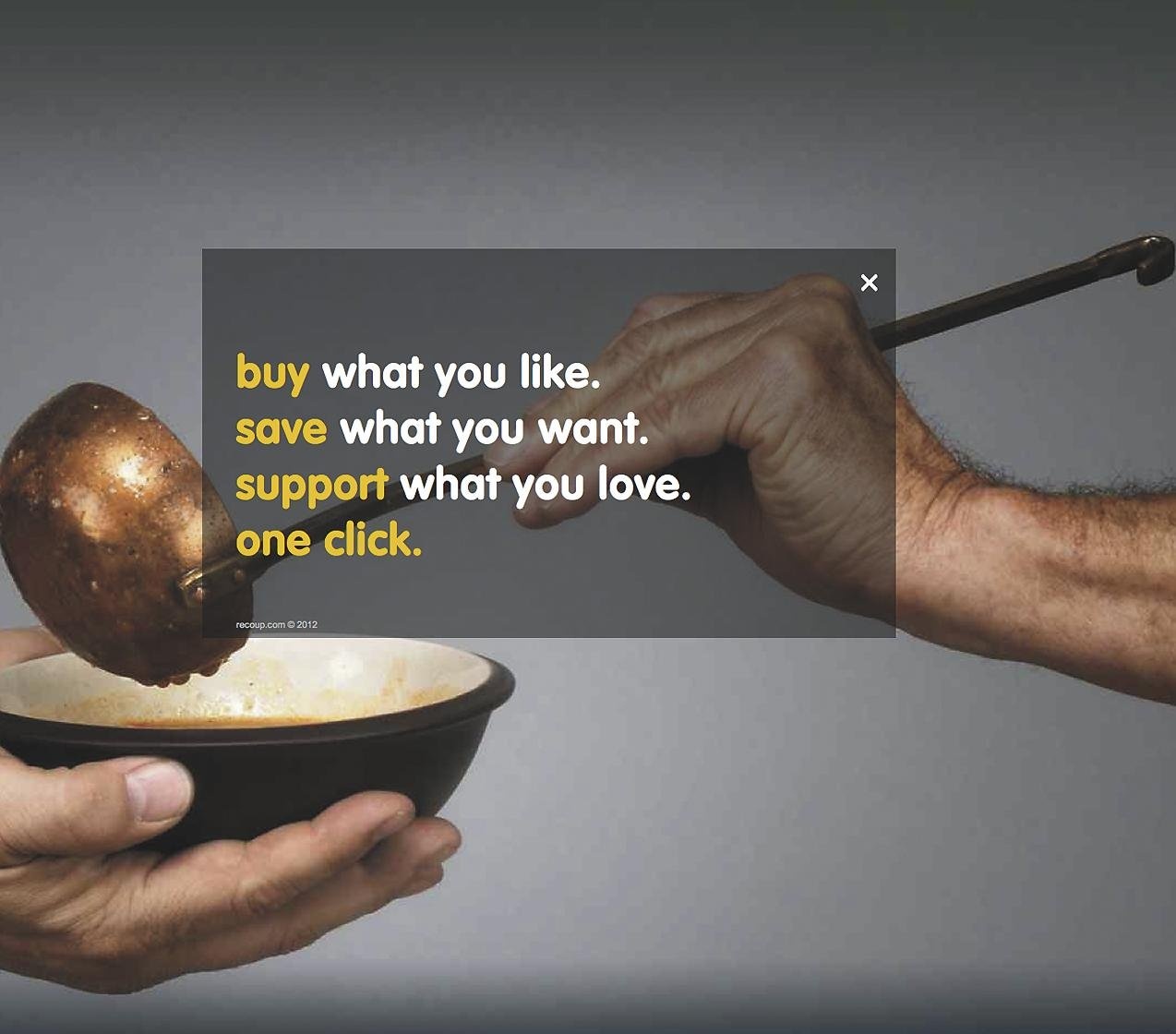
In November, Luca Pivato, started Recoup, a Washington company that also seeks to raise money for local charities via daily-deal announcements, which currently reach 50,000 subscribers. He did so, he says, in part because he saw that charities hold the key to their own fund-raising success—and are mostly failing to use it.
“Nonprofit organizations are sitting on top of this huge asset, which is their relationship with their supporters; it has a lot of value but is almost never effectively utilized,” says Mr. Pivato. Many who support a charity, he says, “give only rarely, or at least only when asked. So this approach allows them to ask differently, in a new and engaging way that doesn’t alienate members but inspires them to give.”
Minimal Risk
The means by which “daily deal” companies find the charities that ultimately benefit from their enterprise are similar across the country. All of them reach out to nonprofits directly, and many encourage their subscribers to recommend favorite local charities, often through a button on the marketers’ Web site.
Hanna Mast, a development associate at a Baltimore group called Moveable Feast, says she’s sold on the approach taken by GiveCorps. She worked with the company to raise donations for her organization, which delivers meals to people who are homebound due to illness.
“Our first project with GiveCorps was to raise enough money to provide 555 meals—and we funded it the very first day we went live,” she says. The experience, she says, was “a low risk for us.”
In the process, Ms. Mast also became a GiveCorps subscriber.
“I’m in my 20s, and this is something that appeals to me personally even outside my work life,” she says. “I find the notion of the $25 philanthropist empowering, and GiveCorps provides an avenue for me to learn about local projects where my small support can be meaningful.”
Sandy Henshue, events director at Gilda’s Club Madison, a Wisconsin nonprofit that offers emotional support to cancer patients and their families, first paired her group with Community Change, a Madison site, more than a year ago. Community Change sells gift cards that people can use to pay for goods and services at a discount at participating local merchants, and 20 percent of each purchase goes to designated local charities.
“When Community Change approached me, it seemed like a no-brainer,” says Ms. Henshue. She was pleased with the individualized marketing pitch it devises for each charity, which it allows the groups to use for other fundraising efforts.
“If people remember to continue selecting you as their purchase beneficiary, the money just keeps coming in steadily,” she says. “For us, it’s added up to a little over $1,000 with practically no effort on our part.” Not a windfall, she acknowledges, but “every little bit helps these days. Better still, it’s not an ‘ask’ and then another ‘ask’ to our donors.”
Due Diligence
But every “deals for donations” site operates differently, and charities looking to raise money through these sites need to exercise due diligence, cautions Siobhan Canty, who worked for nonprofits for a decade before her most recent job as the John S. and James L. Knight Foundation’s program director for strategic initiatives, a post she left in December.
In the long run, she says, “these kinds of tools are better for businesses than they are for nonprofits. In this scenario, businesses connect with new customers when they redeem their coupon. Unfortunately, there is no similar mechanism ensuring that people will interact more with a charity after they have made their donation.”
In addition, she says, fees the sites may charge for processing donations and marketing costs seem “high compared to other fundraising strategies that can lead to stronger and more sustainable relationships between the nonprofit and the donor.”
However, she concludes that if participation is genuinely without cost, “charities have very little to lose in giving it a try.”
Long-Term Outlook
It may be too soon to gauge the ultimate long-range success of Groupon-style fundraising, and there are some signs that it isn’t successful in all regions. At least one attempt to capitalize on the model, CauseOn, in Portland, Ore., shut down after barely a year in operation.
Mr. Waters, for one, is not very optimistic about the future of the trend. “These new cause-specific niche sites face a daunting challenge when it comes to building a sustaining audience,” he says. “You can have a truly fantastic offer, but in order to succeed, and particularly over the long run, you need to get it in front of people—a great many people, because not everybody is going to buy or donate on every single day.”
What’s more, he says, discount sites may face “daily-deal fatigue.”
The best news for charities, he concludes, is that “there is generally very little downside risk for nonprofit organizations associating themselves with a deals-for-donations initiative. At the very least, you’ll get exposure, and maybe even some money.”




