Despite Losses in Government Aid, Charity Serves Twice as Many Clients
The Crisis Center of Tampa Bay, in Florida, increased its revenue by 49 percent

By Doug Donovan
Contributor
May 5, 2013 | Read Time: 3 minutes
Over the past five years, the Crisis Center of Tampa Bay, a Florida charity that provides trauma counseling and ambulance service, has seen its federal aid decline from 65 cents to 25 cents of every dollar in the group’s budget.
Even so, the charity has doubled the number of people it serves by attracting money from private sources, says David Braughton, the nonprofit’s president.
The Crisis Center has increased its revenue by 49 percent since 2007, to $12.3-million, largely because it took steps to diversify its sources of money.
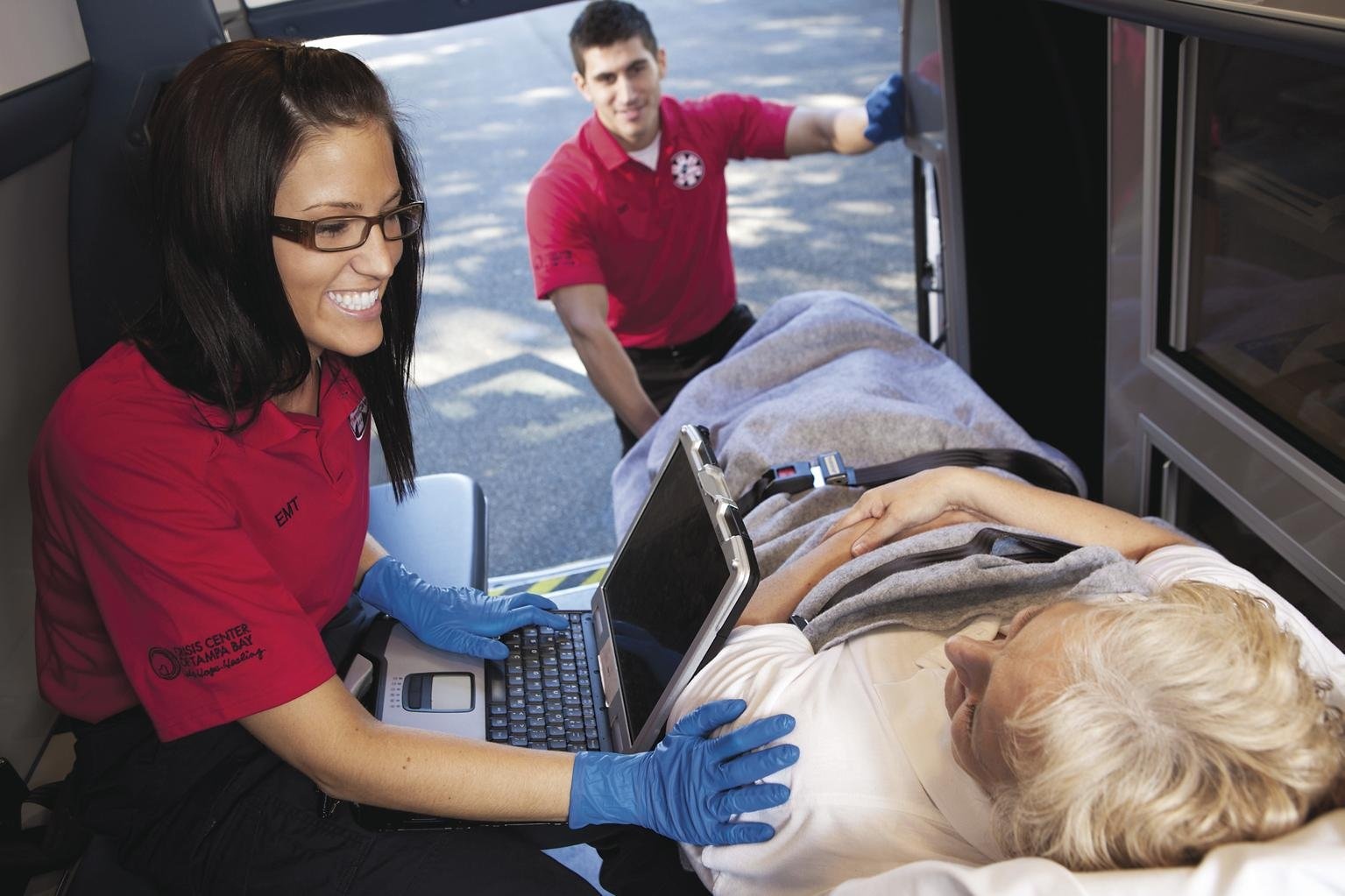
The organization is pushing more aggressively for private donations and has expanded its ambulance and medical-van services, which provide needed assistance to clients and now generate half of the nonprofit group’s income every year.
‘Fickle’ Decisions
Mr. Braughton took the top job at the charity in 2007, just before the recession hit.
He says he knew from the start he wanted to reduce the organization’s reliance on government funds because he had seen what he calls “fickle” decisions by government officials who he says want to focus less on treating people with problems, as his charity does, and more on preventing problems from occurring in the first place.
The national economic crisis, which had been playing out in the Florida housing-market collapse, also did not bode well for nonprofits that count on government funds.
“The writing was on the wall,” Mr. Braughton says. “By having more revenue sources that I have more control over by virtue of my efforts, then I’m not dependent on some politician.”
He also decided it was important to cut costs and invest in fundraising. He eliminated management positions and expanded the center’s development staff from one full-time and one part-time employee to four full-time employees.
In five years, the organization went from raising $153,000 a year in private donations to bringing in $1.4-million last year.
During Mr. Braughton’s tenure, the group has expanded the number of staff members by 40 to 170 and has given raises of 2.5 percent to 3 percent. He reduced administrative overhead by eliminating jobs with the title senior vice president.
Services Bring in Money
The loss of government support during the past five years has been substantial. Hillsborough County used to provide about $2-million a year. Today: $800,000.
A Crisis Center program that counsels child sex-abuse victims had to reduce the number of clients it served after it lost $400,000 at the end of September 2012 because the county decided it wanted to shift its money to programs that prevent sex abuse, Mr. Braughton says.
Still, the county provides 65 percent of the $2.3-million in government aid that supports the nonprofit’s work counseling victims of violence, monitoring suicide-prevention phone lines, and preventing homelessness.
It raised $1.4-million from private sources and earned the rest through its fleet of 20 ambulances that provide 2,600 rides a month and 20 medical vans that provide 3,000 trips a month.
The charity has increased what it earns mostly from those services from $2.4-million in 2007 to $8.5-million in 2012.
Even though Mr. Braughton has found ways to decrease his charity’s dependence on government, that doesn’t mean he isn’t frustrated by what he sees as politicians’ reluctance to cut defense budgets while reducing spending on the social safety net.
“We can find trillions to kill people,” he says. “But when we have to find trillions to help people … .”
| 2007 | 2012 | Percent Change | |
| Government grants | $5,222,805 | $3,059,000 | -41.4% |
| Private contributions | $329,955 | $1,400,000 | 324.3% |
| Program services | $2,414,869 | $8,500,000 | 252.0% |
All 2007 values are adjusted for inflation.