August 17, 2006 | Read Time: 5 minutes
For Aurelia Stanley, transforming the American Cancer Society into a more diverse organization isn’t simply about changing the racial makeup of its staff. It’s about altering the way the organization does business in subtle yet meaningful ways.
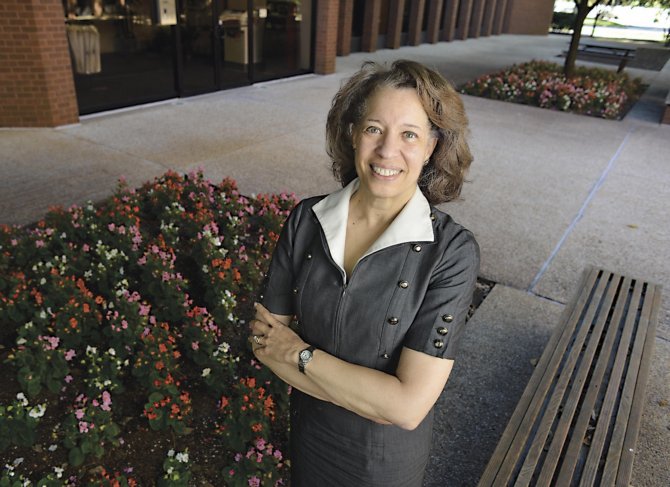
In May, Ms. Stanley was appointed the American Cancer Society’s first chief diversity officer.
The new position is an outgrowth of her previous role as the Atlanta charity’s vice president of human resources — a position she had held since 1992.
In her new role, Ms. Stanley, 56, is charged with leading a nationwide effort to attract and retain a diverse staff to work in the American Cancer Society’s 13 regional divisions and its local offices in 3,400 cities and towns.
But her goal is to do much more than make sure the American Cancer Society has a staff that reflects the United States’ changing racial, ethnic, gender, religious, and social mix.
Ms. Stanley says she plans to make diversity a priority in the charity’s daily business dealings — from selecting vendors to forging partnerships with other charities.
“The whole diversity issue permeates many areas of the society,” she says of the approach she plans to bring to her new position.
While many charities freely espouse that open-armed approach, few have taken the steps to hire a top-level executive who has the sole job of promoting diversity at all levels of the organization.
But for the American Cancer Society, which is attempting to become more effective in teaching minority groups about the risks associated with cancer, creating a culture of diversity is critical, Ms. Stanley says.
The American Cancer Society is particularly concerned with improving its efforts to educate blacks about cancer.
Black men are 20 percent more likely to have cancer than white men and are 40 percent more likely to die from it, the organization says. Earlier diagnosis and better treatment would probably reduce that gap considerably, it believes.
In light of those numbers, the organization has decided it needs to find ways to more effectively spread its message to minorities, says John R. Seffrin, the American Cancer Society’s chief executive officer.
“We know that diversity is critical to our meeting our goals of decreasing the carnage of cancer,” he says. “The biggest part of the problem lies in the most diverse parts of the community.”
The organization’s effort extends far beyond simply building a racially and ethnically mixed staff.
Instead, Ms. Stanley says she hopes to develop an approach that will allow the American Cancer Society to cultivate business relationships with minority-owned suppliers and subcontractors — a move intended to help the organization reach out to minorities with information about cancer prevention and treatment.
“If we invest in the areas we serve, the level of trust will increase,” Ms. Stanley says.
She also plans to lead a more- aggressive push to collaborate with charities that have relationships with blacks, Latinos, and members of other racial and ethnic groups.
By working with organizations such as the African American Fraternity and the 100 Black Men of America, Ms. Stanley says the American Cancer Society can more effectively spread its message, and attract a broader mix of donors and volunteers.
To make these efforts work, however, Ms. Stanley says she believes the American Cancer Society needs to be able to build a team of leaders that reflects the people it serves.
As a result, she plans to continue to identify and groom future leaders who work for the organization, with an emphasis on diversity.
She says she learned the importance of such efforts when she worked as a human-resources executive for General Motors Corporation, a company she says missed opportunities to retain some of its best and brightest employees.
The company was so large, she says, that it was easy for talented people to get lost in the shuffle.
In an interview, Ms. Stanley discussed how she will continue to help the American Cancer Society reach out to well-qualified workers:
How successful has the American Cancer Society been in creating a diverse work force?
We’ve done a great job at building a diverse staff at the home office in Atlanta. The diversity of our staff exceeds the national average. But, as a whole, we don’t have as good a track record. Our goal is to have each office have a staff that reflects the communities they serve.
How will you measure your success?
We really are just looking at trends. We don’t have targeted numbers. I really don’t think that’s an effective way to produce change.
But we’ll be developing metrics that will tell us if we’re doing a good job of attracting and retaining a diverse work force.
I’m planning to develop a diversity scorecard so we can track how well we are doing.
Is it harder for nonprofit organizations to attract diverse talent than it is for the private sector?
The nonprofit world still has the stigma of hard work and low pay.
I think the American Cancer Society has created a structure of competitive salaries to attract the number of people we need to fulfill our mission. It isn’t the mom-and-pop-type organization that some people think it is. We just have to get the word out.
You don’t come to work for not-for-profits because of the money. But money has to be a factor in your decision.
We have to set that myth aside that you can’t earn a competitive wage.
Why do more nonprofit groups need to pay attention to diversity?
It’s a way of life. If you look at the demographics of the United States, it’s going to evolve forever.
All of us in the work force are going to have to work in a changing world. You are going to have to be able to adapt to different people who are in the workplace.
ABOUT AURELIA STANLEY, CHIEF DIVERSITY OFFICER, AMERICAN CANCER SOCIETY
Experience: Before joining the American Cancer Society, Ms. Stanley worked for 14 years in General Motors Corporation’s human-resources division. She was hired by the American Cancer Society in 1989 to work in its national office as director of compensation, and was promoted in 1992 to vice president of human resources.
Education: Ms. Stanley holds a degree in business administration from Emory University, in Atlanta.
What she’s reading: For work, she recently read The Leadership Pipeline: How to Build the Leadership Powered Company, by Ram Charan, Stephen Drotter, and James Noel. For pleasure, she says, “I love James Patterson. I’ve read every book he has written.”