
Educational Organizations Debate How to Handle ‘Three Cups of Tea’ Scandal

By Raymund Flandez
Contributor
June 1, 2011 | Read Time: 5 minutes
At Elgin Community College, in Illinois, students were planning to stage a play in early May based on the book Three Cups of Tea.
The idea was to raise money for a charity founded by the book’s author, Greg Mortenson, to build schools in Afghanistan and Pakistan. But the students quickly reversed course after a scandal broke out over the author and his nonprofit. Instead they produced a play based on The Kite Runner, another popular book about Afghanistan.
Across the country, plenty of other fund-raising efforts have also been transformed or stopped altogether by the controversy over the Central Asia Institute, a charity in Bozeman, Mont., founded by Mr. Mortenson.
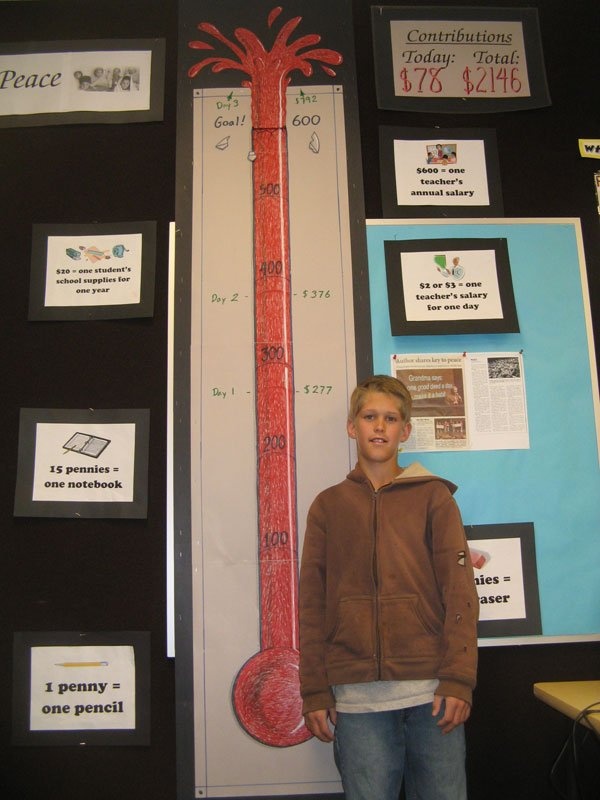
Dozens of schools and organizations nationwide have raised money for the group in recent years, many of them through the institute’s Pennies for Peace fund-raising campaign designed for use in schools and promoted by the National Education Association. Pennies for Peace raised $2.3-million in the United States last year, the Central Asia Institute says. Since its founding in 1994, more than 9,400 schools, organizations, places of worship, libraries, and businesses have registered Pennies for Peace campaigns in 62 countries.
Those efforts were jolted after the news program “60 Minutes” reported that Mr. Mortenson may have reaped undue personal benefits from donations to the charity and that the institute might not have built as many schools as he said.
Mr. Mortenson has denied that he misused any charity money, but an investigation by the Montana attorney general is under way and two donors are trying to organize a class-action lawsuit against the institute, charging that they were misled about where their money was going.
Withholding the Money
The mistrust and uncertainty produced by the scandal has prompted some schools to withhold the money they have raised for the Central Asia Institute.
“Our kids were a little taken aback when they saw the ’60 Minutes’ broadcast,” says Betsye Sargent, head of the Phoenix School, a private elementary and middle school in Salem, Mass.
Now the fourth- through eigth-graders have begun a project to investigate the charity’s work overseas and examine what they should do with the jar of pennies that the school collected, which amounted to about $160.
“It was too much of a teachable moment not to do anything with it,” Ms. Sargent says. The school has scheduled a Skype call with a nonprofit organization in Pakistan, she says, and will soon decide where to send the money.
Ocean Shore School in Pacifica, Calif., which raised $600 by collecting pennies in little pails, is taking the same approach.
When Laura Shain, the school’s principal, was alerted about the controversy, her first thought was: “Oh my God, have we sent the check in yet?”
Fortunately, it had not. “It was a relief. There were a lot of issues for us to talk about. When people donate to a cause, you can’t then use the money for something else.”
She also tried to use the controversy as a learning experience. Students discussed the accusations and were allowed to decide what should be done with the money they had helped raise.
“I wanted them to use their own critical thinking,” Ms. Shain says. “The kids were concerned. They really loved having a role in making a decision.”
In the end, the students agreed to give the money to the Pennies for Peace campaign. One reason, she says, is they were reassured after the Central Asia Institute sent an e-mail message to the school promising that all donations collected for the program are restricted to building schools, she says.
The kids also thought that the controversy was a minor issue compared with the “good that was being done” overseas, she adds. “An important need was being met.” The school sent the $600 check last month.
No Refunds Requested
The National Education Association, which has promoted Pennies for Peace by creating a reading curriculum that integrates the book and the fund-raising project, has urged schools ”to hold on to the money,” says John Wilson, the association’s executive director. “Let’s see what transpires as the investigation is done.”
He adds: “If the money that the kids collected was not spent 100 percent on helping the schools, or helping build the schools, then I think we would have been misled,” he says.
Anne Beyersdorfer, who serves as interim executive director of the Central Asia Institute while Mr. Mortenson is on a medical leave, says that none of the schools that have raised money for the organization have asked for the money back.
But, she says, the group is willing to give back contributions to donors who are upset.
She says schools have no reason to worry about the Pennies for Peace campaign. “Every penny goes to educational projects overseas,” she says, “every penny.”
‘Kind of Sad’
Even so, some teachers now regret bringing Pennies for Peace to their schools. Others no longer want anything to do with Mr. Mortenson or his organization.
“I wouldn’t have done it if I had known,” says Lolene Gifford, a reading specialist who came up with the idea of raising money for Mr. Mortenson’s work from her students at the Hurricane Intermediate School, in Hurricane, Utah.
In March the students presented a check for $2,400 to Mr. Mortenson when he visited nearby St. George, Utah.
“The kids were just great,” says Ms. Gifford. “They opened their piggy banks and their hearts.”
When the allegations about the Central Asia Institute came out on television and elsewhere, she says, “everybody was devastated.”
So, too, were students at North Oldham High School in Goshen, Ky., which raised $7,300 last year with the help of students at the local middle and elementary schools through penny wars, homeroom talks, a pep rally, and a pajama movie night.
In addition, a group of Pakistani doctors in the town matched what the students raised, and the high school sent a check to the Central Asia Institute for $14,700. Everyone was thrilled with the amount, says Steve Rauh, an Oldham English teacher.
Oldham High doesn’t have any interest in getting the money back from Mr. Mortenson’s charity, he says, but “everybody’s kind of sad. We know that it’s going to diminish his ability to raise money for the future.”




