

May 27, 2012 | Read Time: 4 minutes
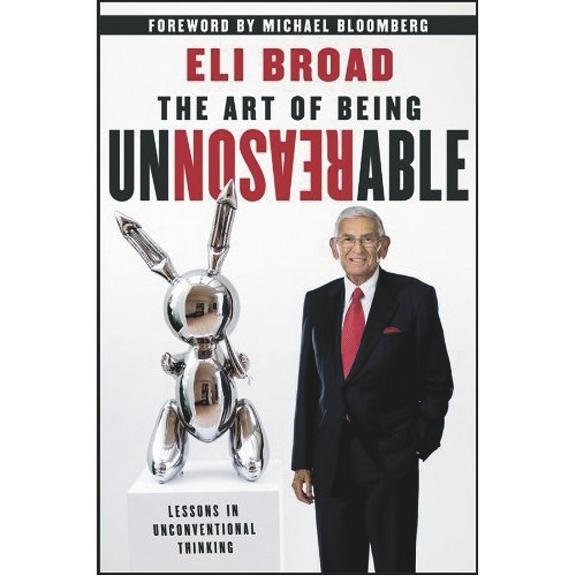
The billionaire arts and education patron Eli Broad has drawn much praise—and controversy—for his hands-on style of philanthropy, an endeavor he has devoted much time and money to after he founded two Fortune 500 companies. He has just written The Art of Being Unreasonable: Lessons in Unconventional Thinking to provide advice on giving and business. In an interview, he discussed his philanthropy:
What do you think of philanthropy today?
Some of the foundations that have come on the scene in the last 10, 20 years are very different than the traditional old foundations. They’ve been started by entrepreneurs that want a return on their investment, whether it’s improved student achievement, greater attendance at museums, scientific and medical breakthroughs, and the like.
Name a philanthropist you admire.
I have to go back in time to Andrew Carnegie. I admire Andrew Carnegie. He was not exactly admired by all at the time he was doing all these things, but look at what he left behind—all sorts of great institutions, a library system, a number of other things.
And a living philanthropist?
We know just about all of them and they’re all doing good things. I like what Mike Bloomberg has done more than anyone else. He funds things that sometimes aren’t popular, having to do with public health, whether it’s [to curb] smoking or obesity or what he’s doing in scientific and medical research. Things that make a real difference.
You acknowledge in your book that you have been described as an “autocratic” donor. How do you respond to such criticism?
Look, I go forward and advocate for things that I think make sense, that maybe haven’t been done before, that people think they’re not going to work, and I ask a lot of questions. Why not? My belief is that if you do the right thing at the end of the day, people applaud it and want to take credit for it, and respect me. But along the way, I don’t have a lot of time with all the things I’m doing to chitchat and play nice to everyone I meet. I don’t mean to offend anybody, but on the other hand, I want to get things done.
What has been the greatest risk you have taken in your philanthropy?
Probably the Broad Institute [a biomedical-research center that is run jointly by Harvard University, the Massachusetts Institute of Technology, and the Whitehead Institute for Biomedical Research], because it didn’t exist, and Harvard and MIT never did anything together before. We created a new way of conducting science and had a great leader in Eric Lander. Getting people—whether mathematicians, computer scientists, engineers, physicists, chemists, and others—out of their labs, all working together on a platform, that was the biggest risk and biggest success to date.
And your greatest failure?
We haven’t been satisfied with what we’ve accomplished in K-12 education reform. We’ve made a dent, but we’ve got a long way to go. I feel very good about our superintendents academy, the residency [the Broad Residency in Urban Education], the Broad Prize. We’re announcing a new prize for charter management organizations in Minneapolis on June 21, so we feel good about that.
But frankly, if you ask how far have we gotten in transforming education within the last 11 years, the answer is simple: not far enough by any means. But we’ve done more than any other foundation than I’m aware of.
Who has most influenced your philanthropy?
David Baltimore [former president of Caltech and a Nobel Prize laureate] in scientific and medical research; in some other areas, Larry Summers [former Treasury secretary and former president of Harvard]. A number of other people also. I’ve chosen every board member for a certain reason. I don’t have buddies or relatives, so to speak, on the board as other foundations do. I want people that I can call upon that can make contributions, be critical of what I’m doing.
You have said that you do not believe that foundations should last forever. What plans do you and your wife, Edythe, have for the Broad Foundation?
We’re going to endow the Broad Center, which runs the superintendents academy and a residency. We’re going to endow the Broad Prize. We’re clearly endowing the Broad Institute. Other things we’re doing I’m not sure we want to continue more than a decade after we’re both gone, which is really writing checks to this, that, and the other thing.
The institutions we’ve created we want to continue, and it’ll be up to those boards to make a decision of how long those things live, whether it’s in perpetuity, 10 years, 20 years, 30 years.




